
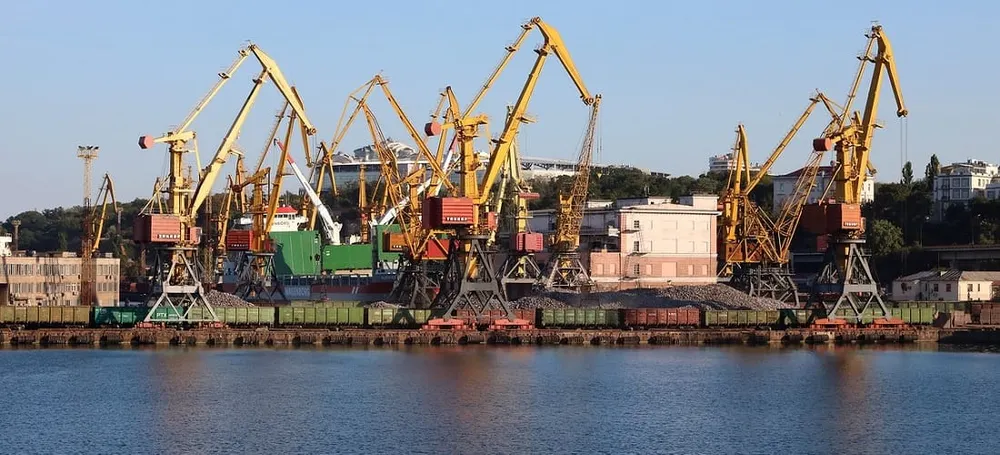
Shipping via the Don River-Sea of Azov-Black Sea route, which handles roughly a quarter of Russia’s grain exports, as EIR reported yesterday, remains suspended in the wake of the Kiev regime’s nine-day drone-strike campaign against commercial shipping in the Sea of Azov. In retaliation, Russia fired a major missile barrage the night of July 15-16, hitting ports in the Odessa Region. The Russian Ministry of Defense reported that Russian forces had targeted port facilities used by Ukraine’s military and several dry cargo ships carrying military equipment to these ports. Since the same ports handle most of Ukraine’s own grain exports, a serious cumulative impact on the world’s wheat and grain supply is looming.
Before the war, Ukraine accounted for roughly 10% of world wheat exports, 15% of corn exports, and 10-15% of total world grain exports, with about 90% of that volume shipped through the three Odessa-region ports of Odessa, Chornomorsk, and Pivdenny (Yuzhny). However, that level has now dropped by one third in the recent days as Russian strikes have increased, according to a July 15 report from Reuters—from about 6 million metric tons a month to now around 4 million. Ukrainian Railways data also show grain railcar traffic to the Odessa ports down 11% and exports down 17% in the week of July 2-8 alone. Factors besides damage to the ports include recent Russian strikes on Ukrainian rail infrastructure, as well as a manpower shortage in the farm sector because of high conscription levels.
Ukraine’s top grain exporter, Kernel Holding, suspended operations at its Chornomorsk terminal after Russian strikes on July 10-12 destroyed roughly 25,000 metric tons of sunflower oil and 45,000 metric tons of wheat, the report continued. Further, four of the ports’ 13 large grain terminals have now suspended purchases altogether. The commodities futures markets have already begun to respond. U.S. wheat futures jumped 5.1% on Wednesday, gaining a total of 7% this week, while Paris wheat futures surged 6.9% on Wednesday.
At the eastern end of the Black Sea, Ukrainian drone forces have shifted from targeting the Sea of Azov, where they report having struck 116 Russian-linked vessels in the Sea of Azov over the past nine days, to Russian targets on the Black Sea itself. Twenty vessels — 17 oil tankers, two gas tankers, and one tugboat—were struck overnight on July 14-15, reported Bloomberg. There is not yet any indication of when the Sea of Azov-to-Black Sea route may be reactivated. The peak months for wheat exports are August through December.
Thus, both Russia’s and Ukraine’s Black Sea grain-exporting infrastructures are being simultaneously degraded, a dangerous situation for global wheat markets that will have implications for the entire world.