Editor’s Note: This article was first published in New Solidarity, the newspaper of the LaRouche movement, Vol. 10, No. 16, April 20, 1979, and is provided courtesy of the LaRouche Legacy Foundation. The following was written on February 5, 1979.
Presidential candidate and U.S. Labor Party Chairman LaRouche wrote the following article on February 5, 1979, with the intention that it would appear in the theoretical journal, The Campaigner. However, since its completion, the outbreak of mass-scale propaganda warfare in the U.S. and international media in covering such strategic developments as the conclusion of the Camp David Israeli-Egyptian peace and the Three Mile Island nuclear accident have prompted us to publish Mr. LaRouche’s article at this time. The Camp David “peace” sealed a war alliance between Egypt and Israel, backed by the U.S. The Three Mile Island “accident” was a case of outright sabotage by Energy Secretary Schlesinger and the Nuclear Regulatory Commission, providing a pretext for shutting down the entire civilian nuclear industry. The media’s lying campaigns that “War is Peace” and “Nuclear Energy is Unsafe” are only two egregious examples in the broader problem Mr. LaRouche discusses here: How do you know the truth?
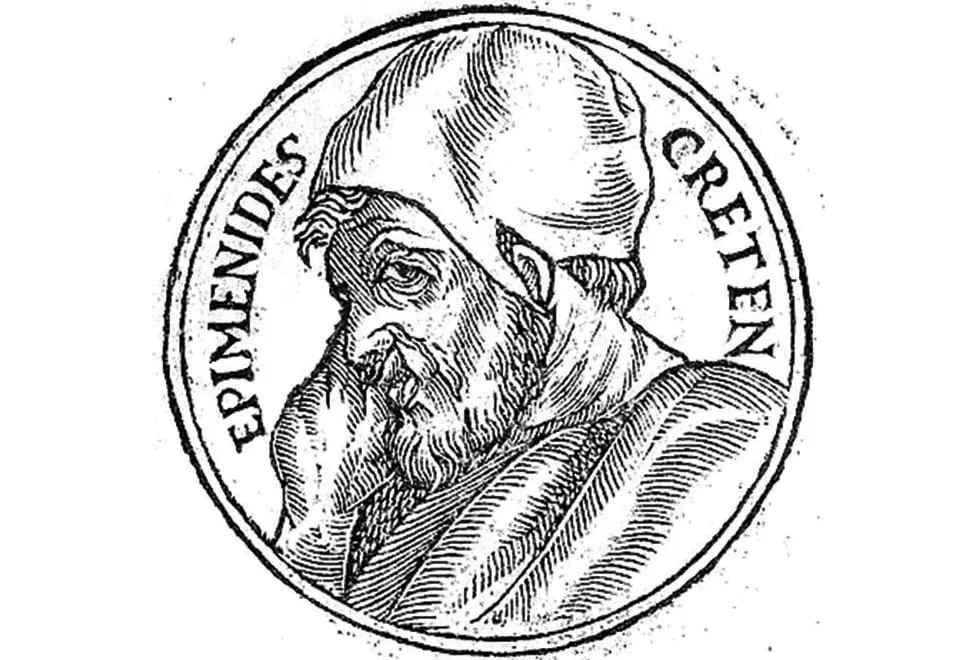
Epimenides the Cretan said, “All Cretans are liars.” Was Epimenides lying?
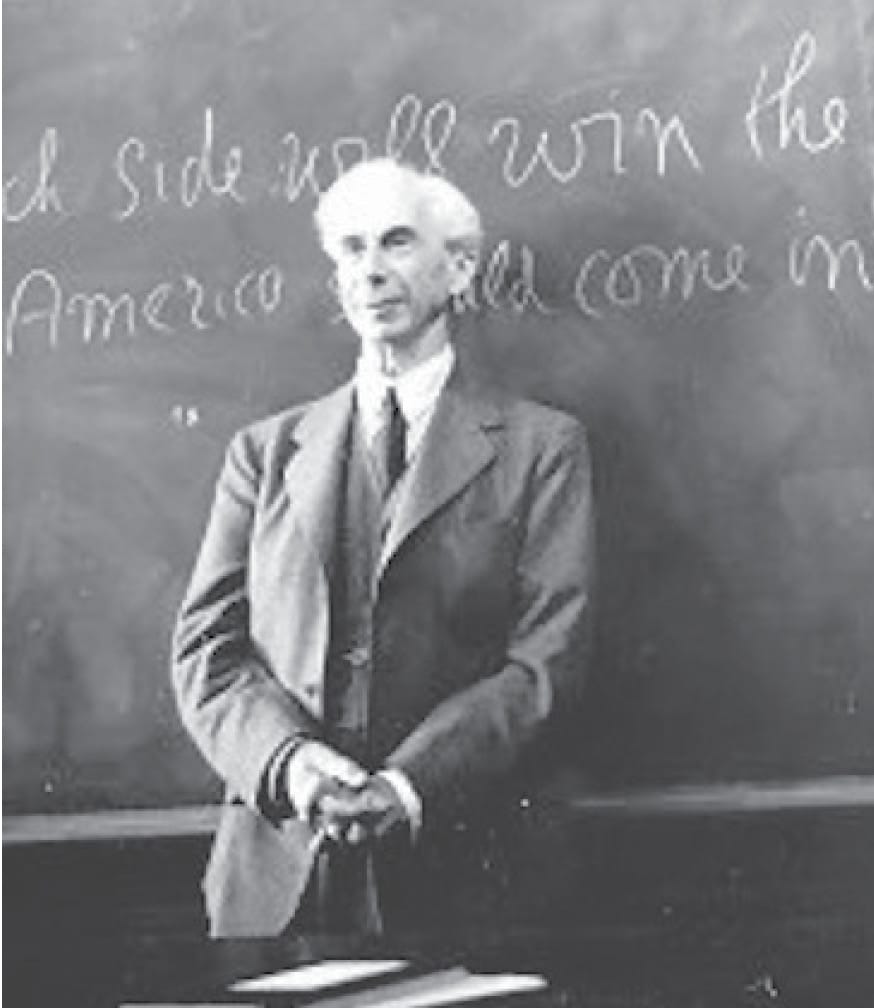
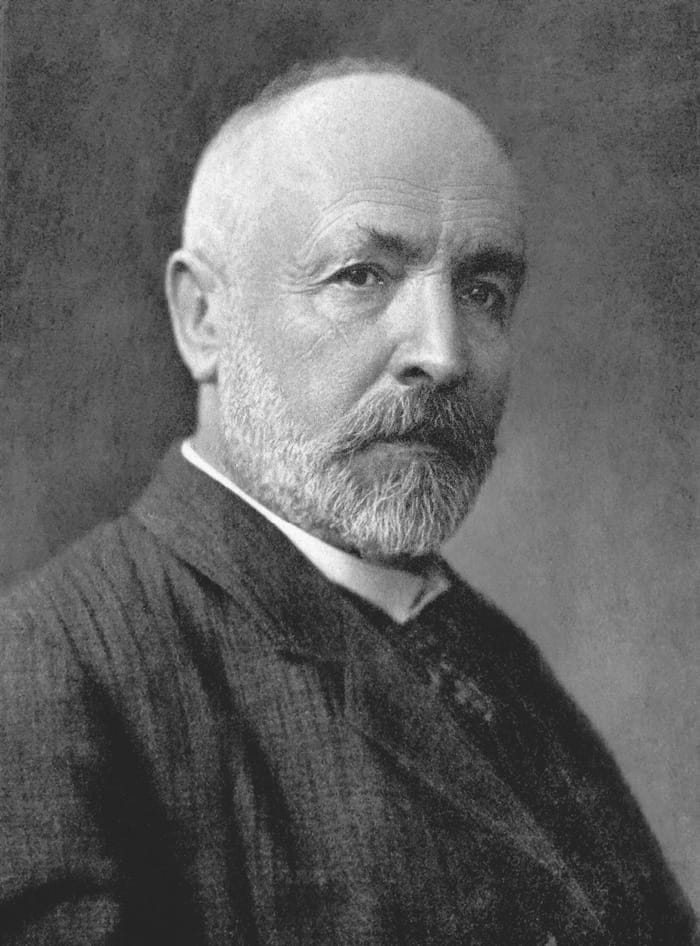
Probably, Epimenides was not lying—for reasons I shall demonstrate here in due course. Nonetheless, Bertrand Russell was certainly lying—that’s not an unusual offense with Russell—when he attempted to premise an argument against Georg Cantor’s notion of cardinality on treating the relatively most trivial sort of homily which might be adduced from reference to the Epimenides paradox.[1]
We shall deal with both the Epimenides case and with Cantor’s elementary notion of cardinality here. To this purpose, we shall employ the excellent model of Dante Alighieri’s Commedia once again, employing this to point toward a more powerful approach to the elementary notion of transfinites than is usually adduced from known students’ readings of Cantor. Although I have developed this point in behalf of Bernhard Riemann’s habilitation paper[2] in several published locations,[3] in my published writings I have not previously focused attention directly to the connected features of Georg Cantor in the manner I accomplish here. I shall proceed by way of some preliminary discussion of the Epimenides paradox, returning to complete that discussion after an intervening development of the Cantor-Commedia analogies.
Epimenides
In one’s first assessment of the Epimenides paradox as I have reported it at the outset here, there is no proper reason to assume that a person who is properly classed as a liar will always lie. Conversely, the fact that a person is proven “to tell the truth” under certain classes of circumstances, on a number of occasions, does not impair in the least his proper classification as a “liar.”
The crudest, false reading of the Epimenides paradox is the syllogistic, expanded form, as follows:
- All Cretans are liars, says Epimenides, who is a Cretan.
- Liars are persons who always lie.
- Therefore, Epimenides is lying, but, therefore, …
It is the second, middle element in the syllogism which is the fallacy.
This crude sophistry, this fallacious interpretation of the paradox might have been used in ancient Greece in various ways, varying with the user and the persons addressed. In its best usage, this fallacious interpretation is a cruel, if well-deserved torture of a commonplace Aristotelian. In its worst, most immoral usage, it becomes a cheap demagogic trick by some ancient predecessor of Martin Heidegger or Karl Popper; by ridiculing the Aristotelian sort of pseudo-rationality, the existentialist-irrationalist rhetorician asserts that rationality is, at best, “filled with large holes,” such as paradoxes of this sort.
Exemplary is the corollary for this crude version of the same paradox, “The Barber Paradox.” The latter paradox is fairly restated as follows: In a certain hypothetical town, all men are shaven regularly. On one side of this town, live men who are shaven only by themselves; on the other side of this town, live men who are shaven only by the barber, never themselves. On which side of town does the barber live?
That latter paradox is designed, like the so-called Richardian paradox, to fit the sort of sophistry which Russell undertook in 1903. This hypothetical statement avoids the (properly obvious) fallacy of the required middle term, “Liars are persons who always lie.” This avoidance is accomplished by replacing a “real-life situation” form of statement by an absurd hypothesis, by appeal to demonstration of a purported “logical principle” demonstrated only in an absolutely “empty” class of hypothetical events. In other words, the “Barber Paradox” is a device for a form of argument comparable to the case which depends upon the included hypothetical assertion, “If the moon were, in fact, made of green cheese, then …”
Nonetheless, as we shall make clear, it is possible to demonstrate something of importance by examining the offering of the “Barber” and “Richardian” paradoxes as matters of clinical pathology, as crucial symptoms of what is awry in the minds of Bertrand Russell, et al. What Russell, et al., attempt to convince the dupes to believe, with the aid of such “If …, then …” forms of paradoxical concoctions, is the irrationalist-existentialist thesis that “universals do not exist,” that statements of the category “all” are fallacious for that condition in which “all” is intended to signify that a certain kind of “allness” is a primary empirical fact. By the sophistical tricks of seeming to demonstrate that case of nonexistence of “universals” for certain kinds of formal-logical statements, Russell et al. purport to demonstrate, “Q.E.D.,” that the conception of a “universal” is a logical fallacy.
That was the issue which prompted Russell to make an immortal public ass of himself in his lectures on geometry;[4] that is what guided Russell to obsessive absurdity in his attempts to discredit the influence of Georg Cantor.[5] All of Russell’s so-called mathematical and philosophical writings, including his pathetically ignorant The ABC of Relativity, are governed by this same obsession.
The practical, political reference for this present review of the Cantor-Epimenides topic is moored by Russell’s attacks on Riemann and Helmholtz in the lectures on geometry, and by Russell’s and Whitehead’s hysterical efforts to discredit both Riemann and Cantor at the beginning of this century. Russell commits the tactical error, in his lectures on geometry, of focusing his hatred most directly against Riemann’s habilitation paper, and resorting to the most indefensible, incompetent sort of wild assertion, in a patent effort to avoid his lack of any rational argument against Riemann. Where James Clerk Maxwell was more prudent in attacking Riemann, by leaving him conspicuously unnamed in an allusion to “geometries other” than those tolerated by the British,[6] Russell lets the cat out of the Cambridge bag.
Since Russell was “more comfortable” attacking the standpoint of “continental science” from within the domain of Aristotelian metaphysics and logical formalism, and since Russell admittedly abhorred the standpoint of physics, it is Georg Cantor against whom Russell directs, implicitly as well as sometimes directly, most of his efforts—following the earlier self-embarrassing outbursts against Riemann and Helmholtz in the lectures on geometry. For this reason, although Russell’s world-outlook is most efficiently discredited in fact from the standpoint of Riemannian physics, the formal proof of Russell’s conscious frauds is most directly obtained by attacking Russell on that flank which he himself exposed: his desperate efforts to drive away the frightening ghost of Georg Cantor.
It is most ironical that Russell should have associated his early efforts against Cantor with the Epimenides paradox. This irony bears directly upon the relatively more trivial side of the paradox itself: Russell is a liar. Russell admits and demonstrates that quality of his personality in his two-volume autobiography.[7] Although Russell asserts, on one location there, that his passion for lying persisted only through his 21st birthday, the evidence has it that the alleged, but non-occurring termination of that habit is clinically merely consistent with Russell’s unimproved character on and after his legal majority.
The most important political development in Russell’s adult life was his lurching out of the company of Lord Milner’s Coefficients circle. As H.G. Wells puts the point in his own (not entirely candid) Experiment in Autobiography:
Presently Bertrand Russell flung out of the club…. I never have had a taste for exile: and so I would not follow Russell out unless they threw me out…. And so nailing my colours to the mast and myself to the dinner table, I remained—and we all continued to get on very well together.[8]
The issue to which Wells referred was the division between the old British Empire supporters and the emerging force of “One-Worlders.” Wells expresses a patronizing sort of affection for his acquaintance Teddy Roosevelt, and also for the passions of his “blinkered” British Empire enthusiasts. “One-Worlder” Wells expresses a dedication to reaching a non-industrialist global, oligarchical order—not entirely alien to the Pan-European Union conception of the Habsburgs of today—but wished to accomplish this through aid of relatively stable, manageable parameters of power. “One-Worlder” Russell wished to put the world directly into Hell, and followed crudely the same general approach adopted during the Fourth Century B.C. by the priests of the Temple of Apollo at Delphi, in their project for carving up the Persian Empire—in order to extend the “Persian model” more extensively and effectively to the entire world.
Wells and his crowd of One-Worlders were aimed at approximately the same world-goal as Russell, but wished to reach that goal by way of influencing the institutionalized forces represented by the Milner Imperialists and the “blinkered” Teddy Roosevelt sort of anglophiles across the waters. Russell was unwilling to tolerate the kind of promotion of science and technological progress which Milner’s group’s approach required. As Wells reports his argument in that cited location:
Hewins, Amery, and Mackinder declared themselves fanatical devotees of the Empire. “My Empire, right or wrong,” they said. Russell said that there were a multitude of things he valued before the Empire. He would rather wreck the empire than sacrifice freedom. So if this devotion was what the club meant—! And out he went—like the ego-centered Whig he is—without consulting me.
Later the discussion was summarized to me. I said I was quite of his mind. The Empire was a convenience and not a God.
It must be understood that Wells’s (Russell’s) own usage of the term “freedom” in this location is “Delphic.” By “freedom” Russell and Wells meant “liberty” for the irrational impulsions of the oligarchical ruling elite, liberty from generalized scientific and technological progress, liberty from that which present-day environmentalists, terrorists, and other irrationalists have denounced as the Cartesian “tyranny of reason.” Exemplary of Russell’s notion of “freedom” was his three-point strategic proposal of the mid-1920s: to bring the progress of science to an end; to destroy those cognitive features of language usage which fostered pro-science and republican attitudes (his linguistics project), and to develop synthetic drugs as instrumentalities for mass mind-control.
Not only does Russell’s autobiography exclude all but the most distant sort of passing allusion to the Coefficients connection, but every other politically significant feature of his life is either unmentioned or touched upon only in such a manner as to obscure its importance to anyone who is not de facto or otherwise an “insider” to the character of those developments.
The case of Russell is comparable, on principle, to that of a lesser-magnitude luminary, a minor satellite in the galaxy of liars, the FBI’s own bought-and-paid-for Gregory Rose. Rose, as FBI Freedom of Information Act releases corroborate, is a compulsive liar. It is those qualifications which directly recommended Rose to employment by Rupert Murdoch at New York magazine and by the Washington Post, as well as a proposed witness for the United Auto Workers, following an earlier collaboration with the Communist Party’s Daily World.
Rose is not merely a compulsive liar, in fact. Direct observation plus official FBI and other documentation disclose how Rose’s mind is twisted to produce the compulsive-lying effect. Rose is a parody of the famous case of the “Great Imposter.” He despises his own identity so profoundly—e.g., his compulsive-eater obesity—that he must constantly assume synthetic identities. Except for retaining the name, “Gregory Rose,” his known biography is a succession of identity changes, each change preceded by a short period of creating a synthetic background for the “new identity” he has elected to assume. His membership in Young Americans for Freedom (YAF), his efforts to impersonate a Catholic priest even to the point of allegedly soliciting confessions, and so forth, are exemplary. Rose does not lie merely to gain specific ends in the manner many persons might lie; he lies virtually instinctually; he lies to give himself the appearance of a synthetic personality—to be something, to say something other than he attributes to what he fears to recognize in his mirror.
Russell manifestly shares the character of Rose in this respect. Although Russell is not obsessed with the problem of “dubious origins” in the same manner as Rose, he is otherwise psychologically a compulsive “imposter”—he is persistently in flight from what he fears his real self to be, or, otherwise, seeking to reconcile himself to the degraded “masturbator,” possible lunatic, and generally wicked person he states (in his autobiography) he is convinced he is by birth and nurture.
There are other types of persons in society we rightly term “liars.” This use of the term, “liar,” broadly has the same significance as “perjurer.”
They frequently lie, for one reason or another, under one sort of circumstance or another. They are persons who may, perchance, state the truth when they announce, “Please bring me a cup of coffee,” or might coincidentally be stating the truth even in such matters as “I saw the brown car knock over the old man walking across the street at that intersection.” The troublesome thing about such perjurers is that one cannot axiomatically discount everything they say all the time; the trouble is that they present us with the recurring possibility that a person broadly established as a person “not to be believed” might on this or that rare occasion be telling the truth. They become most troublesome once they themselves understand this sort of difficulty: they, like Rose, invent lies about topics their intended hearers might believe important topics, and thus amuse themselves by sending important people off on wild-goose chases in behalf of information received from established perjurers.
This understanding of the term “liar” is in agreement with general contemporary practice among informed persons. The same, general putative meaning of the term existed in ancient Athens. The term “liar” does not require the implied middle term, “Liars always lie.” There are no towns in the world which correspond to the “As if …, then …” specifications of the “Barber Paradox,” no reality which corresponds to a coordinate interpretation of the “Richardian Paradox.” This generally belongs to the class of events known as “fallacious questions”: when the question is a raving fallacy itself, the person who proposes to answer the question on its own terms creates a spectacle like that of “one man attempting to draw milk from a he-goat” (the answerer), “while the other man” (the questioner) “holds a sieve.”[9]
The Notion of Cardinality
The argument used by Russell and others, in their efforts to drive away from their minds the specter of Cantor’s notion of “cardinality,” is generally to be classed as an extension of the “inductive fallacy.” In the crudest version of this, the arguments for and against the notion of the cardinality of number-arrays, or point-sets, are an undisguised replay of the inductive theorem-demonstration: “There is no greatest prime number.” The arguments developed in such a manner have nothing to do with the matter at issue, except as the notion of cardinality enjoys the corollary proof that no inductive theorem-demonstration of that sort could extend the notion of integers (for example) beyond the quality of ordinal (noncardinal) numbers. Obviously, one cannot prove the nonexistence of a cardinal number by proving that a cardinal number is not defined to be an included member of the mere process of enumerating a set of ordinal numbers. Thus, we dispense with the silliest edification often encountered in behalf of the mathematical-logical anti-Cantor doctrine.
There is a second, relatively more serious difficulty in this matter—before proceeding to the hard core of the point. The prevailing attacks on Cantor choose to focus their attention on later writings by Cantor. This is reflected in the fact that Cantor’s key work, his Grundlagen, was not translated into English until that was accomplished at the prompting of this writer.[10] Although Cambridge’s Philip Jourdain’s translation of the 1895 and 1897 papers on transfinite numbers does include a useful Introduction by Jourdain, the Introduction has major defects, and the translated papers are Cantor’s own most formalistic statement of the matter.[11]
Exemplary is the inclusion of Sir Isaac Newton’s odious motto, “Hypotheses non fingo,” under the title of Cantor’s 1895 paper. In the Grundlagen, where Cantor earlier proved the necessity for the notion of transfinites, Cantor not only depends profoundly on the method of hypothesis—actually, the notion of the hypothesis of the higher hypothesis (Plato); Cantor derides the contrary, non-hypothetical method as implying the end to all important scientific discovery.[12]
This is not to propose that Cantor’s descriptions of the notions of cardinality in the indicated later writings are wrong as descriptions. Rather, as the citation from Newton might otherwise imply, the Cantor of the 1890s has “plagiarized himself.” Broken in spirit, as his documented brainwashing by Kronecker et al. attests,[13] Cantor has submitted at least to the British demand that arguments in number theory must be reduced to “Euclidean”-derived notions of elaboration of theorem-lattices from an a priori axiomatic structure. His 1890s papers employ significantly such formalistic methods to describe the logical attributes of discoveries Cantor effected approximately one to two decades earlier, omitting the actual methods by which those discoveries were effected.
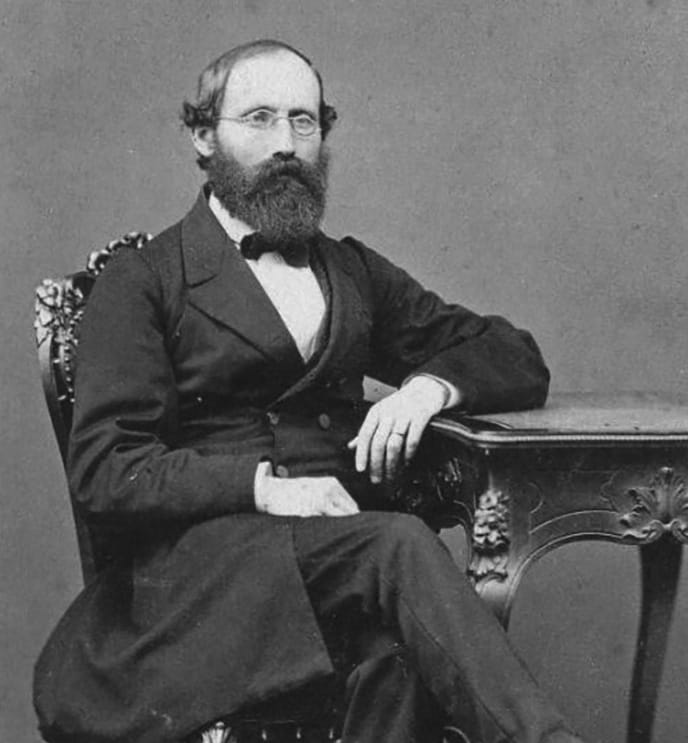
Therefore, we restate the notion of cardinality in our own terms, referring the reader variously to both Cantor’s 1880s and 1890s writings and to the comparison of Riemann and Cantor, in which the reader can adequately satisfy himself or herself of the fact that we have competently represented the sort of notion which Cantor actually describes (and developed).[14]
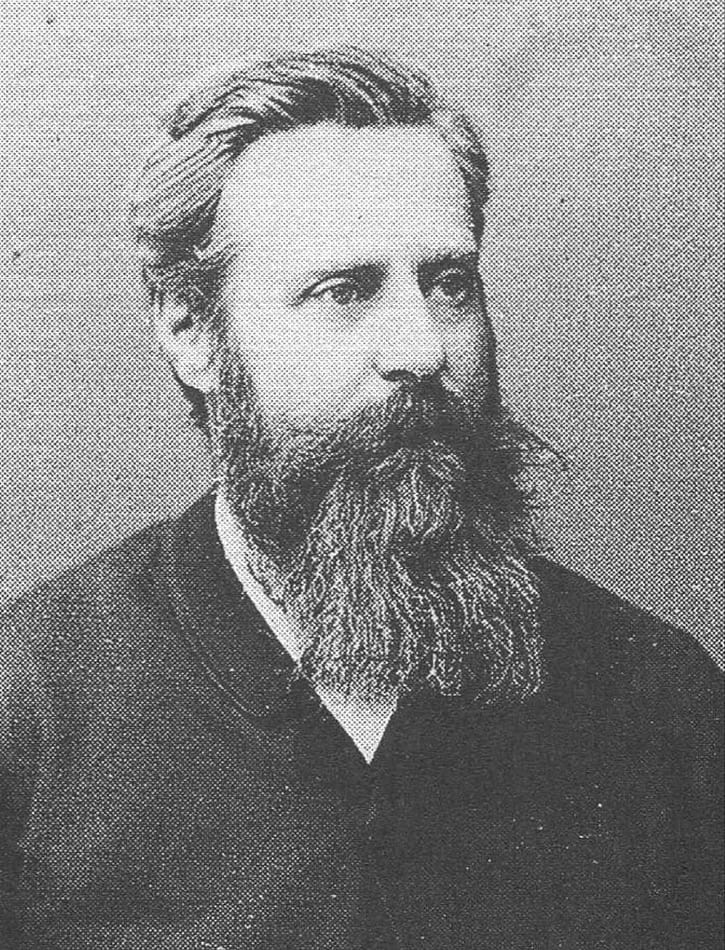
The notion of transfinites is not a matter of number-theoretical domains of “mathematical logic”; it is not a matter of the domain of “pure mathematics.” The notion of transfinites is a notion belonging to the domain of Riemannian physics. The influence of the work of Karl Weierstrass and Riemann on Cantor’s work,[15] and the internal features of his Grundlagen permit no doubt of this, even in the narrower approach to the matter which treats the notion of transfinites as a discovery by Cantor—rather than as an existent reality which existed whether or not Cantor had discovered it. In formal language: the determination of transfinites belongs exclusively to the “non-empty sets” locatable within Riemannian physics. It is the physical significance of definitions, and so forth, which must be stressed at each point, if we are to avoid the “he-goat milking” sort of spectacle to which I have referred above.
Arrays of events whose character and ordering is probably expressive of some aspect of coherent causality are subject to conceptualization as representatives of distinguishable sets. This notion is analogous to the notion of “point-sets” in a generalized notion of a projective physical geometry. One does not mean a Euclidean or non-Euclidean model of physical geometry; one means, in the most general sense, the broad notion of physical geometry remaining to us after we have stripped away all notions of aprioristic dimensionalities, and all notions of axiomatically scalar measures of “irreducible parameters.”
The notion of a set so defined is associated most immediately with two qualities. One quality is that of the quality of events as such, or, more exactly, the quality expressed by the methods of judgment we have employed to distinguish such phenomena as reflecting the same quality of causal coherence in physical sub-space. The other quality associated with a set in physical geometry is that of the ordering of the events of a coherently defined quality. The combined quality and ordering-principle associated with that notion of phase-space is the notion of cardinality.
In the simplest cases of ordering, speaking conceptually, we simply count the order of integrating the same quality of events, giving an integer-series of ordinal numbers. Whenever, in such a simple case, we have exhausted the number of things available to us to be counted in this way, we have, relatively speaking, completed the set by counting. Under that condition the experimental implication is that the number of things aggregately included in this counting-operation stands in that way, and that way alone, for the completion of the set as otherwise defined by the physical notion of cardinality. Thus, that kind of correspondence is established between a definite integer and the notion of cardinality.
That being the case, the correspondence between any counting-number and any physical notion of cardinality is entirely determined in the physical domain, and cannot be found in any way in the metaphysical nature relative to physics of abstract number-domains.
The problem becomes more complex, and more profound, as physics obliges us to discover new kinds of number-orders for counting events in various kinds of physical processes. We find that Euclidean algebras (combined Euclidean geometry and associated numbering systems) carry us only so far. As long as the physical phase-space notions involved admit of “straight-line” extension and scalar notions of axiomatic measure of extension (including symbolic representation of actions, events), the number-systems required can be elaborated without crisis. Although the addition of rotation to the system, as uniform, or uniformly determined rotation does in fact produce an implicit qualitative change, a revolutionary overturning of what is often termed Newtonian physical space, the additional class of numbers can be added without formally overturning the aprioristic models as a whole.
The physics and mathematics of the Carnots, Fourier, Cauchy, et al., whose direction is underlined by Gauss’s thrust toward making physics the determinant of formal mathematics (non-Euclidean geodesy), lead us directly into the work of Weierstrass, Riemann, and Cantor. The different classes of numbers required for different kinds of physical-geometric sets bring us to a point at which things must evidently be sorted out.
The summation of the situation is as follows. At that point in the efforts to define a comprehensive notion of physical function, the problems of physics were reflected as correspondences into the accumulated conventions of numbering. These were manifest as different kinds of numbers. These distinctions, associated with different kinds of physical-geometric sets, defined different kinds of numbers, classes first approximated as integers, rational numbers more broadly, irrational numbers, transcendental numbers, all of which taken together had a Euclidean-like physical geometric explanation for the Lagrangian model, although not the Newtonian model. Abruptly, to make the whole business more challenging, but also more definite, Weierstrass, as well as Riemann, proved the principle of countable (in principle) discontinuities.
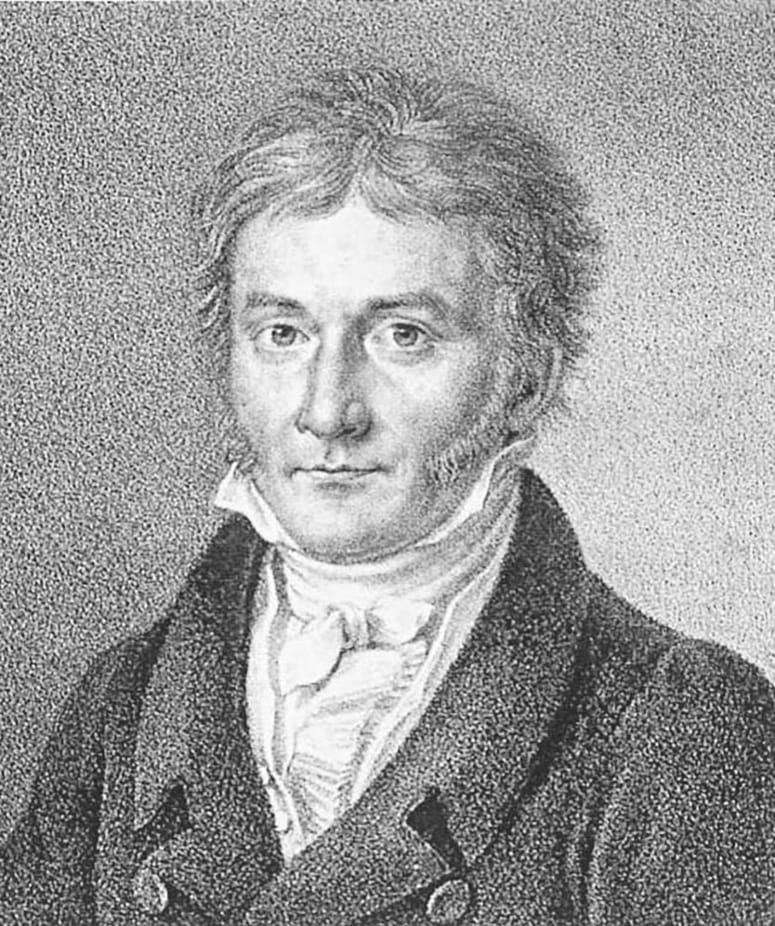
Naturally, the more primitive idea of attempting to order numbers generally, so as to include all possible numbers of all kinds, was associated with the assumption that continuous lines of homogeneous-extension qualities existed axiomatically. This (mistaken) assumption implied that the problem could be defined as that of attempting to prove, in principle, that a counting-system (of ordinals) existed through which one could systematically generate all the numbers required to fill up all the “in-betweennesses” along that homogeneously extended line. If this is looked at from the axiomatic standpoint of “pure mathematics,” assured insanity probably will be the ultimate result. From the standpoint of Riemannian physics, the same heuristic definition of the problem increases sanity. It helps to face the reality that primary extension does not correspond to simple, homogeneous extension of the kind associated with scalars.
There is no competent basis for arguing against the judgment that Riemann’s habilitation paper expresses the essential discovery needed to solve this and related, implied physical problems. The question is not one of how numbers are ordered; the question is one of discovering how the actual ordering of the universe causes us to require ourselves to develop number systems in the manner we do.
We should underline again: cardinality is not a property of number-systems as number-systems per se. Cardinality arises as a reflected correlative of numbers through the actual cardinalities of our investigations of the physical processes to which we apply ordinal numberings. The number “five” in the statement, “There are five,” does not arise from the number as an integer, but from the fact that physical reality instructs us that we have finished counting. Agreed, some people might prefer to attribute an alternative dictionary meaning to “cardinal numbers”; those people are not discussing the concept “cardinality” debated, so to speak, between Russell and Cantor. Hence, their dictionary-nominalism is simply irrelevant babbling.
From the standpoint of Riemannian physics,[16] it is the relationship among physical sub-spaces of differing cardinalities that is “interesting.” The singularities defined by the conceptual and also physical intersection of sets of differing cardinalities determines definite sub-cardinalities. This approach to the matter enhances our critical faculties of judgment of physics, by enabling us to think in a rigorous and orderly manner about the way in which we proceed in the formation of hypotheses, and the conduct and judgment of corresponding experiments: How we put differing cardinalities (processes as qualities) into physical conjunction to arrive at determined, countable results. The countable result, the conjunction of the distinct processes in physical reality, is a sub-cardinality.
Looking at number-systems in this way, we arrive at the most useful result: when certain conditions arise in the application of counting-processes to observation of experimental results, these conditions inform us that a new qualitative condition has been introduced into the observation—either by the processes under investigation, or by the observers’ projecting some judgment into the observed domain. We discover, by understanding the way in which we direct the development and application of counting-systems, how our physics and related practice is reflected in the way in which the employed number-systems behave.
The most basic distinctions of cardinality are the distinctions in existing knowledge among inorganic, organic, and the domain of reason (reason as rigorously defined). We readily distinguish nowadays between living tissue and non-living processes. We also distinguish the scientific discovery which uniquely reflects the quality of reason from those forms of dog, paramecium, and hominid behavior which coincide with biologically determined animal or animal-like behavior. That distinction defines the notion of quality of event. By examining the way in which these are ordered, we note that Newtonian-Maxwellian physics defines the characteristic of the inorganic domain to be entropy, and the characteristic of living tissue and human reason to be negentropy. We also note that the combination of reason and negentropy is different from the combination of mere living tissue and its negentropic properties. Thus, the three define three distinct cardinalities, and three mutually exclusive number-systems. Yet, all three domains are mutually efficient (causally), and so multiply connected.
We also discover that such kinds of qualitative distinctions in domain also occur as subdivisions within the inorganic domain. Thus, and in related ways, we arrive at the Riemannian generative principle (n + 1), determining the characteristic of any domain to be associated with a measure of its potential-actuality for generating a higher-order domain.
Riemann’s fundamental hypothesis is made clearer from the standpoint of Cantor’s Grundlagen. Cantor’s determination of the transfinite, and the ordering of transfinites, aids us in purging the mathematical aspect of our thinking about physical processes from the superstitions of aprioristic notions of space, time, mass, and rotation. With aid of Cantor’s approach, we not only generate successive orders of transfinites in the obvious way, but see that such a first series of ordered transfinites is itself an ordering from which higher-order transfinites are generated.
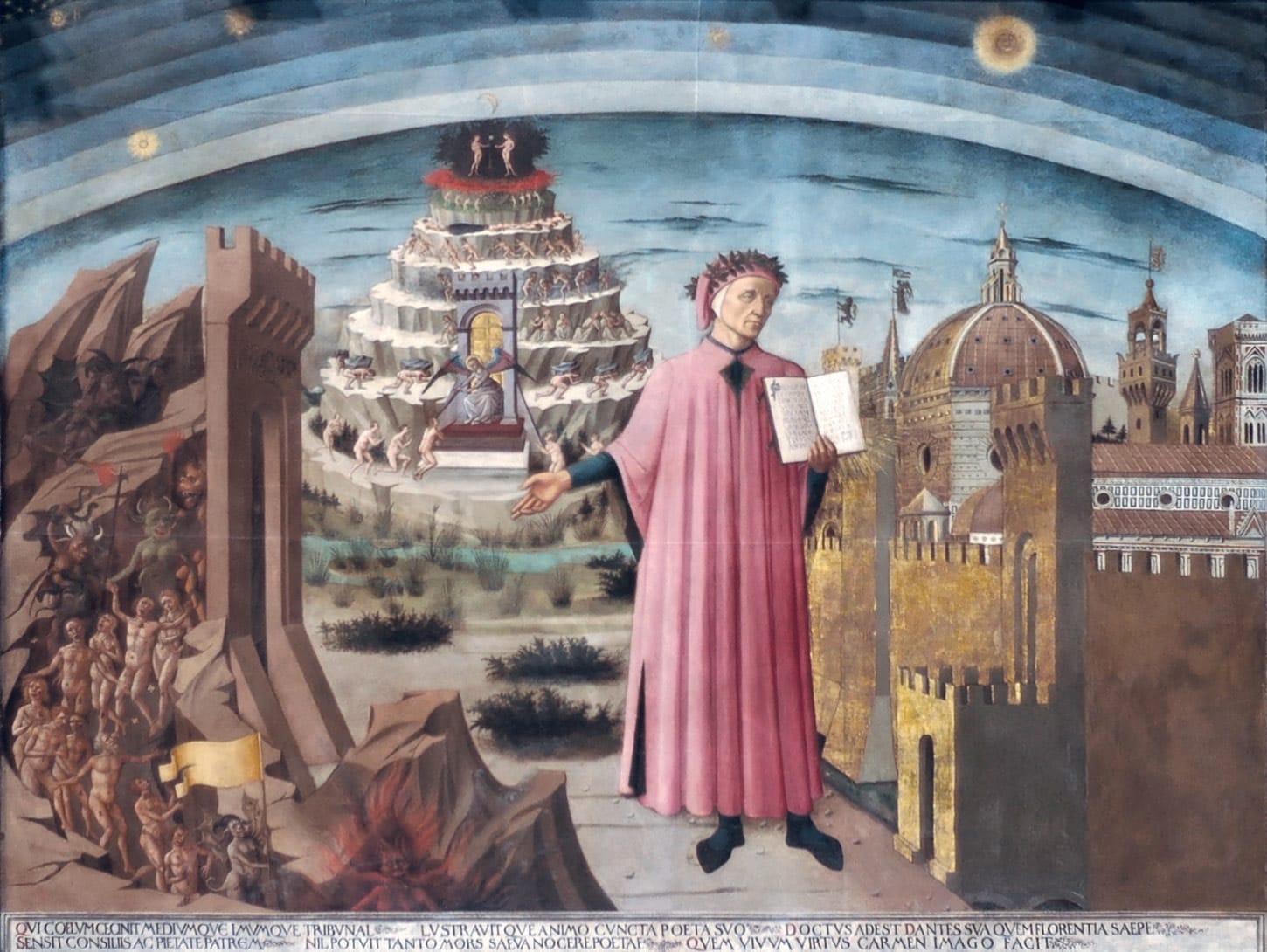
Dante Alighieri’s Commedia is perhaps the most accessible demonstration of the validity of the notion of such transfinites and their ordering. The Commedia, compared with the notion of the cardinalities of inorganic, organic and reason in physical processes generally, demonstrates fully the required basic proof for both Riemannian physics and the notion of cardinality employed by Cantor.
The Physical Geometry of the Commedia
The unthinking person, having arrived at a certain location, and asked how he arrived there, probably responds by measuring the distance he has most recently traveled. He does not think of any of the interesting implications of being so questioned. The same point is illustrated by a commonplace kind of dispute among travelers; one uses a map and interprets any directions received from the standpoint of the knowledge of the map. (Of course, one must verify the map before adopting such an approach with too much confidence.) Another insists, “Simply ask directions.” The latter sort of traveler does sometimes, to my perpetual amusement, arrive at his or her destination. A well-ordered life is one which has spent much of its efforts not merely in using maps, but in improving various sorts of maps, or making maps of terra incognita. “How did you arrive here?” to such a person implies all sorts of gratifying reflections: “Is this the place I chose to arrive to at this juncture in my life, should I be elsewhere, how was I guided to this place, how did I choose the maps and method of reading maps which guided me here, did I contribute, by what method, to modifying the map which guided me here?—is this a place to have reached, to remain?”
The “what” of anything is readily boring; it is the “how” and “why” that are fruitful, and therefore of enduring fascination.
To restate the leading proposition here. The notion that the mathematics of physical science is essentially a product of logic, is like saying that the essence of human sexuality is derived from the mechanics of masturbation: if the principled-masturbator cult-followers of Michel Foucault would only be more consistently principled, in a generation we might, happily, be rid of them. The idea that any important “property” of mathematics could be derived from a lattice-system of theorems derived from an abstract axiomatic basis is not merely wrong, but a form of lunacy.
Mathematical physics is a map. This map embodies a determined reflection of the process of investigation and discovery, physics, by which the map has been constructed. The conceptual peculiarities reflected in mathematical physics, and from mathematical physics into formal mathematics, are reflections of qualitative peculiarities either in lawfully ordered physical processes, or additional peculiarities reflecting the condition to date of the process of human investigations of such processes. The function of looking at mathematics in a most-rigorous, epistemological manner, is that of accounting for the way we have reached that state of affairs—it is also a sanitizing activity, an activity through which we remind ourselves of the conceptual-physical processes which are the reality merely reflected in the map we call mathematical physics.
It is proper and useful to regard the three principal sections of Dante’s Commedia as three distinct cardinalities, which cardinalities we designate by the sub-scripts, n, n + 1, n + 2. n is the characteristic (invariance) of thought and behavior in the successively ordered cantos of the Inferno. n + 1 is the characteristic of Purgatory. n + 2 is the characteristic of Paradise. The self-development of the progress of Dante’s observation in Inferno is represented by the way in which the determined conception of a preceding canto is nested within a succeeding canto, but to the effect of a more adequate realization of the principle n. This leads to the Pit, which Pit is a crucial demonstration that the Inferno and its organized-principle n are to be superseded for some other organizing principle. The same occurs in Purgatory, leading through the self-elaboration of n + 1 to the reductio ad absurdum of Earthly Paradise. This leads to the adoption of a new invariance, n + 2, within Paradise.
The Commedia as a whole thus represents a process of self-development expressed by successive characteristics, cardinalities, n, n + 1, n + 2. These cardinalities have, as a succession, a higher cardinality, which we designate as א. The Commedia’s development reaches closure at the point of the empyreal, concluding canto of the Paradise, at which the determinate conception flowing from self-development of n + 2 has achieved correspondence with א. This notion is identical with the Platonic hypothesis of the higher hypothesis (e.g., Timaeus), which is in correspondence with the notion of fundamental hypothesis as identified by B. Riemann in his habilitation paper.
This א/n + 2 cardinal correspondence corresponds, inclusively, to the perfection of the hypothesis of the higher hypothesis—to the effect that this form of human scientific knowledge is in correspondence with that underlying, lawful ordering principle which has caused the biosphere to emerge from the inorganic earth, and the development of human reason to emerge, through the emergence of man, from the self-development of the biosphere.
The practical function of that view of the Commedia in respect to physics is that once we know that the universe, as a process, is lawfully ordered in this way, we apply this knowledge of the nature of lawfulness to bring better order into the formulation of hypotheses for correcting, expanding, and qualitatively advancing physics, and for simultaneously bringing improved insight and methods to the map-making and map-reading activities associated with mathematical physics.
Epimenides probably did not lie. At least, if Epimenides were expressing the standpoint of the Ionians and Eleatics, the statement by a Cretan, that “All Cretans are liars” would be offered to an audience with indifference to the practical, factual point of whether or not Cretans have a cultural disposition for being liars. Such a statement would be a pedagogical device used by a Cretan teacher to make an important point: that the principle of cardinality is in itself not an ordinal number, and yet cardinality exists all the more powerfully and actually because of that: Existence is not a predicate.
Hence, Bertrand Russell, who was not a Cretan, but only another lying, individual enumeration of the breeding and nurturing practices of the British oligarchy.
The Methodological Importance of Cardinality
After reflection on the completion of the preceding section, I have elected to attach this second part to it directly, rather than making the following development the basis for a brief, second, related article.
The preceding section has special circumstances, on which I briefly remark here. For the reasons I shall promptly identify, that portion of the article was delimited in outline to a thematic point and “plot” I adopted during 1959, when such an article was first projected. Although I employed the predicates and improved wisdom of current practice in the elaboration of the argument, the argument itself is that of 1959. I kept myself within those confines because the point as defined during 1959 is good and useful for present needs, and because I saw a useful purpose in so paying my dues to my past of 20 years earlier.
That point is better made if I now situate it for practice in the way which follows. I have decided that it is better to incorporate the complementary article within the continuation of the first, to so prevent the important connections from “falling between the cracks” between two separate articles.
I have already stressed in other locations, that there is more than a mere analogy between certain features of “wave phenomena” in physical processes and crucial features of social-political processes. Just as important kinds of waves determine the behavior of the participating particles, and not the other way around, so certain aspects of institutionalized social life determine the thoughts and actions of members of society, rather than the members determining aggregately the policies and impulses of the institutions.
“Democracy” in the sense of the term associated with Jeremy Bentham is among the more monstrous hoaxes foisted upon recent centuries. In a Benthamite form of democracy, the behavior of individuals within the most “ultra-democratic” institutions is determined dictatorially to a degree which warrants equation of the terms “democracy” and “tyranny.” The old argument is that excessive democracy leads to an ensuing tyranny; in reality, overt tyranny is simply a coming-to-the-surface of the tyranny already fully established in any Benthamite “democratic” form.
The key issue here, as I have emphasized earlier, is that in a democratic-republican form, the individual republican’s judgment is focused efficiently on the interests and policies of the nations and their institutions as a whole. It is these policies which determine what the actual circumstances of the nation and of individual life within that nation may be. When this individual’s republican outlet is nullified, either entirely or to a large degree, the individual falls back to the level of heteronomic appetites and impulsions of either the small group or even the mere, isolated family or individual. By a demagogic playing upon the individual’s heteronomic appetites and impulses, the tyrant appears to be a true “democrat,” while in fact being largely free to do as he pleases with shaping the fate of the nation, and hence the circumstances which confront the individual.
By prompting the duped individual to adopt the myths, the deluded ideologies of Benthamite “democracy,” the tyrants cause the citizens to blind themselves to the very existence of the principal issues which determine the conditions of the nation and of individual life. The demagogues, by insisting that the very notion of a larger, higher, national interest is “undemocratic,” “oppressive of the individual’s impulses,” set the foolish dupes into hostile opposition even to the idea of considering the actual determinants of their individual circumstances.
There is a direct and most meaningful correspondence between the “sociology” of Newtonian physics and the “physics” of Benthamite social theory. In Benthamite ideologies, the deluded individual imagines that national policies ought to be determined “pluralistically.” He or she imagines, however foolish this may be in fact, that a “social contract” among heteronomically-competing local individuals and groupings is the proper determinant of those episodic postures and practices which national policy at that moment should rightly be. Analogously, in Newtonian pseudo-physics, it is assumed that the interactions of particles determine the wave-formation as a mere construct of autonomous particle interactions. Just so, Russell’s wild, reckless constructions, on the borrowed basis of Gottlob Frege’s bowdlerization of Cantor’s notions, hysterically deny the existence of the universal in the domain of mathematical physics.
Russell, et al., base this hysterical denial upon the presumed axiomatic authority of mathematics, for the condition that mathematics is reduced to what are regarded in that view as its essential features, to a mere logic. Since the axiomatic structure of this mathematical logic presumes, nominalistically, that the universe is unknowable except to the extent it is axiomatically a mere aggregation of self-evident “fundamental” particles, Russell and those like him are able to appear to prove that the universe must be of the reductionist form—since “mathematics proves this to be the case.” In fact, it is the opposite of this which is true. If the universe is once demonstrated, by crucial-experimental evidence, to include wave-phenomena of the sort Leibnizian and Riemannian hydrodynamics specify, then the entire edifice of mathematical lattice-theorems collapses in total bankruptcy.
The question of whether “universals” exist is a question of physics, not abstract mathematics of the sort adopted by Russell et al. Once the Riemannian character of the universe is crucially demonstrated in a single case, it follows that the entirety of mathematical logic is incompetent, and that the ordering of mathematics must be governed from the standpoint of Riemannian physics.
Despite complications arising from Cantor’s vacillations under monstrous “brainwashing” sorts of social pressure, through Kronecker and Kronecker’s evil accomplices, Cantor’s development of the notion of the transfinite is the kernel of the approach needed to reorder mathematics in accordance with Riemannian physics. Ironically, but not accidentally, the kind of cardinality Cantor defines is in correspondence with the principles of republicanism. The notion of cardinality makes primary for knowledge those aspects of processes (quality, ordering-principles) which determine the individual elements (events, etc.) subsumed by that cardinality.
This correctly implies, as we have also developed this point elsewhere, that there is a necessary connection between the way in which one’s mind views social processes, and the way one’s mind sees physical processes. This is complicated by the fact that most educated persons are of two minds (one public, the other private), such that a man or woman may be rational in job, professional work, and so forth, and an irrational, virtual infant in those categories of practice his or her mind associates with “personal” or “family” life. Essentially, insofar as the individual’s mind sees social reality as a matter of relations among biologically self-evident individuals and self-evidently individual objects, the sort of mathematical-logical assumptions solicited by Russell et al. seem to agree with the axiomatic organization of social life, and hence the organization of social practice.
The problem, of developing a greater incidence of truly creative physicists and so forth, is not merely a matter of pasting advanced education and other professional training onto the public-personality exterior of the individual’s mind.
The essential obstacle to comprehension of the actual, known organization of physical processes lies in the fact that most physicists retain an infantile residue of heteronomic individuality within them, that they view knowledge, rationality, as a means for egoistical command of the world in a more rational, rather than relatively irrational way. They assimilate rationality in such a way, in such a form of organization of knowledge, that it does not violate essentially the heteronomic requirements of the unresolved nest of individuality within the Kantian organization of their personalities. Hence, their susceptibility to belief in the axiomatic validity of an axiomatic mathematics which is in fact contrary to the experimentally-manifest organization of our universe. It is this sort of psychological problem which is the most essential of the obstacles in the way of developing a more numerous body of creative scientists.
As I have repeatedly emphasized in other locations, the special advantage of the creative scientist is that a succession of single basic discoveries by an individual scientist transforms, potentially, the entirety of human practice for the better. The scientist who recognizes this connection has an empirical basis to regard himself as a personality of immortal importance to his species, because of the self-development of his creative-mental potentials. Once that connection is made, the scientist regards his or her sensual needs merely as necessary mediation of his existence, but locates his existence in the self-development and fruitful exercise of his creative-mental potentials—for humanity generally. This shift in the sense of innermost identity, away from the sensual residue of infantile impulses, to the self-development of creative-mental powers, is the change in inner state of mind which distinguishes the kind of thinker who can make the sort of leaps scientific problems before us require.
To such a personality, such a suitably informed personality, Riemannian physics and the kinds of notions associated with the concepts of transfinite and cardinality in Cantor’s work are readily comprehended, and contrary views immediately recognized as pathetic.
This is crucial to my own fundamental breakthroughs in economic science. Although, in a certain sense, I was better-educated than most persons of my generation, this was not in the conventional sense of education then prevailing. Rather, because I comprehended the sort of shift in location of sense of personal identity I have summarily described here, I was relatively freer of the mental obstacles summarized by the putatively best-educated, most advantaged professionally among my contemporaries. It is the ability to think certain crucial kinds of conceptions, because one is relatively free of the Kantian (or worse) sort of social-mental blocks which I have indicated, which determines one’s ability to develop one’s mental powers in that direction. To make important discoveries, and to master conceptually for practice the most important qualities of conceptions, one must “give up” one’s attachment to the “little, inner me” which sets “my family and personal needs” into opposition to the general needs of humanity, of our nation as a whole.
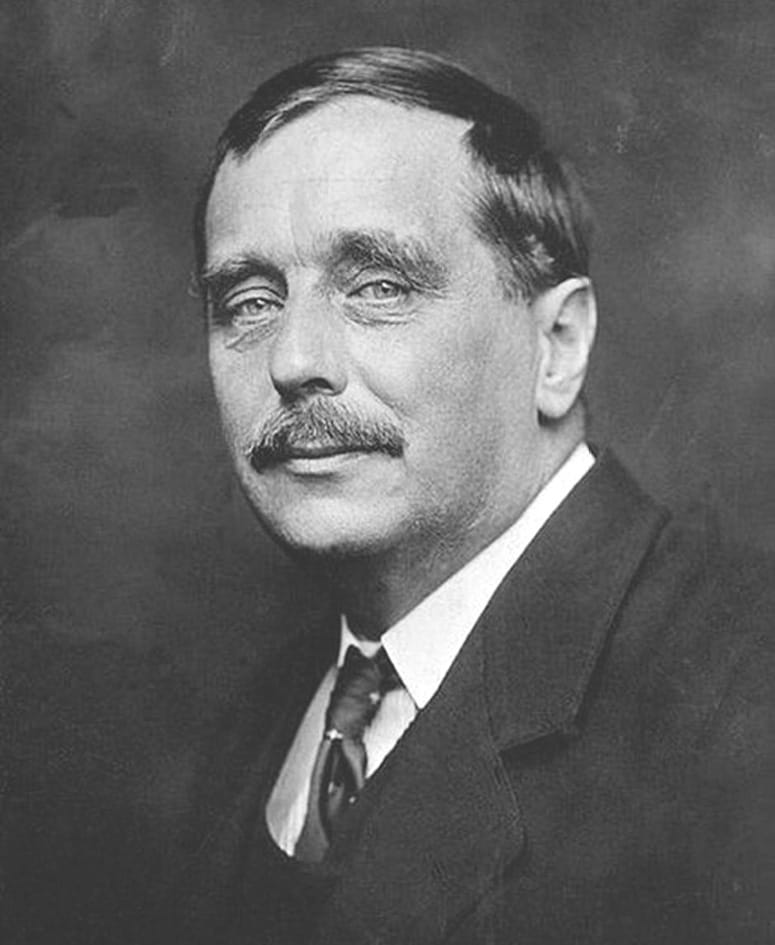
Although credulous fools and badly misinformed persons tolerate the hoax that Bertrand Russell was essentially a “gentle humanitarian,” exactly the opposite is true. Russell was all the “self-centered egoist” and much worse, Wells described him to be in 1934. This wicked, irrational person could not tolerate the subordination of his heteronomic individuality—his freedom to masturbate in public, if he so chose—to any external authority. He hated the nation-state; he hated scientific and industrial development—he hated with all the insanity he suspected himself to embody anything which embodied institutionalization of the “tyranny of Cartesian-Leibnizian reason” with respect to himself or individuals like himself. Russell wished a world without nation-states, a world in which each person’s irrational, sensualist—infantilist—individuality would be at the greatest liberty.
Key to Russell’s “humanitarianism” are the cited three proposals he advanced in the course of the 1920s: scientific progress must be halted; language must be changed to become an efficient instrument of social mass-control; new, synthetic drugs must be developed for social mass-control. This is your “libertarian” Russell, your ultimate anarcho-democrat for you.
Russell’s One-Worldism did not signify concern for the world of humanity as a whole. It represented a determination that there should be no world as a whole, but only a kind of borderless wildlife preserve for gurus and drugged zombies of the sort which he, in alliance with Aldous Huxley, Robert Hutchins, Gregory Bateson, Kurt Lewin, Karl Korsch, and Margaret Mead contributed so much to propagating.
The notion of cardinality is not a debatable matter within formal mathematics. It is a reflection, into the domain of mathematical physics, of the difference between humanity organized as humanity (cardinality) and the beast-like degradation of mankind in an order, without universality, of the sort Russell and the 1920s Oxford generation of faggots sought to create.
People who do not think—whether in physical sciences or social, political practice—in terms of the principles of cardinality, simply cannot yet think through any important matters.
Notes
- Bertrand Russell, Principles of Mathematics, New York: W.W. Norton, 1903.
- Bernhard Riemann, “Über die Hypothesen, welche der Geometrie zu Grunde liegen” (“On the Hypotheses Upon Which Geometry Is Based”), 1854.
- E.g., Lyndon H. LaRouche, Jr. “New Dark Ages Book Makes Progress,” New Solidarity, Vol. 9, No. 94, Feb. 2, 1979.
- Bertrand Russell, The Foundations of Geometry, 1897.
- Op. cit.; also, Bertrand Russell and Alfred Whitehead, Principia Mathematica, New York: Cambridge University Press, 1912. This theme is dominant throughout Russell’s writings on philosophical issues.
- James Clerk Maxwell, in an 1877 letter to his friend Garrett in The Scientific Letters and Papers of James Clerk Maxwell, Cambridge: Cambridge University Press, 1990.
- Bertrand Russell, The Autobiography of Bertrand Russell, Boston: Little, Brown, 1944.
- H.G. Wells, Experiment in Autobiography: Discoveries and Conclusions of a Very Ordinary Brain, New York: Macmillan, 1934, pp. 654-55.
- The image is that cited by Immanuel Kant in his Critique of Pure Reason.
- Lyndon H. LaRouche, Jr., “Physics and Economics,” and Uwe Parpart, “The Concept of the Transfinite,” The Campaigner, Vol. 9, Nos. 1-2, January-February 1976.
- Georg Cantor, Contributions to the Founding of the Theory of Transfinite Numbers, P.F.B. Jourdain. trans., “Introduction,” New York: Dover, 1952.
- Georg Cantor, Foundations of a General Theory of Manifolds, The Campaigner, supra footnote 8; Jourdain, op. cit., cites this with some distortion, pp. 68-69.
- Parpart, supra footnote 10, on Kronecker-Cantor dispute.
- Supra footnotes 10 and 11.
- Parpart, op. cit.
- My outline of Riemannian physics is given in various other locations, and the special authority for my views on that is given in various locations, such as “The Theory of the European Monetary Fund,” Executive Intelligence Review Supplement, October 1978. These references are assumed for the argument respecting physics given throughout the conclusion of this present text.