Editor’s Note: This article was first published in EIR, Vol. 30, No. 22, June 6, 2003.
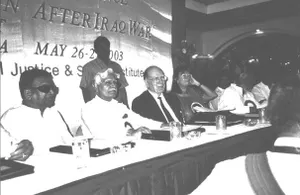
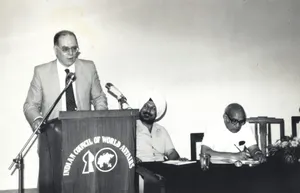
This summary was prepared by Lyndon LaRouche for circulation at the May 26-27, 2003, international conference in Bangalore, India, titled “World Situation after Iraq War.” The conference was sponsored by the Center for Social Justice and the Schiller Institute, and was attended by 260 prominent individuals from different countries. At the end of the conference, after intense deliberation, a statement was issued named the Bangalore Declaration.
May 18, 2003—In the aftermath of the recent, U.S.A. war against Iraq, the world has two broadly defined choices for the present course of history: Either there will be an inevitably disastrous continuation of the policies leading to the recent U.S. break from the proceedings of the UN Security Council; or, the more hopeful prospect, the prospect of measures adopted to reverse the presently accelerating economic collapse of the presently bankrupt, global, floating-exchange-rate, financial-monetary system. That much said, I shall now address certain of the more important difficulties which must tend to arise even in the efforts which I have proposed, to establish a more just, peaceful, and profitable new world economic order within a global community of perfectly sovereign nation-states.
For example, it has been suggested, with a touch of humor, that if India’s computer software were combined with China’s computer production, those two economies would dominate the world market for that class of combined product. That witticism properly implies, that any successful program of long-term economic growth in Eurasia as a whole, will be based on an orientation toward replacing the formerly, popularly traditional notions of income from financially competitive export of finished products and engineering installations, by a scientifically more refined concept, of profit as derived primarily from technology sharing as such.1 That change, while positive, must overcome certain old habits which would tend to ruin its implementation.
However, as I shall indicate here, this shift in conventional economic thinking, toward primary emphasis on technology sharing as such, poses the need for considering some very important, evolutionary changes in the cultural relations between today’s globally extended European civilization and the peoples of East, Southeast, and South Asia. When we consider the weight of the sheer size of the population in the potential market represented by the growing populations of South, Southeast, and East Asia, failure to address the implications of this cultural challenge, could become a principal impediment to a globally successful economic recovery.
My conclusion here shall be, that understanding the role of separate national cultures in effecting technology transfer, shows us that, happily, the age of the sovereign nation-state has not ended. On the contrary, with the present world crisis, we have barely reached the historical threshold of the sovereign nation-state’s most flourishing expression as the foundation of a global system of such nations. Consider the following evidence, and then study the function and consequences of technology sharing in that setting.
In the meantime, the possibility of a general economic recovery from the presently ongoing self-collapse of the present monetary-financial system, requires a return to the kind of fixed-exchange-rate, regulated monetary system, under which enormous volumes of long-term credit of up to twenty-five to fifty years maturities, are available at basic simple-interest rates of between 1-2%. The credit so required for this global economic recovery, can only be generated, chiefly, by the sovereign authority of perfectly sovereign nation-states. The thrust of investments which set the recovery fully into motion, will be supplied, initially, through large-scale investments in expansion of basic economic infrastructure; that, in projects which are, in many cases, multi-national undertakings. Without that change from the present, 1971-2003 world monetary-financial system, no general economic recovery were possible at this present juncture.
This reform will feature vast physical expansion of investment in generation and distribution of power, of water resources development and management, of massive water management programs, forestation and of other natural improvements in the Biosphere, mass transport systems, renovated and new urban and urban-rural complexes, and in health care and educational systems. This development of infrastructure will stimulate large increases in useful employment, which will therefore be a gigantic and increasing stimulus for the growth of private entrepreneurship, and will move at accelerating rates, into high rates of technology transfer.
For example, Asian nations such as India and China, will tend to take an initially leading role in generating technologies which will be incorporated in production for export by European economies such as Germany, France, and Italy. The successful reintegration of the railway systems of the Korea Peninsula, would be of crucial importance for emergence of a most significant North Asia (Japan-Korea-Russia-China) component of Asia development. Russia has a vast repository of left-over achievements of Soviet science, which lend themselves to development as part of three-direction technology-transfer potentials: with China, India, and Germany, for example. A general, even kaleidoscopically evolutionary pattern of layered, national, specialized, primary and secondary roles, as exporters of expanding repertoires of technologies, will emerge under the impetus of large-scale economic development in such regions as the internal frontiers of Asia.
The focus of my attention here, is upon the qualitative changes in economic relations among nations of differing cultural characteristics and patterns, changes which must emerge under the impact of this qualitatively increased role for technology transfer as a quality of reciprocal export among both formerly-“industrialized” and “developing” economies.
In broad terms, the foreseeable physical-economic relationship among the economies of Europe and Asia, should be studied by focussing attention on the increasing significance of the emerging relationship among the four principal divisions of Eurasia as a whole. These divisions are: first, Europe as the typical center of radiation of modern technology; second, the growing populations of East, Southeast, and South Asia; third, Southwest Asia’s Middle East; and, finally, the great concentration of mineral and kindred resources located in the vast, undeveloped, now thinly populated regions of Central and North Asia. I shall indicate, at a suitable, later point in this report, why it is the relationship of a Eurasia so defined, to the Americas, Africa, and Australia–New Zealand, which will determine the future state of the world as a whole.
Now, concentrate for the moment, on the generality of the current political, economic and cultural relations within Eurasia as I, a world traveller from Washington, D.C., see it.
From this spectrum of opportunities presently before us, consider the third case. Bringing a durable internal peace to Southwest Asia, creates the opportunity for that region’s economic development as a productive, seaborne and land-based2 crossroads, from the Mediterranean to the Indian Ocean, a crossroads functioning as the key link of Asia to Africa’s development, and as a crucial flank for the security of the regions of Asia immediately to the East. Meanwhile, during two generations to come, the emerging, dominant feature of Eurasia’s development as a whole, will be the pivotal role of the rational, technologically progressive development of the great geological and related regions of Central and North Asia as a growing supplier of materials to the great population centers of East, Southeast, and South Asia.
Already, in a politically sane world, East, Southeast, and South Asia represent a growing potential for supplying technology among one another, and to and from Europe. More and more, the tendency should be, that instead of the export of relatively high-technology goods and services from Europe and the U.S.A. into Asia, future trade will be dominated by a two-way flow of technology as such, in both directions. If there is to be a durable economic recovery from the presently accelerating crisis of the present world monetary-financial system, we shall then see that the improved products and improved production techniques of the future, will become, more and more, the combined effect and fruit of an increasingly complex, and scientifically progressive technology sharing, flowing simultaneously from both East and West.
This technology-sharing process will require, and will be accelerated by many great and lesser programs of building and maintaining basic economic infrastructure. New land areas must be developed for habitation. Great projects in mass transportation, water-management, generation and distribution of power, and well-organized urban centers, will be needed to provide for populations, and to make possible increased per capita productivity. The great transportation routes across Eurasia must bring into being new urban centers, and new agro-industrial regions, and production along trunk routes of transport. This development will serve as both the goad and the means for management, of the otherwise poorly accessible but great raw materials resources of Central and North Asia.
The Cultural Impact of Economy
For reasons I shall identify here, such changes in the physical economic relations within Eurasia, demand a corresponding development of the individual within society. Such changes are reflected as a continued increase of the expressed need for an improved insight into the relations between globally extended European cultures and the typical cultures of Asia. The growing importance of this new approach to technology transfer, will require a serious rethinking of much presently accepted doctrine bearing upon the deep interconnections between physical science and national cultures.
For example: The continuing, ancient legacies of human slavery, imperialism, and colonialism, define the uncompleted task of mankind to be of service to the principal present and continuing, long-term interest of mankind, to eradicate the traditions under which a relatively smaller number of some human beings have hunted, or herded the much greater number of other human beings as virtual human cattle.
Those presently continuing, predatory traditions are not only wrongful; under present conditions of our planet, they are also deadly for the attempted continuation of a relatively civilized life throughout the planet as a whole. The ability of nations, and humanity as a whole, even to maintain present levels and conditions of populations, requires a continued flow, from discovery of universal physical principles, into resulting bursts of technology, thence into both greater per capita power of all mankind to exist, and that under conditions ever more consistent with that specific and unique nature of all mankind, which sets the human individual apart from and above cattle.
It is those patterns of gains in net productive powers of labor, per capita, and per square kilometer, which pinpoint the role of technology transfer as the primary form of commodity for future mankind.
This change to a form of society essential for sustainable growth, requires a broad, scientific-technological elevation of the quality of individual, family and community life, and of education and employment of the generality of individuals. It also requires those realized increases in net productivity, as realized through applied technological progress, which make it possible, economically, for nations to supply the improved education and physical standard of existence this implies. The society needs the betterment of its individuals, and demands the realization of that potential as rises in rates of physical productivity, per capita and per square kilometer, throughout the society as a whole. The gains so generated, so defined, are the only true expression of national profit.
Nonetheless, that said, at first glance, this might appear to signify little more than physical science and technology in today’s conventional use of those terms. That physical progress is indispensable for freeing mankind from today’s still prevalent social and personal conditions of physical existence. However, the zeal for progress in science and technology would tend to fail again, as globally extended modern European civilization has failed so often in the past, until we take into account, and examine more closely, what Russia’s V.I. Vernadsky identified as that mental-spiritual process which is the essential companion and precondition for true and continuing, both physical-economic and social progress.
The notion of relatively increased rates of technological potential of all nations’ populations, brings us directly into encounter with the crucial contribution to be made by what I shall term “cultural ecumenicism” among the assortments of national cultures within Europe and Asia.
To situate those economic-cultural considerations with respect to widespread opinion today, consider the dominant role of purely fictitious notions of economic value and profit among misguided leading governmental and other institutions today.
Widespread credulity respecting the alleged veracity of contemporary financial accounting practice, is largely responsible for the faddish delusions which have caused, or simply permitted the presently ongoing economic collapse of the post-1971 world monetary-financial system since, notably, the negative economic-cultural effects of the Indochina War began to be felt inside the U.S.A. about 1966. We have but to compare the accelerating, post-1966 accumulation of nominal financial values, in both the Americas and Europe, with the collapse of net physical output and consumption. It is this presently acute discrepancy between merely nominal and physical wealth, which underlies the presently lurching collapse of many, even most of the world’s leading banking and related institutions. The most widespread expression of this mistaken course in the policy shaping of nations and private investors, alike, has been the fallacy of assuming that net national income, or gross and net national product, is to be measured, primarily, as the simple sum of the reported monetary-financial income of individual firms and households.
The simple socialist might respond: “Aha! So, you are proposing that private enterprise is to blame for this!” On the contrary, it is those forms of individual initiative which generate scientific and technological progress, which are essential counterweights against the bureaucratic sluggishness of the combination of habit-weary public institutions and an habituated public opinion’s resistance to change. Under the necessary correction, found in a rational division of economic authority between the state and the private entrepreneur, we have the state assuming responsibility for the welfare of all persons and all the territory, and the entrepreneur, or virtuous rebel supplying the spice of introducing useful innovations within the context created and maintained by the economic and related functions of the state. In this context, it is the creative powers of relatively exceptional individual personalities, whether in government, the indispensable rebel in the large corporation, or the private entrepreneurship, which are the typical, principal source of those actualized, principled innovations by which a real net gain in physical-economic output is secured.
It may seem ironical today, but, on this account, the most successful form of economy yet known, has been what today’s grumpy right-wing monetarists often label the “socialist” American System of political economy. This is the American System as defined by such followers of Benjamin Franklin as Alexander Hamilton, Mathew Carey, Henry C. Carey, and also the German-American Friedrich List. It is the American System of Presidents Abraham Lincoln and Franklin Roosevelt.
Unfortunately, for nearly forty years, since the assassination of U.S. President John F. Kennedy, the American System has not been practiced by the governments or political parties of the U.S.A. A similar downshift has been seen, since the ouster of Germany’s Chancellor Ludwig Erhard, in Europe. These disastrous changes, back to the kinds of monetarist policies which had produced the 1928-1933 depressions in the U.S.A. and Europe, have been increasingly in force since the 1966-1968 presidential campaign of Richard Nixon. Similarly, the quality of educational systems which had trained the qualities of graduates needed for a sound practice of national economy, has been intentionally undermined, and nearly destroyed, in the Americas as in Europe, since the Paris OECD report of 1963 on education. The radically monetarist varieties of “free trade” doctrines have dominated more and more areas of the world, and been applied with increasingly savage force, since August 15, 1971.
So, in Europe and the Americas, since the initial period of change downward, 1966-1971, we have experienced hyperbolic growth of financial and monetary aggregates, but this at the price of an accompanying, accelerating decline in net physical output per capita and per square kilometer. Thus, when one speaks of the alleged, but actually nonexistent success of the U.S. internal economy today, one is referring to purely nominal financial gains, even gigantic swindles; whereas, the physical side of the same economy has been going down, down, down, especially since the radical deregulation introduced under Zbigniew Brzezinski and Paul Volcker, during 1977-81.
The practical conclusion to be drawn from this today, is that money, like Goethe’s “sorcerer’s apprentice,” is an idiot by nature. Hence, the ultimately manifest idiocy of the sundry varieties of monetarists and their recipes for government. Therefore, whenever the American System of political economy was in force in the U.S.A., a wise government carefully regulated the issue and circulation of money, to the anti-inflationary purpose that increase of per capita valuations of financial and monetary volumes shall not outrun the rate of growth of actual physical values produced and consumed. Government should not suppress the creation of credit, as the reckless “fiscal conservatives” do: in ways which obstruct the fulfillment of necessary consumption and growth. Rather, the sovereign state must use the power to regulate currency, to tax, and to employ other protectionist measures, to curb, or even penalize those business and other practices which generate financial gains at the expense of physical improvement of the economy and the general welfare of the nation as a whole.
Science and Culture
This brings us now to the pivotal element of this report: the cultural preconditions for durably successful technology-transfer policies.
To understand the challenge of technology-transfer-based economic processes, we must briefly disturb what have become, unfortunately, the conditioned habits of thinking about not only economics, but also both science and culture generally, as found among even a majority of today’s relevant academics, and also laymen generally. Lack of comprehension of these matters would tend to prevent a much-needed, improved understanding of the sources of avoidable intercultural conflicts. The specific form of danger from lack of such knowledge, is lack of comprehension of that definition of a universal physical principle, upon which a functional economic definition of technology transfer depends.
On that account, as I frequently remind the students of mathematics, for example: the modern mathematical-physics definition of a universal principle was first defined by Carl Gauss’s 1799 refutation of Leonhard Euler and Euler’s protégé Lagrange, on the subject of the Fundamental Theorem of Algebra.3 This Gauss work, which gave us the first approximation of Gauss’s and Riemann’s later, deeper understanding of a strict, experimental-physics meaning of the complex domain, is crucial for introducing university undergraduates, or exceptional secondary pupils to modern science, if they are to gain the proper mathematical-physics notion of what is properly qualified as a universal physical principle.
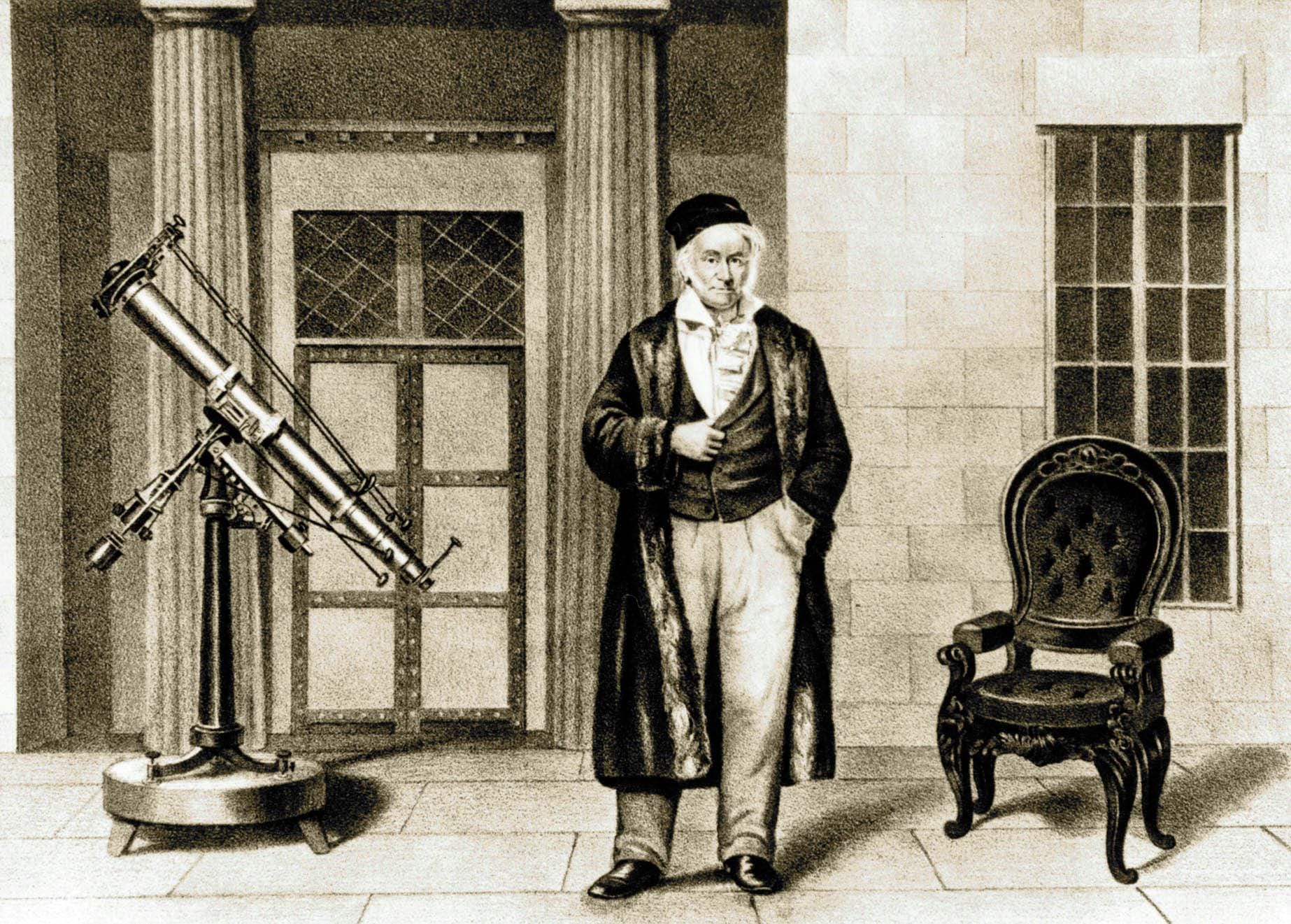
I have emphasized this from the work of my ongoing program for the political education of the 18-25 university-age group. On this occasion, I present a non-mathematical, epistemological explanation of this crucial point. In the following summary, I shall attempt to make clear the practical importance, the urgent relevance of stating this case, to this or audiences representing similar ranges of education.
The ancient astronomers known to us through their calendars and related means, saw the night time sky as observed objects which may seem to be as if painted on a celestial sphere enclosing us all. That, for them, was the universe as known to the experience of our senses. However, our senses are part of our organism; by their nature, what they convey to our consciousness is not the image of the actual universe around us, but our senses’ own reaction to the effects of that unseen universe. What our senses show us, is therefore as a shadow of that which casts the shadow. In mathematical language, this sensually unseen reality is what Gauss identifies as the physically efficient, but mathematically complex domain. Or, as Johannes Kepler showed, in detailing his original discovery of gravitation, in his 1609 The New Astronomy, it was certain measured anomalies in the planetary orbits which led him to recognize that some unsensed intention, which he defined for us as gravitation, accounted for the actual planetary orbits. In response to Kepler’s proposals, we have the unique development of the implications of an infinitesimal calculus, by Gottfried Leibniz, and the treatment of elliptical functions and the complex domain, following the 1799 paper by Gauss.
[[[INSERT GALLERY HERE]]]
LaRouche argues that our senses can not show us the real universe, but only “a shadow of that which casts the shadow.” Johannes Kepler (1571-1630), as documented in his 1609 The New Astronomy, according to LaRouche, measured certain anomalies in the planetary orbits “which led him to recognize that some unsensed intention, which he defined for us as gravitation, accounted for the actual planetary orbits.” This in turn inspired Gottfried Leibniz (1646-1716) to develop the infinitesimal calculus. On the left is a portrait of Leibniz by Johann Friedrich Wentzel. The portrait of Kepler is credited to the Frankfurt University’s Pictures of Famous Physicists.
As Gauss’s most famous successor, Bernhard Riemann, stated the case, Gauss’s principal work, all of which was pivoted on his original definition of the complex domain, was based on a revolutionary overthrow of the notions of a Euclidean or Cartesian manifold based upon “ivory tower” choices of definitions, axioms, and postulates, in favor of a return to the pre-Euclidean, constructive, physical geometry of such followers of Pythagoras as our ancient predecessors Archytas and Plato. Hence, what Gauss and Riemann presented, was not a non-Euclidean geometry, but an anti-Euclidean one, as Gauss’s teacher Abraham Kästner had argued earlier.
The resulting knowledge of our universe, is that of the conjunction of two geometries. One, was the shadow-world geometry of sense certainty; the other, the unseen, but efficient physical geometry defined by those controllable, observed effects, and their associated coefficients, which are associated with crucial-experimental proofs of discovered universal physical principles.
These facts are the clue to today’s least understood, but, unfortunately, most crucial principles governing real economic processes: Why is man able to change the apparent laws of the universe, as no other species—excepting the Creator—could? How did mankind achieve a relative population-density three decimal orders of magnitude greater than any species of great ape? Man, through physical-scientific discovery and experimental control of unseen causes, has already changed the manifest geology of our planet, and is reaching out toward Mars, as no other living species, excepting the Creator, could have done. Here lies the key to understanding and mastering the concept of technology transfer as such.
Without adopting that point of view, there is no possibility of a competent grasp of that current of modern scientific progress traceable through the work of such successors as Leonardo da Vinci, Kepler, Leibniz, Gauss, and Riemann. Without that point of view, their work could be understood only as a form of describing them in a formal-mathematical, classroom-like way, without insight into the underlying physical-experimental, practical nature of the relevant subject matter. This is otherwise experienced, often, as a form of conflict between physicists and widely accepted, “ivory tower” dogmas of the mathematics classroom.
The crux of the lesson for economics is the following.
Mankind’s achievement, in attaining, until now, a global potential population-density three decimal orders of magnitude greater than that possible for great apes, reflects a potential of our species which is lacking in all other forms of life below that of the Creator. This is a potential which is only typically expressed by the ability of the developed mind of the solitary, sovereign individual to detect, explore, and solve those experimental paradoxes of observation which guide that individual either to discover an experimentally valid universal physical principle, or to repeat that discovery made, perhaps, by some original discoverer of such a principle thousands of years earlier. It is the appropriate application of an accumulation of the ability to replicate the discovery of each among such discovered principles by individuals, which has enabled the human species to accomplish all its great leaps of progress.
As the great V.I. Vernadsky emphasized, for example, the power of man to use scientific progress to make cumulative, beneficial changes in the Biosphere, of farming and other types which are not possible for any other form of life, points to a special faculty in man which many have identified as the individual human soul, or as the most essential, spiritual quality of the human being. It is through this faculty, which some of us name a spiritual power embedded in each among us, that men and women are enabled to discover the real universe hidden behind the shadows of sense perception, the universe of the complex domain of Gauss, Riemann, Vernadsky, and their many great, ancient and other predecessors.
This faculty is not only expressed in the forms associated with physical science. It is demonstrably true, that all of those great works of plastic and non-plastic art which could be named “Classical” reflect the same principle responsible for great scientific work. These forms of art, and related productions, have a crucial role in enabling society to share and employ the great universal principles of physical science.
The greatest constitutions and similar works of government also express the workings of those same creative powers unique to all members of our species. The connection of such good works of statecraft to those principles of physical science to which I have referred here, is to be recognized in the distinction of great Classical poetry and drama; that it does not imitate the naive, literal sense certainty of the beasts, but employs such devices as paradox to convey the same kinds of ideas respecting man’s relationship to mankind which good physical science adduces from the individual person’s relation to the so-called material realm. Great government shares with great Classical plastic and non-plastic art, the work of discovering and expressing the principles which should govern man’s relationship to a mankind exploring and improving the universe. Art, and politics practiced according to the principles expressed by great Classical art, embody a domain of ideas reflecting those same powers of the individual mind which generate our knowledge of discovered universal physical principles.
From the broader implications of what I have stated here so far, the success of the great ventures, such as the development of Eurasia, which I foresee before the nations today, depends upon chiefly two principled considerations. First, the importance of seeking to improve the humanizing of work through sharing the benefits of scientific progress, and to develop the individual member of society, especially the young, accordingly. Second, the indispensable role of the perfectly sovereign nation-state, and the further development of its specific national culture and included cultures. Neither of these two is a mere matter of sentiment, nor of any other mere generalities, otherwise I need not have said what I have stated here up to this point.
Without a shift of economics doctrine and practice back to emphasis upon the leading role of scientific progress, these urgently required changes in relations within and among nations could not be sustained. This bears, most emphatically, on the challenge of new qualities of cooperation among nations of European and Asian vintages.
‘Cultural Ecumenicism’
Recently, there has been increasing attention to the matter of improving ecumenical relations among the world’s religions. I caution, that it is not the business of a wise government to meddle in the internal affairs of religions as such. However, there is a more appropriate way in which governments may, and, indeed, must, deal with humanity’s deepest spiritual concerns. In the best European traditions, we refer to this as a matter of what is termed “natural law.”
This body of natural law begins with the notion of spirituality expressed by Vernadsky’s physical chemist’s experimental definition of the existence of a Noösphere, a form of organization superior to the mere Biosphere. That is to say, that there exists a demonstrated, universal category of physical effects which have exerted increasingly, a dominant role, as a trend, in the physical history of our planet; effects which can be produced only by the creative mental powers which exist only in one living species, mankind. These powers, which we know as the power of original discovery of experimentally validated universal physical principles, are rightly called spiritual powers: powers not found in abiotic or even living processes, except in man. These spiritual powers are recognized as man’s likeness to the Creator of the universe which continues to undergo that process of creation.
The appreciation of the evidence that the human individual is made, thus, in a unique likeness to the continuing, efficient authority of a Creator of the universe, is the underlying premise of a notion of universal natural law: the law by which mankind should govern its own behavior, the law of man’s mission in our universe. Under this law, that spiritual expression of the individual’s mortal existence, becomes the primary, principled point of intersection of natural law with the political obligations of the nations. The elementary obligation of the state is to foster and defend the development and expression of that essentially spiritual being which inhabits the mortal flesh. The love of the state toward mankind, on that specific account, expresses the essence of what should be a universal morality of practice.
On that account, the law of nations should be, as set forth in Europe’s great A.D. 1648 Treaty of Westphalia, that the warring parties should seek the pathway of enduring peace by loving one another as children of the Creator, and thus, above all else, never make war in the name of religion, never conduct “crusades” or the like.
On the positive side, natural law requires each state to assume two respectively distinct, but inseparable duties. This set of duties is key to the challenge of technology-transfer policies.
First, the development of the spiritual powers of the individual. On this account, learning by imitation, as a monkey might, is not a proper form of education for human beings. The individual must experience the great past and current discoveries of universal physical (and Classical artistic) principles in a spiritual way, as a re-enactment of the discovery of experimentally validated universal physical principles.
Second, society must foster the opportunities for expression of that development of the individual mental powers which is consistent with such an educational policy. The form of work for all people must be continually revolutionized to this effect. The people, whose individual mortal lives are being expended with the passage of time, must be afforded the opportunity to spend that life in ways which fulfill the spiritual hopes of past generations, and build better foundations for the more advanced achievements of new generations.
This twofold mission of society requires the perfectly sovereign nation-state.
Let us agree, for this report, to limit the use of the term “ideas,” to that class of physical-scientific and Classical-artistic notions which lie outside the shadow-world domain of mere sense certainty, in that real universe constituted of those universal principles which can be discovered, and thus known, only through the agency of those spiritual powers specific to our species. That qualification introduced, focuses our attention on the process by which today’s new generation re-creates the experience of the discovery of such ideas from the past. Let us call that process “culture.”
Take language as such as a case in point. Contrary to that self-described, soulless beastman Thomas Hobbes, the essence of the communication of actual ideas in the English language, for example, lies outside the shadow world of dictionary-like definitions of words, within the domain where metaphor prevails, the domain of irony. All great ideas are metaphors, as Kepler’s conception of universal gravitation is, at the same time, a metaphor, and yet uniquely reflects the true universe, as distinct from the mere shadow world of sense certainty. Thus, for the English language, Shakespeare’s, Keats’ and Shelley’s approaches to composition are the best for transmission of actual ideas, as is shown by the comparable durability of ideas embedded in Classical forms of poetic composition in sundry languages.
What a child born into a certain national culture confronts, is an existing culture already more or less rich in an array of amassed ironies, whose efficient connotations reach far beyond any deductive-dictionary-like sense of intention. It is a mind so situated within those national-cultural modes of communication, which enters family life and education as a child and emerging adult. It is only through aid of those irony-rich features of a national culture, that the individual is able to participate efficiently in the dialogue of ideas by means of which a people might properly rule itself, rather than be ruled by masters, as cattle are.
Therefore, a world government could exist only as a form of inevitable tyranny.
It is the fostering of the education of a people in ideas, and the orientation of national economic practice of day-to-day life toward the frontier of the advancing ideas of the time, which fosters a population capable of assimilating and generating technology transfer as the common expression of productive practice.
There is much more to be said on this account, much, much more, but the essential idea is stated in précis. Let further, more fulsome discussion proceed from here.
Notes
- For example, consider the intrinsically anti-scientific follies of what is called “benchmarking,” as merely typified by the catastrophic case of the design of Ford’s Sport Utility Vehicle (SUV).
- Production of goods-in-process of development, across the land routes within which value-adding phases of development are incurring, is usually quicker than corresponding seaborne transport, and is cheaper in net cost per ton-mile.
- I date the emergence of a comprehensive mathematical physics from the detailed account of the original discovery of a universal physical principle, the discovery of gravity by Johannes Kepler, in his 1609 The New Astronomy.