
Editor’s Note: This article was first published in EIR, Vol. 13, No. 35, September 5, 1986.
This is part 1 of the introduction by Lyndon LaRouche to the Schiller Institute’s 1986 Spanish-language book, La integracíon iberoamericana: Cien millones de nuevos empleos para el año 2000! (The integration of Ibero-America: 100 million new jobs by the year 2000!). Part 2 will be published in a forthcoming issue of EIR.
The nations of Central and South America are shaped by a Catholic cultural matrix. Amid the sea of corruption, domestic and imported, which is to be found in these, as other nations of the world, the viability of these nations depends upon the influence of the Augustinian tradition, and upon those special doctrines of Augustinian statecraft first defined by the 1439 Council of Florence.
As this Augustinian heritage bears upon the leading issues among these nations in today’s great crisis, the basis for policy is centered in the Augustinian denunciation of the practice of usury as a mortal sin. This issue was emphasized by Joseph Cardinal Ratzinger, in an address to an assembled body of Catholic economists, on Nov. 19, 1985, immediately prior to the convening of the Extraordinary Synod of Bishops in Rome. Cardinal Ratzinger denounced, by name, Adam Smith, Max Weber, U.S. President Theodore Roosevelt, and the Rockefellers, for seeking to impose upon Ibero-America the immoral dogma of Adam Smith, a dogma which licenses both usury and drug-trafficking, a dogma based on the assertion, that no man or government should be held morally accountable for the foreseeably wicked consequences of an economic policy of practice.
In respect to what Cardinal Ratzinger stated upon that occasion, no moral person could disagree. However, the Cardinal did not attempt to define a body of economic science to replace the monetarist dogmas of Smith, Jeremy Bentham, James Mill, John Stuart Mill, Alfred Marshall, and John M. Keynes. We can neither blame the Cardinal for not being a professional economist, nor for omitting specific recommendations on this point. Indeed, the Cardinal acted most appropriately, in assigning to conscience-stricken economists the task of defining economic policies which are consistent with moral principle, and which might replace the wicked dogma of the “free market.” That assigned task is therefore left to those among us who are specialists in this aspect of statecraft.
The practical difficulty is, that the economics doctrines taught and studied at the leading universities of Western Europe, North America, and Ibero-America, are all varieties of the axiomatically immoral, monetarist dogma. Not that a well-developed scientific alternative to monetarism has not existed. The traditional opponent of Adam Smith’s dogma was the American System of political-economy adopted by the administration of U.S. President George Washington, and named the “American System” by U.S. Treasury Secretary Alexander Hamilton. That anti-British American System was the leading issue of the American Revolution of 1775-83, and was continued as policy by such American Whigs as Henry Clay, the two Careys, and Benito Juarez’s friend, Abraham Lincoln, during the first half of the 19th Century. This American System was spread into the practice of European nations by Friedrich List, and was hegemonic among the patriots of Mexico, Argentina, and other Ibero-American republics during various periods of the last century. Indeed, the practice of Peronism is consistent with the principles of Hamilton’s American System. The problem has been, that since international rentier-finance seized control over the U.S.A.’s currency, national credit, and public debt, through the treasonous U. S. Specie Resumption Act of the late 1870s, the teaching of the American System was eradicated from the universities, as it was expelled from the policy-making of the U.S. government.
The difficulty is, that only a very tiny number among the professional economists have any degree of competence in economics. What they call “economics,” is not economics at all, but merely rentier-financier money theory, monetarism.
Although some of the leading states of Ibero-America have sections of their populations who enjoy a European or North American standard of material subsistence, the majority of the people of these nations are desperately poor, and kept poor by the looting practices of industrialized nations and supranational monetary authorities. Hence, any government or political party of Ibero-America, which is patriotic, and not merely a compradore of foreign rentier interests, which is dedicated to the well-being of the nation, and the improvement of the condition of all of its citizens, is not merely placed into irreconcilable conflict with the monetarist dogmas of Adam Smith, but finds that most of the professional economists are no better than unwitting agents of the special interests of those foreign rentier-financier interests which are looting the nation and region. To be a patriot of an Ibero-American republic, a professional economist must begin by repudiating most of that for which he was awarded his university degree.
This predicament of the professional economists, has caused numerous among them to be misled into believing that to be a patriot, one must be a Marxist. Since most of them have no knowledge of the history of political-economy, no knowledge of the American System, they are rather easily misled to believe, that one is either an apologist for foreign financier interests, a monetarist, or a Marxist.
Those patriots who reject both monetarism and Marxism, have produced some excellent policies, and some very competent proposals for economic reform; however, with rare exceptions, those patriots lack a coherent body of economic science. Since they lack knowledge of economic science, the proposals of these patriots take the form of a collection of fragmentary recommendations for the development of the economy as a whole; they lack an effective, general theory of economic development. The enemies of the republics exploit this situation, by attacking the patriots’ policies on the flanks, by forcing concessions, often described as compromises, in areas which the patriots are poorly equipped to analyze.
As a patriot of the United States in the tradition of Franklin, John Quincy Adams, and Abraham Lincoln, it has been one of my leading objectives to establish a true and equitable community of principle among the republics of the Americas.
We republicans of the Americas are cut from the same cloth. We established our republics according to the kinds of Augustinian principles of statecraft introduced by such Golden Renaissance events as the 1439 Council of Florence. While we represented European republican networks, to which we were closely tied during the 18th and early 19th Centuries, Europe had failed to rid itself of the institutions associated with both feudal aristocracy and the Venetian rentier-financier nobility. We sought to establish a new quality of republic, based on the equality of the individual soul under Augustinian natural law, in which no distinctions of privilege excepting those of moral merit and service to mankind, were permitted. This, Secretary of State John Quincy Adams asserted, in his arguments for the United States’ unilateral promulgation of the 1823 Monroe Doctrine. The United States’ government, supported in this by two former Presidents, Jefferson and Madison, rejected any treaty with Britain, because, as Adams emphasized, we and the new republics of Hispanic America shared no commonality of moral principle and law with a Britain dedicated to the evil colonialist dogmas of Adam Smith’s employer, the British East India Company.
Unfortunately, within the United States, there has arisen a powerful faction whose original great wealth and power was derived from partnership with the British East India Company in the China opium trade. This faction is composed of families, chiefly from New England and the vicinity of New York City, which were pro-British Tories during and after the American Revolution, and which are, today, the masters of Harvard and other “Ivy League” universities, and the dominant, self-styled “patrician” class of the Liberal Eastern Establishment. These “patrician” families have always been the dedicated adversaries of the republics of Hispanic America within the United States. With the accessions to the U. S. Presidency by Theodore Roosevelt and Woodrow Wilson, the anti-Hispanic policies of the Liberal Establishment became integral to U. S. foreign policy.
So, just as Abraham Lincoln, as U.S. Representative from Illinois, denounced British agent of influence Polk’s complicity with the Duke of Wellington, in plunging the U.S. and Mexico into a war, I opposed my government’s violation of its own law, in the Reagan administration’s backing for Britain in the Malvinas War. Although I have sometimes aided the British, when they happened to be right, or when the entanglement of U.S. and British interest demanded this, the U.S. toleration for British military action against Argentina was a violation of the most fundamental strategic interests, as well as moral commitments, of the United States. It is bad enough when the United States is complicit in injustice against our friends of the hemisphere; to allow extra-hemispheric powers to make war in this hemisphere is both a violation of solemn U.S. treaty law, and a betrayal of the United States’ own most vital strategic interests.
The advantage of Ibero-America to the United States, is not to be construed as defining these states as in any approximation U.S. colonies or satrapies, as Theodore Roosevelt and Woodrow Wilson did wickedly define the existence of those states. Today, Ibero-America represents approximately 350 million souls. Since the culture of these nations is a product of the highest European Augustinian traditions, the educated individual person in each of these states has an exceptional potential for efficiently assimilating the most advanced science and technology. The United States can only benefit from rich and powerful neighbors which share the same moral principles upon which the U.S. Declaration of Independence was premised. It is in the vital interest of the United States that each and all of the republics of this hemisphere be fully sovereign, prosperous, and politically and socially secure and stable in self-government of their affairs. With such states, the U.S.A. must establish and maintain an unbreakable community of principle, a much firmer and stronger bond of mutual assistance than any mere military alliance.
Essentially, the patriots of Ibero-America and the United States have the same purpose and the same enemies. We in the United States must, urgently, free our institutions from the virtually dictatorial grip of the Liberal Eastern Establishment, so that we may once again order our internal and foreign affairs according to the principles expressed in the formulation of our Declaration of Independence and federal Constitution. This Liberal Establishment, together with its Venetian and Swiss rentier-financier partners, is at the same time the dedicated adversary of the republics and peoples of Ibero-America.
I have been engaged in the problems of Ibero-America for approximately 12 years, since 1974. My commitment to the welfare of those sovereign republics has been threefold. First, in my capacity as both a U.S. patriot and a world citizen, the patriots of Ibero-America are, by definition, my friends and allies in a common cause. Second, in every circumstance, I must act, ad hoc, as my principle instructs me to employ my limited capacities, as I reacted in the matter of the Malvinas War. Third, it continues to be my special personal responsibility, as an economist, to work to supply the patriots of Ibero-America, as well as my own nation, with that body of economic theory we all desperately require for the needed ordering of our affairs.
The best and most useful method, for providing a large assortment of patriots with knowledge of economic theory, is to present economic theory as an integral part of working through concrete, practical solutions to problems of national and regional economic development. Rather than saying to our friends, “Here is the economic theory. Now, go and apply it yourselves to the tasks of national economic development policy,” it is more fruitful to cooperate with those friends in working through, step by step, the kinds of concrete programs needed.
Over the past dozen years, many such research projects have been launched, with several useful studies of entire Ibero-American economies completed. At the present juncture, a time when the entire U.S. banking system is now on the brink of a general collapse, the governments of Ibero-America will be soon confronted with saving their nations from the chaos which a collapse of the international banking system will bring. When the imminent banking collapse occurs, those governments will be confronted with political decisions which must be made within days. There will be no time available for scholarly commissions to spend weeks or even months in constructing long-winded academic treatises. Governments must act immediately, within days, in decisions which have revolutionary impact on existing banking institutions and monetary agreements, decisions of broad and profound scope, and of great pungency and substance. Worse, at least a number of the governments of the hemisphere, must act in concert, and reach agreement on such common forms of concerted action within a few days. At the present moment, most of the leading forces of Ibero-America are not yet prepared for such crucial decision-making; there is a lack of insight into the nature and breadth of the problem to be confronted, and a lack of agreement on the kinds of coherent and concrete measures which must be taken suddenly as soon as the crisis erupts. This book provides a summary of an assortment of the major economic options on which governments might act in concert at the moment of crisis.
For my part, in the remainder of this introduction, I shall summarize relevant general points on three areas of major concern. First, I shall describe the yardstick which must be employed to measure both economic performance and proposed economic policies. Second, I shall identify the central features of changes in technology which will dominate the world’s economies during the coming 40 years. Third, I shall indicate the policies which the member-states of an Ibero-American “Common Market” must implement, to ensure economic progress and political stability during the period ahead.
How To Measure ‘Economic Value’
In what modern ethnologists allege to be mankind’s most primitive state, “hunting and gathering society,” approximately an average of 10 square kilometers of our planet’s land area would be required to sustain an average individual. This would put an upper limit on the size of the human species, of about 10 million individuals. Today, our population is approaching five billion persons; the greatest part of this increase in population has occurred as a result of policies set into motion by the 1439 Council of Florence. The entirety of this increase in Earth’s potential human population-density is the result of mankind’s ability to willfully modify its economic behavior. Those kinds of modification which cause an increase in potential population-density, are of a form we associate today with scientific and technological progress.
Man’s capacity for scientific and technological progress, is the most fundamental practical, and moral, distinction between being human and being a mere beast. Each healthy newborn child, is dominated by a quality of hedonistic, “instinctive” behaviorisms like those of a mere beast; however, that same child is also distinguished absolutely from the beasts by the child’s possession of a quality often called a “divine spark” of potential for creative reasoning. If that potential is cultivated, educated, the child becomes less and less beast-like as it matures into an adult; the individual’s behavior, instead of being dominated by bestial forms of hedonistic irrationalism, is dominated by those qualities of reasoning we associate with mastery of the physical sciences. Through this agency of reason, mankind is able to discover the laws of cause and effect in our universe, and to use those discoveries as guides to progressive changes in mankind’s behavior. These progressive changes have many facets, in politics, in art, and in economic practice; technological progress is the most direct expression of this human capacity for progressive change.
Science is very old, much older than the founding of the Dravidian (“Harappan”) colony of Sumer, which brought the agricultural revolution to the savage Semites of western Asia. The first known science is solar astronomy, developed by the ancestors of a Vedic civilization based in Central Asia between 6,000 and 4,000 B.C. Primitive science was introduced to Europe from India and by way of the priests of Ammon in Egypt and Cyrenaica. The first European science, was Greek science, which reached its highest development under Plato’s Academy at Athens. However, there was no significant progress above the level of Plato’s science until the 15th Century Golden Renaissance. Although there were many essential forms of technological progress over the nearly 2,000 years between Plato and Cardinal Nicholas of Cusa (1401-1464), modem science begins with Cusa’s 1440 De Docta Ignorantia, and the work of Leonardo da Vinci and his collaborators after Cusa. The policy of basing the existence of modern society on a policy of scientific and technological progress, is an outgrowth of profound changes in principles of statecraft set into motion by the 1439 Council of Florence.
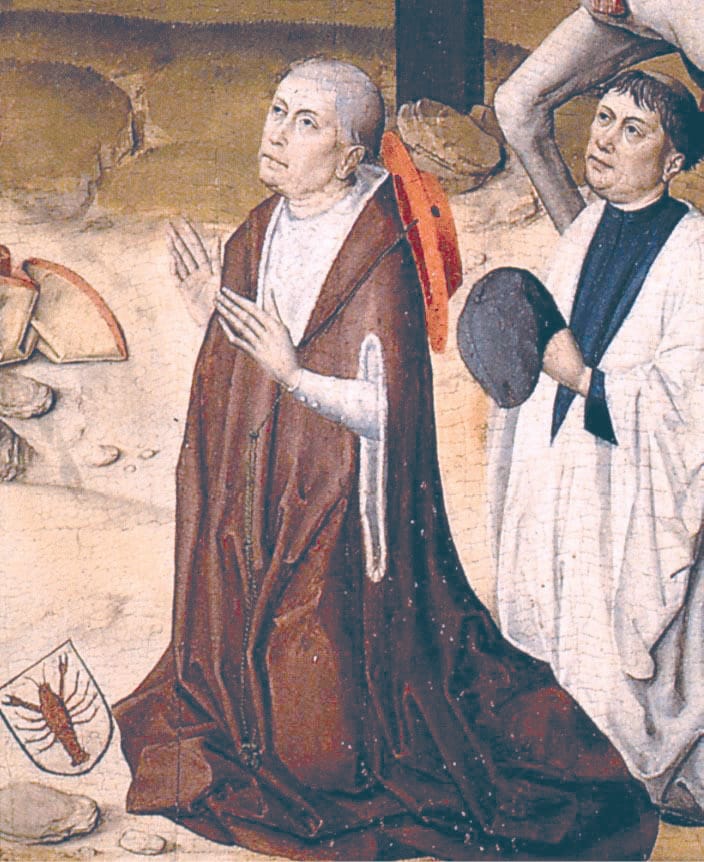
The first attempts to create republics based on the principles of the Council of Florence, were the efforts of Cosimo de’ Medici, and, later, by Leonardo da Vinci at Milan. These efforts in Italy were defeated. So, the first modern form of sovereign nation-state consistent with these principles, was the reconstruction of France by King Louis XI. The second such state was the establishment of Tudor England by the English faction associated with such figures as Erasmus of Rotterdam and Sir Thomas More. When the English counterrevolution of 1589-1603 plunged England into backwardness, the Erasmian faction in England founded 17th-Century English-speaking colonies in North America.
From these beginnings, the new form of sovereign nation-state spread its influence throughout more and more of the world as a whole. It is a fact which must be emphasized, that the old feudalist faction, which the 1439 Council of Florence attempted to defeat, has remained very powerful down to the present time; the rentier-financier faction, centered around Venetian, Swiss, and other financial families, and wealthy elements of the old feudal aristocracy, do dominate the world’s affairs at the present time. However, every stage of progress in the condition of mankind over the past five centuries has been a result of the spread of the influence of either European science, or Renaissance humanist notions of natural law and political institutions, or a combination of both. The net growth of the world’s potential population-density since the Council of Florence, has been the result of modifications in human behavior set into motion by Nicholas of Cusa and his collaborators.
Although the principles of machinery were first elaborated by the Leonardo da Vinci who was the first to explore scientifically the notion of powered machines, economic science was first established as such by Gottfried Leibniz, beginning with Leibniz’s short treatise on wages policy, his 1672 Society and Economy. Leibniz’s development of a science of physical economy, is the basis for defining a yardstick capable of measuring “economic value.”
The pivotal point of departure, for Leibniz’s founding of economic science, was his study of the principles of heat-powered machinery.
Leibniz’s work had an emphatically practical reference point. The use of wood and charcoal as an industrial fuel, had reached its limit in Tudor England during the 16th Century, where the scientist William Gilbert and others had already proposed the development of coal as a superior fuel. Leibniz saw that economic progress depended upon both the use of coal-fueled heat-power for machinery, and the use of heat-powered machinery for developing of mining of coal and ores. He was determined to uncover the mathematical function, through which we might predetermine the relationship between an increase of heat power applied to a machine, and an increase of the rate of output by an operator using that machine.
While the increase of heat power per capita, is the most obvious source of increase of the productive powers of labor, this is not an adequate explanation of the relationship between heat power and productivity. To discover the additional factor, it is sufficient to consider the following hypothetical case. Imagine two machines, each designed for the same kind of work, and each consuming the same amount of coal per hour as heat power; yet, in this case, the same operator using the one machine, has a higher rate of output than in using the second. In this case, the difference between the two machines is some difference in the geometry of internal organization of the machine’s construction. Those changes in geometry of internal organization of machines, or analogous processes, which in themselves cause increase in the productive powers of labor, are the definition of the term “technology.”
Two other leading considerations enter into the function. As the French collaborators and students of Gaspard Monge and Lazare Carnot were first to demonstrate, as we increase the average temperature at which heat is produced, not only does the efficiency of heat power increase, but at higher temperatures, we are able to perform chemical operations which are impossible at lower temperatures. The use of technologically advanced machinery, or analogous processes, requires a higher cultural standard for members of the labor force, including improvements in life expectancies and the general standard of living of households from which the labor force is recruited.
So, on condition that the education and material conditions of life of households are increased sufficiently, the chief preconditions (i.e., “constraints”) for economic progress are the following four:
1) The average amount of usable energy, both per capita and per hectare, must increase.
2) The average temperature, or equivalent, at which heat power is supplied to production, must increase.
3) The ratio of employment for production of machinery and other producers’ goods, to employment for production of households’ goods, must increase.
4) The technology of production must increase.
The increase of mankind’s potential population-density, is dependent upon such technological progress. Therefore, for purposes of statecraft, we must measure technological (and economic) progress, in terms of variable rates of increase of the potential population-density. We must have an “equation,” which puts a “variable rate of increase of potential population-density” on one side of the equation, and measures increases, in per capita and per hectare heat power, in energy-density cross-section, in capital intensity, and technological progress, on the other side of the equation.
It should be obvious, at this point, that the theories of labor value of Ricardo and Marx, are absurd. We must grant to Marx, that at various locations in his four-volume Capital, he repeatedly admitted, that all of his analysis ignored the effects of technological progress. Once we take into account the role of technology, both the various theories of labor value and the utilitarian (“monetarist”) notions of economic value, are worse than useless.
Put the same point another way. Modern econometrics, since the proto-fascist Swiss economist Léon Walras, of the Lausanne School, has been based on Prof. John von Neumann’s false assumption, that the solution to all problems of economic analysis can be stated as solutions of systems of simultaneous linear-algebraic inequalities. That axiomatic assumption of modem econometrics, is false to the degree of absurdity. If we leave out of account two parts of the equation, increase of absolute households’ consumption and technology, we are able to express the other variables of the function in terms of linear inequalities. Once we introduce the impact of marginal depletion of primary resources, an economy consistent with the assumptions of von Neumann is dominated by a spiral of physical collapse. No linear-equilibrium model of an actual economy exists, or could ever exist. It is only through technological progress, that mankind is able to overcome marginal depletion of primary resources, and also meet the requirement for increased consumption by households.
These observations enable us to isolate the crucial question of economic science. How can we measure technology mathematically? Although Leibniz supplied a correct, general answer to this question, no adequate application of Leibniz’s principle was presented until my own discoveries of the early 1950s. I shall indicate and describe the nature of my discovery, limiting my references to facts which can be understood by readers who have completed a secondary school program in mathematics.
Leibniz based the deeper side of his economic science, like his physics generally, on what is described as his Principle of Least Action. To understand how technology may be defined mathematically, one must understand what is meant by the Principle of Least Action. The concept of Least Action is entirely a geometrical concept, which can not be described competently from the starting-point of an algebra based on either axiomatic arithmetic or algebra in the disguise of Cartesian geometry. Leibniz did not discover the Principle of Least Action; the discovery was made by Nicholas of Cusa, and first stated in Cusa’s 1440 De Docta Ignorantia. Cusa termed this discovery “The Maximum-Minimum Principle.” Cusa’s discovery of this principle performs a central part in the contributions to physics by Leonardo and Kepler. Leibniz gave the principle new emphasis.
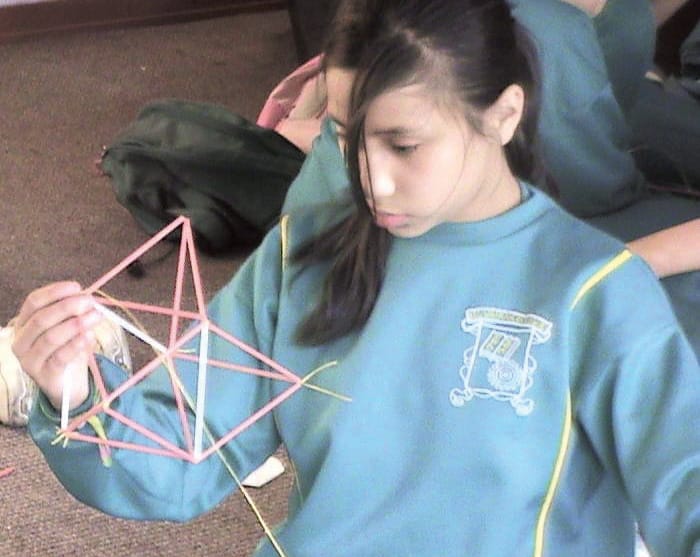
The easiest route to understanding the Principle of Least Action, is to start with Euclidean geometry. Euclidean geometry assumes, wrongly, that space is a three-dimensional emptiness. It assumes that the existence of an infinitely small point is so self-evident, that one need not account for the way such points might come into existence. Euclidean geometry adds to the idea of the point the idea of a straight line. These and a few additional arbitrary assumptions, are adopted as axioms and postulates. Once these assumptions have been adopted, the rest of geometry is built up through a hierarchy of theorems which are derived from the axioms by formal-logical deduction. Mechanistic physics, such as that of Descartes and his followers, assumes that physics is a matter of points roaming in empty space, and that the points act upon one another either by percussion, or by forces acting at a distance along a straight-line pathway.
Such geometry, such physics, is wrong, because it is based on axiomatic assumptions from the beginning. Nicholas of Cusa was the first to present a proof of this fact. Cusa’s discovery was first reported in the 1440 De Docta Ignorantia, and in some among his sermons. Cusa reworked Archimedes’ study of the problem of attempting to construct a square whose area is equal to that of a circle, using nothing but geometric construction. In the course of this reworking, Cusa discovered his “Maximum-Minimum Principle.”
In Euclidean geometry, it is assumed, wrongly, that the point and straight line are the self-evident forms of existence, and that the circle comes into existence through constructions based on a point and a straight line. Exactly the reverse is true. Circular action is the only self-evident form of action in physical space; points and straight lines are among the products created as byproducts of circular action. The only thing which is truly self-evident in the geometry of physics, is the existence of a least amount of perimetric action required to generate a relatively maximum area or volume; that is the reason Cusa’s discovery is also known as the Principle of Least Action, and is called the Isoperimetric Theorem in modern topology. Cusa’s “Maximum-Minimum Principle,” Leibniz’s “Principle of Least Action,” and the Euler-Bernoulli “Isoperimetric Theorem,” are more or less equally valid ways of describing the same conception.
Cusa’s discovery made possible the development of a complete replacement for Euclidean geometry. This new kind of geometry is known today, by the names of either “constructive” or “synthetic” geometry. To understand any among the fundamental discoveries in mathematical physics by such persons as Leonardo da Vinci, Kepler, Leibniz, or the collaborators of Carl Gauss, the student must have learned to think in the language of synthetic geometry, instead of Cartesian geometry, or algebraic deduction.
Any reasonably intelligent secondary school student can master elementary synthetic geometry. The student may find some difficulty in making the leap from understanding Least Action as a concept in geometry, to Least Action as a physical concept. The greatest single obstacle to understanding of physics, is the naïve person’s refusal to accept the simple fact, that the images of the world supplied by his sight, hearing, touch, and smell, are highly distorted reflections of reality. For this reason, the uneducated person clings stubbornly to the convictions, that “matter” is built up out of the “bricks” of indivisible, very small particles, and that action “naturally” tends to move in “straight lines.” The greatest pedagogical problem in the teaching of physics, is twofold: assisting the student to make the leap from geometry, to physics, and to understand physics from the standpoint of constructive (synthetic) geometry.
By “action,” in “Least Action,” we mean motion in physical space-time. This motion, is in itself the primitive idea of “substance,” “substantiality.” The simplest proof that Least Action is the form of substance, is the refraction of light beams; light is refracted precisely as the Principle of Least Action specifies, and never in any other way, never in any deviation from that way. In other words, a properly constructed synthetic geometry, if developed to a sufficient degree, is already in itself mathematical physics: geometric motion according to Least Action, as it occurs in synthetic geometry, is the only form of physical action which occurs in the universe.
Synthetic geometry becomes physics, through experiment and related observation. Synthetic geometry is a method for mapping the terrain of physical experiments and observations; we discover the nature of particular experimental phenomena, by discovering which sort of synthetical-geometrical theorem fully accounts for those phenomena: that is the essential feature of mathematical physics as “mathematical.”
In abstract synthetic geometry, such as the elementary synthetic geometry of Prof. Jacob Steiner, every geometric relationship within the same scope as Euclidean plane and solid geometry is derived from circular action alone, without any other assumptions required, and without any resort to deductive reasoning. After the student has mastered the isoperimetric theorem, the only difficult conception in elementary synthetic geometry, is the student’s initial difficulty in grasping the notion of “multiply-connected circular action.” We explain this briefly, so that we may then show how “technology” is defined mathematically.
Instead of imagining only simple circular action, like action in a plane, imagine that a second circular action is acting upon every “point-interval” of the first circular action. This generates a sphere, of course, and is the basis for constructing (“creating”) the existence of a “straight line” and a “point.” This is called “doubly-connected circular action.” “Triply-connected circular action, generates a hypersphere, and is the first approximation of the geometry of action in physical space-time.
However, simply circular action exists as such only in abstract geometry, not in physics. In physics, action is time-extended. So, we say “physical space-time,” rather than “physical space.” There are only two possible primitive varieties of time-extended Least Action: spiral action on the surface of a cylinder, or self-similar-spiral action on the surface of a cone. Cylindric extension generates what we see as a coherent sine-wave form of radiated light; all forms of action in the universe associated with work accomplished, are based upon conic self-similar-spiral action.
The central accomplishment of Carl Gauss, was to work out the first steps of mastering the mathematics (synthetic geometry) of a physical universe which has been generated by multiply-connected, conic self-similar-spiral action. The mathematical physics of a complex variable, is nothing but the synthetic geometry of a multiply-connected, conic self-similar-spiral action. The mathematical measurement of technology, is a definite kind of continuous such, Gaussian function of a complex variable.
A doubly-or-triply-connected such function, is a pure type of what we call a “non-linear” function. By “non-linear,” we mean three things:
1) We mean an algebraic function which is normally best represented in trigonometric terms, preferably in terms of an elliptic or hyperbolic trigonometry.
2) We mean a function which is efficient over the full range of its indicated application, and which is, in this sense, a continuous function like any continuous algebraic function.
3) We also mean a function which appears to be discontinuous within many intervals of its full range of application. A so-called “Weierstrass function,” is the simplest classroom illustration of such “non-linear” functions.
The simplest case is this. If conic least action is doubly connected, the function generates hyperbolic discontinuities. These discontinuities, which each cover a definite small interval of the continuous function as a whole, are of such a nature that no linear algebraic analysis of these intervals is possible. In the normal function of such a function, these intervals appear with increasing frequency, increasing density.
The continuous functions corresponding to such a physical process, can be represented only by a special type of mathematical function known as a “Riemann Surface,” or, as Riemann himself indicated, a “Riemann-Weierstrass Surface.”
All competent attempts to represent technological progress mathematically, must assume the form of a “Riemann Surface” function. This function must be set in terms of the general expression we summarily described above: increasing potential population-density as a function of technological progress in an energy-intensive, capital-intensive mode.
That is the mathematical core of the LaRouche-Riemann method of economic analysis.
To be continued.
