
In preparation for the BRICS leaders summit to be held in New Delhi, India on September 12–13, the Finance Ministers and Central Bank governors of the BRICS nations met on August 12 and 13 in Jaipur, India. No major new initiatives have been expected under India’s cautious presidency of the BRICS for 2026, and the gathering of financial officials produced no big surprises.
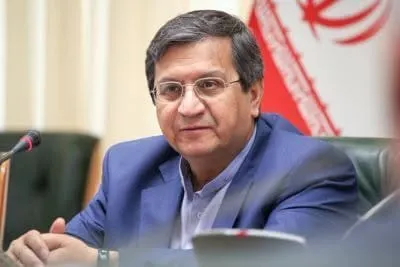
Perhaps the boldest initiative came from the head of the Central Bank of Iran, Abdolnaser Hemmati, who used back-to-back sessions on August 12-13 to argue in favor of a “dedicated BRICS financial corridor,” composed of linked national payment systems of BRICS countries outside the dollar system, to facilitate international trade and investment flows. As reported by Financial Tribune, Hemmati stated on the opening day that “BRICS will have the greatest impact when it can translate policy dialogues into practical initiatives.” The second day he called to “create operational, secure, and sustainable infrastructure for cross-border payments.” Hemmati further confirmed , according to this account, that “Tehran has already begun examining the technical and legal dimensions of linking its payment systems with other members, adding that Iran is ready to help draft an ‘operational roadmap’ for the project.”
According to the Tehran Times, “the Central Bank Governor concluded by stating: BRICS can play a more effective role in shaping a more inclusive, balanced, and resilient international financial architecture… He said: Connecting payment networks and expanding the use of national currencies, while reducing dependence on financial routes outside BRICS, helps increase speed, reduce costs, and enhance the security of member trade transactions… Mehdi Heydari, Deputy Minister of Economic Affairs and Finance of Iran… called for the development of practical financing mechanisms, including local currency financing, currency risk hedging instruments, and attracting private capital.”
Hemmati also met with Dilma Rousseff, president of the BRICS New Development Bank (NDB), to finalize Iran’s membership in the NDB. “The most important result of cooperation among BRICS member countries is the establishment of the New Development Bank, and our country will soon become a member of this bank,” Hemmati said, Reuters reported.
Other participants in the meeting included Egyptian Finance Minister Ahmed Kouchouk, who called for a fairer global financial architecture for developing countries and discussed local currency trade settlements. “We look forward to a global financial system that is more responsive to the priorities of growth and development in emerging countries,” Kouchouk said.
The Ethiopian delegation also called for urgent changes in the current global system. According to Ethiopia’s Fana Media Corporation, “the Ethiopian delegation highlighted rising debt, limited fiscal space, high borrowing costs, climate-related shocks and financial fragmentation as challenges requiring stronger collective responses,” and demanded “access to innovative development financing through BRICS institutions and platforms.”
A more traditionally monetarist approach was taken by host nation India, whose Union Minister for Finance and Corporate Affairs Nirmala Sitharaman and the Reserve Bank of India Governor Sanjay Malhotra “highlighted the pivotal role central banks play in maintaining price and financial stability,” according to Economic Times. “Structural reforms, continued infrastructure investment and Digital Public Infrastructure, are all critical to strengthening macroeconomic stability,” the Indian Ministry of Finance noted. Sitharaman also emphasized the need for BRICS countries to create a more favorable environment for private investment, Times of India reported.
The Russian delegation was headed by Elvira Nabiullina, Governor of the Bank of Russia, who shares a monetarist approach and is resistant to substantive change in the international financial architecture.
