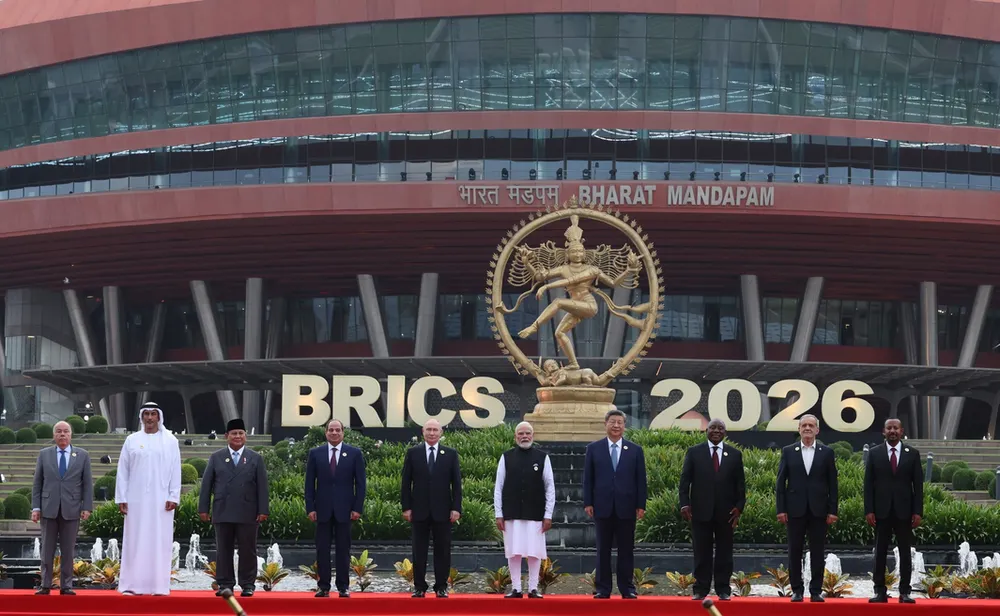
Two very different, irreconcilable futures lie before humanity, and, as seen in global developments of the recent weeks, the pace at which we are being pulled toward one or the other is accelerating. On the one hand, nations of the Global Majority are moving to do away with geopolitical divisions and consolidate a new system of global governance based on win-win cooperation. This was seen most recently at last weekend’s BRICS summit in New Delhi, at which it was evident that external attempts to divide the BRICS nations using geopolitical tensions had failed miserably. Instead, closer ties were forged between the two most populous nations on the planet: “China and India are partners rather than rivals,” Xi Jinping insisted, “and [are] development opportunities rather than threats to each other.” A subsequent meeting between the two nations’ commerce ministers has already begun to take concrete steps toward furthering economic cooperation.
The very grave danger that we face is that the other future—the continuing hegemony of the Western elite—is a fantasy. It cannot exist. The current trans-Atlantic system has broken down economically, militarily, and morally, and as more and more leaders have warned, the attempt to defy natural law and prolong that impotent system is leading us toward the cliff of nuclear war.
As illustration, take the contrast between two recent statements about humanity’s use of outer space: On Monday, U.S. Air Force Secretary Troy Meink publicly and bluntly revealed that the U.S. now has space-control weapons on orbit to defend against “hostile adversaries"; the next day, not only did both Russia and China reaffirm their nations’ position that space must be demilitarized, but Chinese Foreign Ministry Spokesman Guo Jiakun spoke about China’s Sept. 14 gift to the United Nations of the world’s first lunar soil sample from the Moon’s far side: “China looks forward to working with all countries to uphold relevant international law with the Outer Space Treaty as the cornerstone, abide by the paramount principle of exploring and using outer space for peaceful purposes, firmly oppose attempts to weaponize space or turn it into a battlefield, make sure progress in science and technology will bring greater benefits to all humanity, and ensure that space will truly become a platform for win‑win cooperation.”
Similarly, we hear Trump’s ravings that rising oil prices—due, he says, not to his war against Iran, but to the war in Ukraine—will fall as soon as the fighting stops. Physical economic reality disagrees. Brent crude hit $108 per barrel on Tuesday, one day after the average diesel price in the U.S. rose to more than $6 per gallon—which will have devastating and cascading effects on agriculture, transportation, and everything else downstream, long into the future. Industry executives reiterated last week that all of the usual mechanisms to stave off extraordinary escalation in oil prices have been used up.
Russian Presidential spokesman Dmitry Peskov commented on Tuesday about Trump’s proposal that Ukraine and Russia stop bombing each other’s energy infrastructure, calling it “a very good idea”; however, he said, “It is very important to clarify the following: ensuring the safe operation of oil refineries and increasing the volume of petroleum product production does not solve global problems.” What could have a measurable effect? “We need to lift the sanctions,” he said, “these illegal restrictions on energy supplies to the world.” End the attempt to strangle countries economically to achieve political aims.
The other thing that could have a measurable effect is to shut down the past 25 years of illegal, post-9/11 wars, starting with the illegal war on Iran. Today, U.S. Representative Thomas Massie introduced articles of impeachment against Secretary of War Pete Hegseth, accusing him of violating the War Powers Resolution through the continued U.S. military campaign against Iran. All American citizens and Congressmen, besides, should rally in support of this resolution.
This raises the pivotal question—where will the United States fit in all of this? Xi Jinping is scheduled to come to Washington for a state visit on September 24, which will likely be followed up with another meeting on the sidelines of the November APEC summit—where Trump could also meet with Russian President Putin.
The current behavior of the United States is one of “rivals, not parters”; can the new paradigm dynamic of the world’s other leading powers reshape what the U.S. administration sees as its best interest, and free it from the imperial grip of British-sponsored, post-War geopolitics? Will the American people—and citizens of good will around the world—wake up and demand it?
Humanity’s choice of future may very well depend on it.