The following is an edited transcript of remarks by Gen. (ret.) Edwin Patterson Monsalve to Panel 1 of the Sept. 4, 2026 EIR-IPC Roundtable, “An Alternative to War and Looting in the Americas.” General Patterson, a retired Peruvian Brigadier General who served as Military Attaché to India, is a scholar and professor of geopolitics and geostrategy at various Peruvian military and civilian educational institutions. Subheads have been added. The video is available here.
Thank you very much for the invitation and, through you, I extend a cordial greeting to the organizers of this important event, and also to all the participants.
It is very true that the issue we’ll be discussing today is the Chancay Port and the integration and development corridors in South America. I think it is a very important issue.
In my country, let’s say, there is a military academic concept from a few decades ago that says the following: That there can be no development without security, nor security without development. And as we already know, the concept of security has changed, from a unidimensional point of view, referring to external war or internal war, and it has moved from the 1990s—1994, specifically, when the idea of a Human Development Index came about—to what we call human security. And that’s why now, currently, countries face a number of security threats which are of a multidimensional nature, including poverty, drug trafficking, terrorism, and transnational organized crime. These are valid starting points to begin this discussion, because I believe that we must present the world as it is. The world we have today, in fact, is a world that has gone past the moment of a bipolar world, up to the fall of the Berlin Wall in 1989, to a unipolar world in which hegemony is exercised by one player, which is the United States.
But over this period, what we see appearing now on the international stage are new players who are, shall we say, on the rise. Consequently, we have a scenario that can be characterized as a state of permanent competition among nation-states such as the United States, China, India, Russia, and very important regional players in South America, such as the Federative Republic of Brazil. Furthermore, within this context of competition, there are intergovernmental organizations, such as those created after the Second World War—the United Nations Organization, the International Monetary Fund, the World Bank. Other blocs are also entering into competition, such as BRICS-Plus, as well as certain very important development funds or banks competing from the other side.
There are also supranational corporations doing business in technology, science, communications, as well as energy transition, which are already making their specific weight count on the global stage, as well as non-state actors, such as non-governmental and civil society organizations. This framework presents a picture of a very dynamic world, a very fragile, volatile, complex scenario in which leaders of nations must be very adaptable and flexible so as to understand this whole scenario and develop their policies.
Chancay’s Strategic Role in South America
Thus Chancay has become, within the famous Silk Road undertaken by the People’s Republic of China, a strategic point in South America. As we know, in 2013 President Xi Jinping launched what is called the Belt and Road, and a number of routes began to be planned to extend throughout Asia, coming, in fact, from the so-called factory cities, and arriving now all around Europe. There was also a variant that I was able to study when I was Defense Attaché in India, known as the famous Pearl Necklace Strategy, which has strung a series of enclaves all along the Indian Ocean, one of the most important oceans, through which flows a large part of world trade, particularly through the Strait of Malacca, because it supplies very large populations, such as India and particularly China, two countries that comprise together nearly 30 percent of the world’s population. So, Chancay has become a strategic component of this concept that we call the Silk Road. And so, for our illustration, these maritime routes were also conceived as logistical, commercial support, or channels of supply and distribution of goods for the benefit of political interests prevailing in years past.
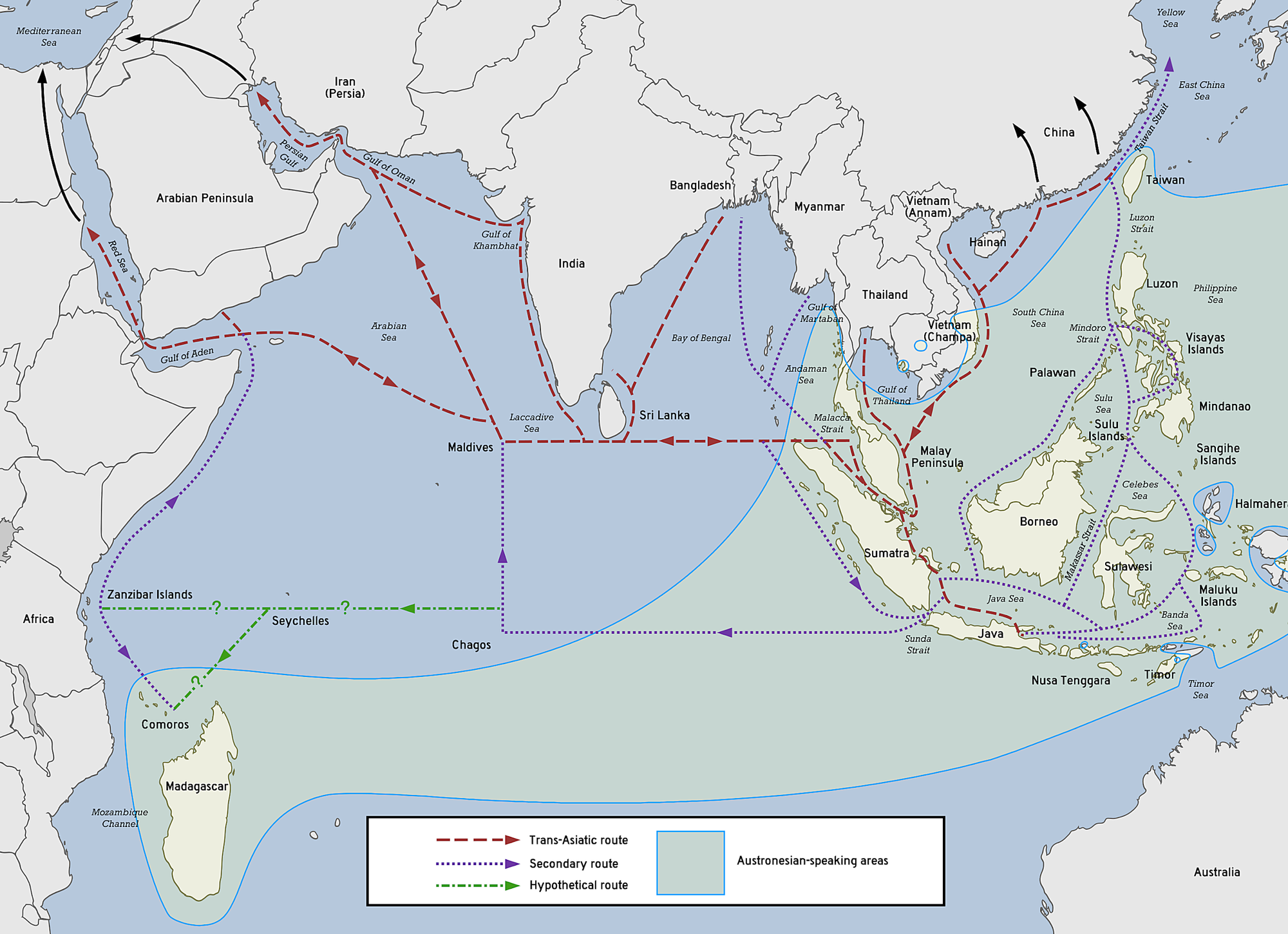
One of the great U.S. geopoliticians, for example, was Admiral Mahan, and he prioritized the idea of maritime trade routes. And that is precisely the subject I’ll be referring to: Chancay. What is Chancay? Chancay is a strategic asset of the Peruvian state, situated along an axis of regional integration and development.
In 2000, in São Paulo, and at the initiative of the Brazilian government, meetings and conferences were held, in an effort to establish which axes of integration and development should exist in South America. And they came up with somewhere between twelve and thirteen. Peru participates in four of those 12-13 axes of integration and development: In the Andean axis, starting from Venezuela and traversing the whole Andean range through Brazil and ending in Bolivia. In the greater Amazon axis of integration and development, going from north of the capital—that is, the Peruvian capital, Lima—northward to Ecuador, some of the southern provinces of Colombia, and the entire Brazilian northeast. (This one, for me, is one of the most important axes of integration, precisely where Chancay is located.) And the other two axes are one called Peru-Brazil, which comes from ports in southern Peru, connecting through several Brazilian provinces to major ports, such as Ilhéus or Santos, in Brazil. And the last one is a bi-oceanic corridor originating in the south of Peru, crossing Bolivia and ending in Brazil.
A ‘Bone of Contention’ Between the U.S. and China
But what does Chancay represent at present? Chancay has become a geopolitical and geoeconomic bone of contention between the United States and China. We are seeing this. We all know that the Port of Chancay was crystallized or conceived by the People’s Republic of China, through a company called Cosco Shipping Lines, a state-owned company associated, indeed, with a Peruvian company called Volcan. So, what is the true meaning of Chancay? Is there a geoeconomic impact? Yes, there is a geoeconomic impact, because the direct route between Chancay and Shanghai, or any other Chinese port, would make it a voyage of 23 to 25 days, meaning that the voyage across the Pacific to reach Chinese ports would be shortened by about ten days, which would bring down logistical costs.
At the same time, it is a direct connecting route, and what Chancay is doing is no less than replacing all of the routes that formerly ran through North America. Likewise, Chancay is an axis of natural resources within this axis of integration and development. And we know that the value brought by Chancay is also there on the other side, in Brazil, which is one of the countries in this region that is on its way to becoming a world power and has an immeasurable amount of resources, including strategic ones, such as rare earths, food security, minerals, further complemented by Peru, which has copper, lithium, and other important elements or factors.
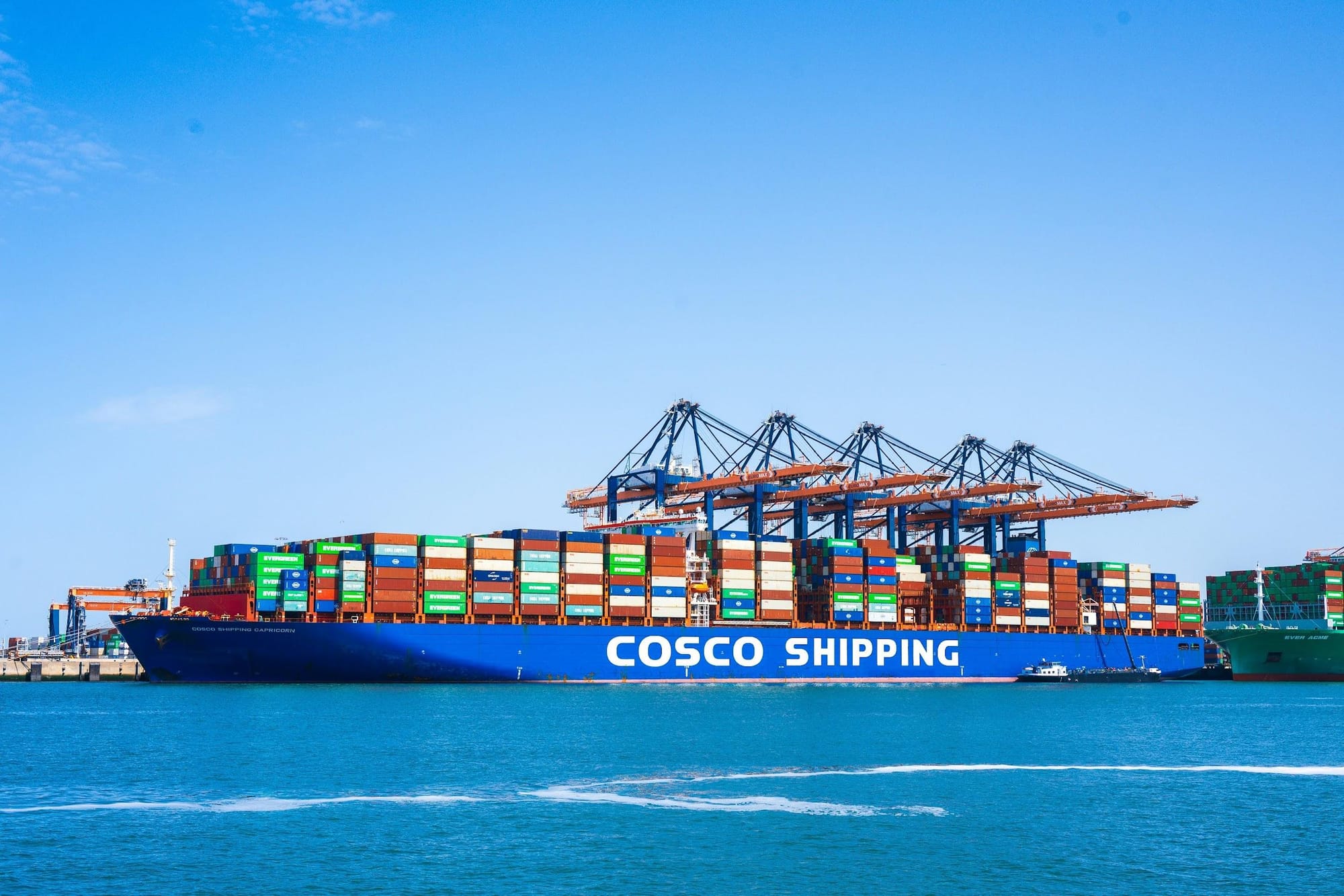
So, what are the geopolitical implications? There is a competition for regional influence. The United States does not trust progress on the Cosco Shipping Port, which was inaugurated last year as the Port of Chancay, in its first stage, and they see it as a critical asset in the hemisphere. We’ve also had discussions about sovereignty, because the Port of Chancay was not the Peruvian state’s idea, but was conceived by private parties, particularly Cosco Shipping Lines, a Chinese company, and Volcan, a Peruvian company. And the United States is also distrustful because they feel that this port could be used as a future strategic and military outpost by Beijing—which isn’t true, and has also been denied by Beijing. So, this is the significance, the importance of the matter from a geopolitical and geoeconomic point of view.
I don’t know if you can see the slide, but what it shows is that the new route takes off some 10 to 15 days [travel time] from direct access to ports in Southeast Asia, including China. If this axis of integration and development comes to fruition with the Port of Chancay as a critical asset, our trading partners [such as Brazil] would no longer need to go through the Panama Canal. As you know, the Panama Canal is having problems due to climate change; the locks are not filling up, it has stopped raining, so ships are being held back, and obviously the cost of services provided is going up. Consequently, an essential alternative, given Peru’s geographical location and the connectivity it offers, is precisely the Port of Chancay, which is part of the integration and development axis linked to Brazil.
Chancay Is Only at Its Beginning
This also means that much Peruvian sea freight previously reaching Asia via the ports of Los Angeles, Long Beach, Oakland, Tacoma and Seattle, would [ship directly and] no longer transit through those North American ports, which would lose the shipping volume thus deflected. This may increase because, remember, Chancay is only at its beginning. The first phase of investment in Chancay has been in the order of $2.3 billion, but additional phases are projected to further modernize Chancay and expand its infrastructure. For the short to medium term, it is expected that Chancay could be handling about 3.5 million containers, or TEU. At present, for its first year of operation, it is estimated that it could get to 700,000 containers. Callao, which is still the most important port, has a throughput close to 3.1 million TEU, which means that Peru and the Chancay-Lima axis, or the Chancay-Callao axis, has become a strategic point of global trade and particularly of this area of the American continent in the South Pacific.
The strength of Peruvian ports is that they are deep-water ports. Many Post-Panamax vessels with large loads can only be supplied at such ports, and some countries with which we share the continent carry, or must carry their freight, in fact, to Chancay or Callao. This is why Chancay becomes a strategic asset; but let’s remember that it is simply one point within an axis of integration and development, which is the most important thing.
In the decade of the 1960s, we had a Mr. Edgardo Mercado Jarrín, a general and also a geopolitician, and he was already talking about South American integration, as it is called, about regional integration. At one point during the Cold War, Peru was among the Non-Aligned Countries, and shared many of the concepts of the Bandung Conference, and he [Gen. Mercado Jarrín] saw regional integration as a path to national sovereignty. For, remember, the founding precepts of the nation-state are national sovereignty and territorial integrity, ideas born centuries ago, and this, clearly, is what nations want, that duality—development and security—for a country to achieve sustainability.
Thus Chancay becomes a strategic asset that we have here in Peru, as well as the development of several ports on the way, like the port of Callao, for example, which is already a consolidated port, now undergoing further expansion, and other ports in southern Peru, such as Matarani.
In conclusion, I just want to tell you that Chancay has become an actor, a strategic asset in Peruvian geopolitics, and we must continue to develop it, because it is so important for a country that needs development and also needs science and technology. We must keep in mind that we cannot remain in a state of primary commodity dependence, selling off our raw materials. That is the important thing.
So, I thank you for this opportunity, and we clearly have a number of challenges in Peru to continue to develop our country in a climate of security. Thank you very much.