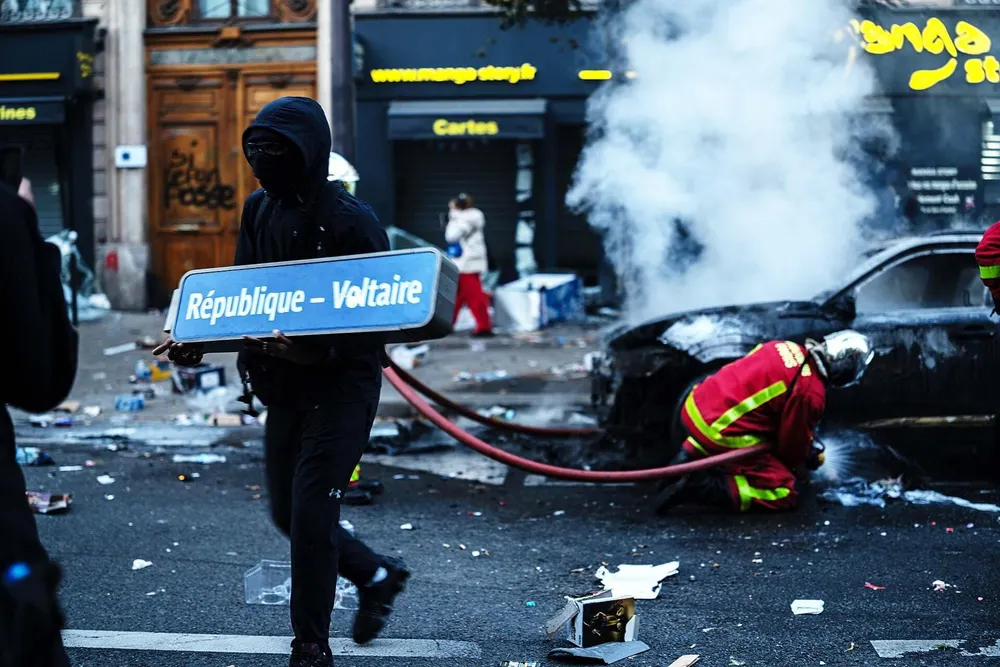
Oct. 24—Mass protest actions are continuing this Fall in many nations in Europe, as well as in South America, and elsewhere, in response to differing specifics but overall in reaction to the unlivable conditions and unacceptable dictates from governments refusing to act in the public interest. The wave of popular protests, when viewed in total, is stunning. Those in France this month, sparked by youth demanding better education systems, have been the most spectacular, but protest actions have also taken place in many other European countries, including Belgium, Italy, Spain, Greece, Portugal, the Netherlands, and Albania. Add to these the demonstrations taking place in India, Argentina, and Brazil, just to name a few of the most visible. Although the particular demands differ widely from nation to nation, the common denominator is the failure of the system to ensure a better future.
The dilemma for the elites of the trans-Atlantic world is that there is no way they can satisfy the just demands of the people, even if they should want to, unless they accept fundamental changes in policy and priorities that undercut those elites’ cherished prerogatives. In the European Union, leaders have resolutely rejected proposals for a negotiated settlement of the war in Ukraine, including the lifting of some sanctions to facilitate the export of Russian oil and gas, although doing so would benefit their populations. Instead, they continue to promise more money and weapons to Ukraine, while at the same time cutting social and infrastructure budgets in order to feed their rearmament drive.
But the breaking point will soon be reached. It is vital to use reason and dialogue to inject new policies and ideas into the mass action process, allowing people to think through how a new economic and security framework could be established. That makes it especially important right now to understand and expose the counterinsurgency operations deployed to crush peaceful protest. The violence over the Oct. 17-18 weekend in Paris, Milan, and Tirana, Albania, played up to the hilt by the Western media, shows features of formula-type anti-insurgency operations.
These patterns continued over the Oct. 24-25 weekend in multiple cities and countries. In Milan, for example, huge crowds marched through the streets on Saturday, mostly young people, and 500 soldiers were deployed to the city, supporting a force of some 5,000 police and other municipal personnel. The use of the military is part of Italian Prime Minister Giorgia Meloni’s response to the upsurge, now taking place nationwide.
Staged Gang-Countergang Operations
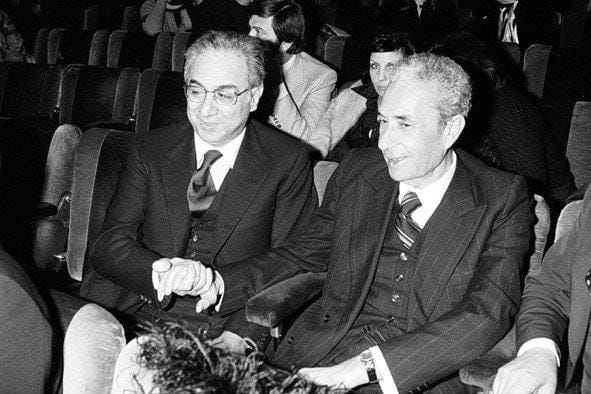
A description of the step-by-step way to subvert peaceful mass protest was given by an Italian political figure, and British asset, Francesco Cossiga (1928-2010), in a shameless interview in the well-known Italian daily Quotidiano Nazionale, Oct. 23, 2008. Cossiga was President of Italy (1985-1992), Prime Minister (1979-1980), Interior Minister (which includes police, 1976-78), and ex officio lifetime senator (from the end of his presidential term in 1992 until his death).
In the interview, Cossiga gave advice for how then-Prime Minister Silvio Berlusconi and Interior Minister Robert Maroni should intervene in public protests. In short: infiltrate, then instigate violence and anti-violence. An excerpt from the interview:
Cossiga: Pull the police forces off the streets and out of the universities, infiltrate the movement with agents provocateurs ready for anything, and for about ten days let the protesters wreck the shops, set cars on fire and put the cities to fire and sword.… After that, backed by popular consensus, the sound of ambulance sirens will have to drown out that of police and Carabinieri [a national police force, run by the Defense Dept.—ed.] cars.
QN: Meaning that—
Cossiga: Meaning that the law enforcement forces should show no mercy and send them all to the hospital. Not arrest them, because the court would just release them straight away, but beat them, and beat the teachers who are egging them on too.
QN: The teachers too?
Cossiga: Especially the teachers.
Cossiga’s formula is just a repeat of what he had learned from the “gang-countergang” anti-insurgency tactics used by British army officer Frank Kitson (1926-2024), which Kitson implemented in several theaters for the British Empire, the most famous being the Mau-Mau revolt in Kenya 1953-55. He used brutal repression tactics in Northern Ireland, Cyprus, Oman, and Malaya as well.
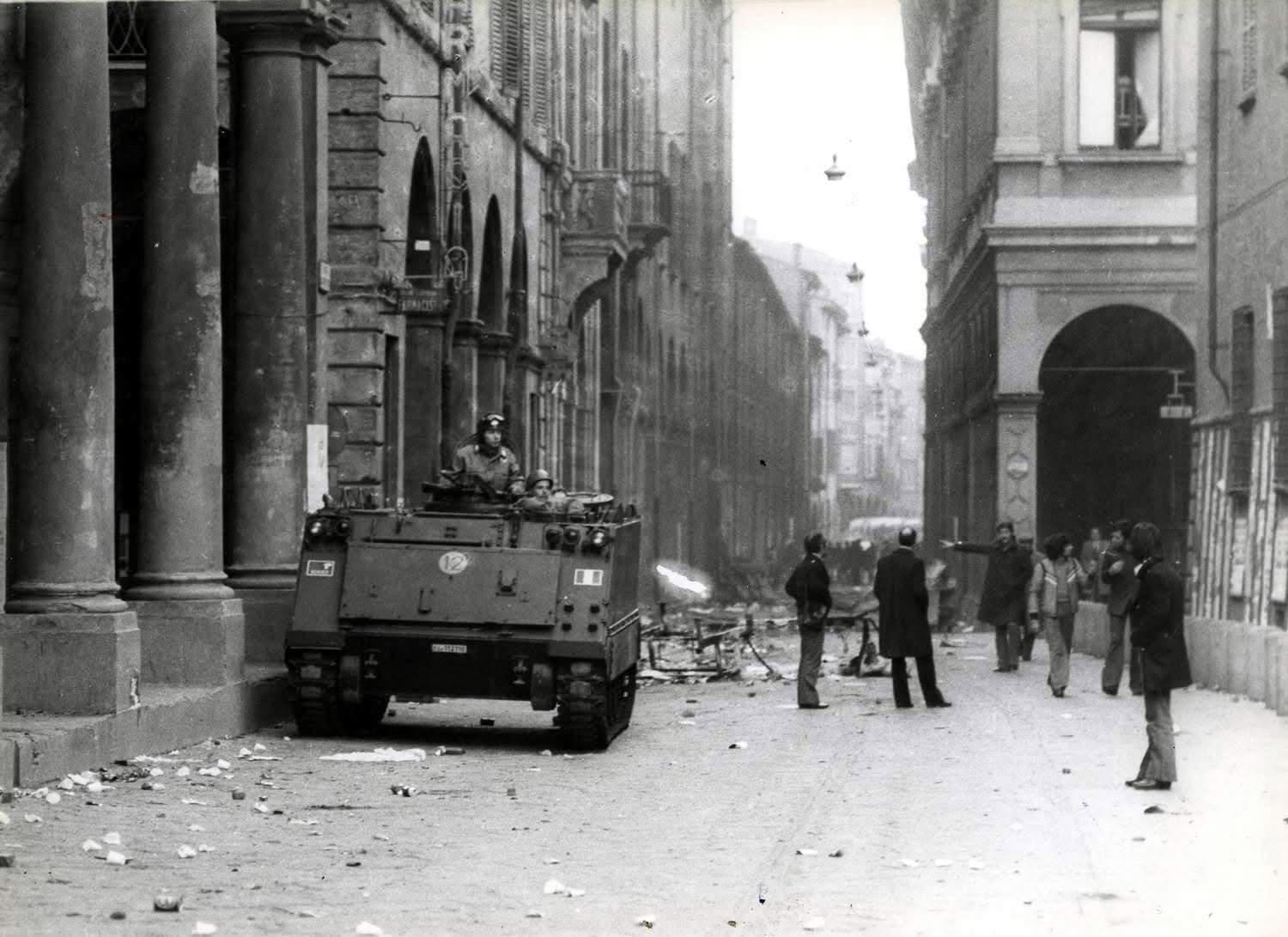
Cossiga, himself, was one of the most pro-British Italian politicians of modern times, an admirer of MI6. Ideologically, he was a follower of Cardinal John Henry Newman, founder of modern British Catholic Liberalism, further cementing his status as an anglophile. Cossiga’s role during the 1978 kidnapping and assassination of Aldo Moro, when Cossiga oversaw police and intelligence forces as Interior Minister, has marked him as a witting or non-witting accomplice of those who pulled the strings in that murder.
Cui Bono from the Violence in France?
The images coming out of the mass demonstrations in France on Oct. 17 were shocking for the degree of violence. However, French and international media have overemphasized the violent looting and burning of some public buildings that took place, rather than report on the up to 800,000 people (students, firemen, nurses, lawyers, yellow vests and others), who took to the streets peacefully to express outrage at their collapsing living standards and also to fully support the young students who had launched the movement in the suburbs to demand a better education.
Jacques Cheminade of the Solidarité et Progrès Party gave a firsthand report from Paris shortly after the Oct. 17 mass demonstrations. Indeed, well-organized provocateurs operating in “black bloc” mode were sent into the marches, while gangs of looters sacked the shopping areas of several cities, and carried out significant material destruction. Interior Minister Laurent Nuñez then admitted that he had instructed the police to intervene against these groups forcefully and mercilessly, injuring many non-violent demonstrators as well, with over 2,000 arrests made and some 800 policemen injured. The events had all the markings of the gang-countergang scenarios that have long been used by intelligence services as part of a so-called strategy of tension.
Cheminade otherwise noted that France can be said to be the epicenter of a larger dynamic sweeping Europe. There are many, sometimes conflicting, reasons for that, including the presidential election to take place next Spring, the strong sovereignist tendency in the country, and the fact that the leadership of France, a nuclear power, has led it to become a key element of the “war party” in Europe. Add to this the severe crisis of France’s public finances, with a public debt at 119% of GDP, to solve which the government is at a loss. Financial markets warn President Emmanuel Macron not to give in to the protesters’ demands.
The revolutionary tradition of mass uprisings in France is positive, Cheminade said, but it can be easily manipulated, with the effect of polarizing the country even more.
The disintegration of the old trans-Atlantic world order is generating all sorts of disruptions and destabilizations that can be expected to escalate until the new, more just order of international relations now emerging has taken hold. History is on the side of the economic and peace initiatives being undertaken by the Global Majority, no matter how hard the guardians of the current Western financial and banking system try to prevent it through wars and suppression.
