Oct. 1—“How is it possible that a state founded in the immediate aftermath of the Holocaust stands today credibly accused of perpetrating large-scale war crimes, forcible displacement of civilian populations, and crimes against humanity?… And how do we come to terms with the fact that Israel’s war of destruction was conducted with the wide support, laced with denial and indifference, of most of its own Jewish citizens?”
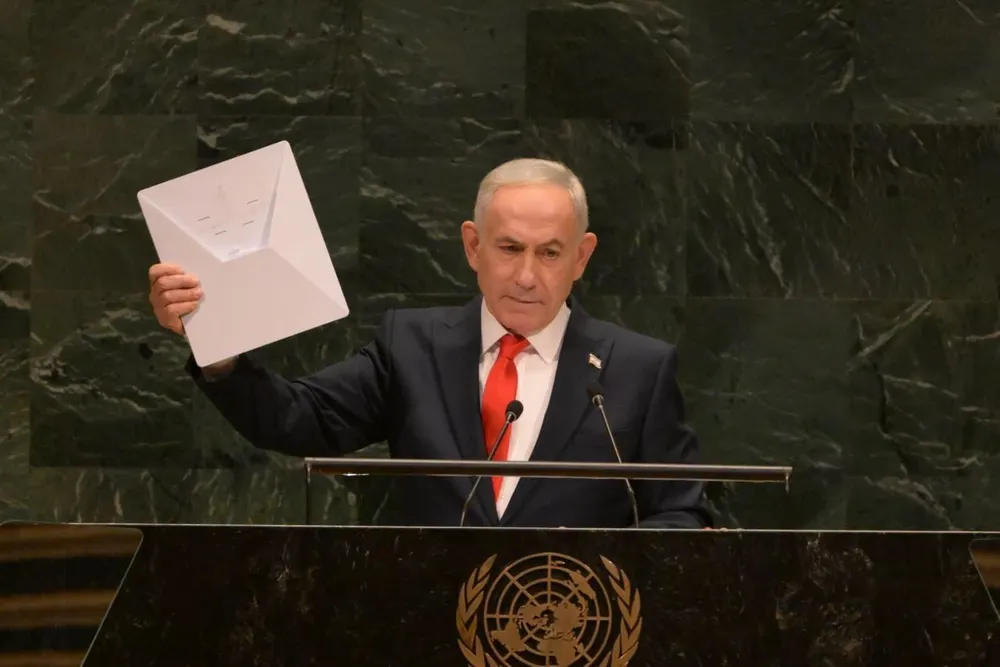
Omer Bartov, eminent genocide and Holocaust scholar, and citizen of Israel, has published a book, Israel: What Went Wrong?1 which opens with those questions. With a national election October 27, it is more urgent than ever that these questions be posed to the voters of Israel, especially since the incumbent Prime Minister, Benjamin Netanyahu, whose regime is responsible for what most of the world sees as a genocide, is up for re-election. The “opposition” candidates are campaigning to remove him but are supporting the same Greater Israel colonial policies—including ethnic cleansing of the Palestinian population of Gaza and the West Bank and annexing parts of southern Lebanon—making a mockery of their claims to be an alternative to the extremist apartheid regime currently in power.
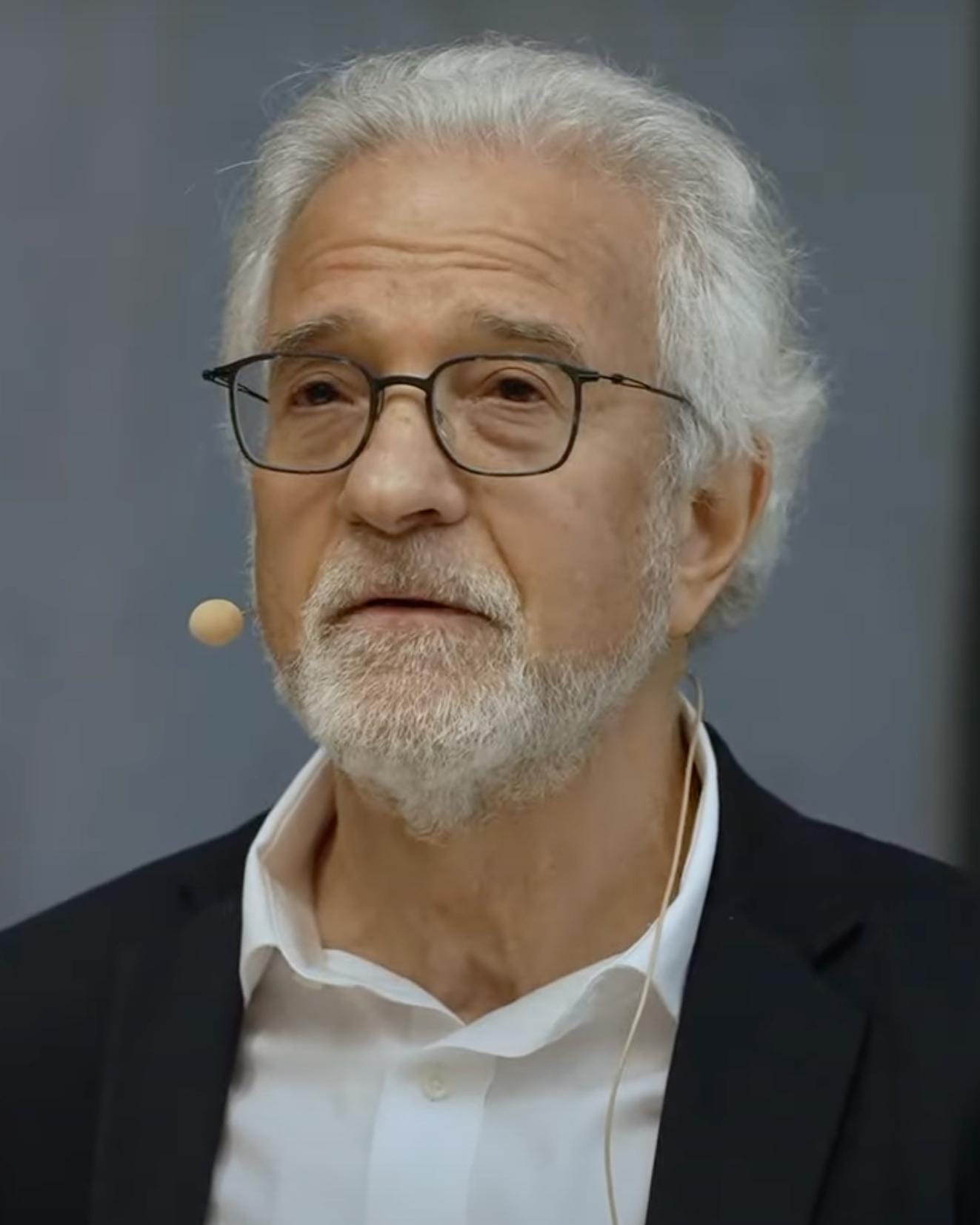
Professor Bartov initially concluded in a Nov. 15, 2023, New York Times op-ed that the first wave of response by the Israel Defense Forces (IDF) to the October 7, 2023 assault led by Hamas could be identified as “war crimes,” but the “evidence did not … rise to the crime of genocide.” On July 15, 2025, he painfully acknowledged in another op-ed in the Times that it was “no longer possible to deny” that a genocide was underway. The title of this follow-up op-ed was “I’m a Genocide Scholar. I Know It When I See It.”
Denial
Despite the growing evidence of the crime of genocide, polls continued to show that, while Netanyahu’s personal popularity was declining, there was overwhelming support for his regime’s campaign to eliminate the Palestinian population. Bartov and others point to a combination of two factors: denial, an unwillingness to face the truth; and a siege mentality inherent in Zionism, which defines the outside world as dominated by anti-Semitism, a hatred for the Jews. Netanyahu and his die-hard allies play the anti-Semitism card to the hilt, insisting that were it not for his toughness, a new Holocaust would likely emerge. Bartov said that this belief is so powerfully reinforced that it is unlikely that there could be a reversal of support for genocide from within Israel. The only hope for change would be the result of a military collapse, or excruciating pressure on Israel to stop, coming from the United States, in the form of cutting off military and financial aid.
A test of this emerged with an article published in Israel’s Haaretz daily newspaper on September 8, which confirmed what many Israelis had suspected since the Hamas military-style attack on October 7: that Netanyahu must have been aware that an attack was coming, but failed to act. The shocking story in Haaretz was excerpted from a book written by Shlomi Eldar and Ruth Yuval, Kidnapped: 843 Days of Abandonment, which states that Mohammad bin Zayed (MbZ), the President of the United Arab Emirates (UAE), called Netanyahu in late September 2023 to warn him that Yahya Sinwar, the Hamas leader in Gaza, was planning an attack, but that Netanyahu failed to notify his top security officials, implying at a minimum extreme negligence on his part. The still-unanswered question is whether his failure to act was deliberate, to justify the ethnic cleansing and related war crimes committed in response to October 7—an outcome favored by Netanyahu to expand the area annexed by Israel, through “voluntary transfer” or physical removal of the Palestinians.
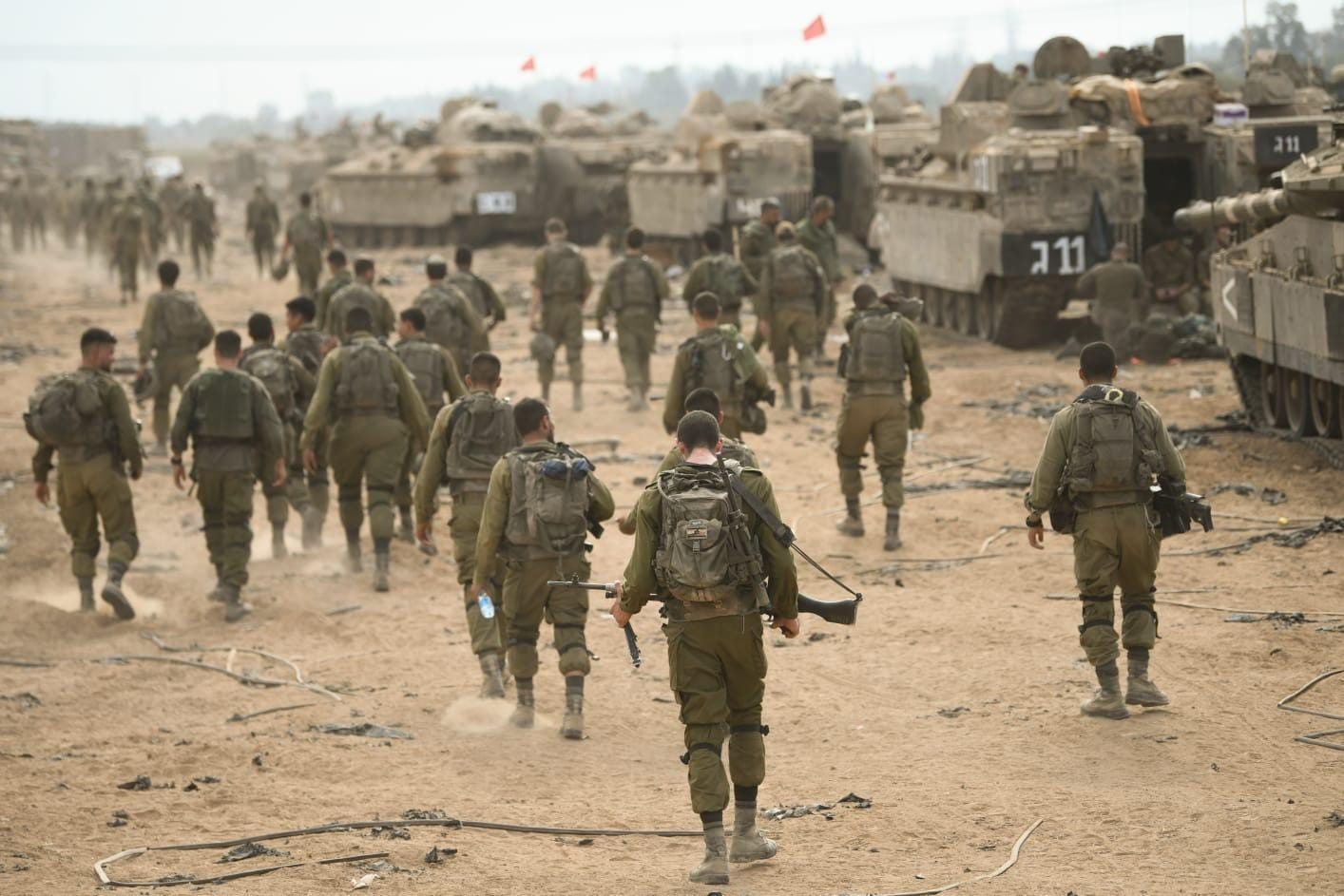
This report was coherent with an earlier report which accused the Prime Minister of taking more than two hours to come to his office after being notified of the attack on October 7, a delay which gave Hamas time for more killing and seizing of hostages.
The story triggered a furious response from Netanyahu. “It’s a fabrication,” he shrieked. Some Israeli media backed up the Prime Minister, and there were charges that the story was treasonous, planted by anti-Semites to discredit Netanyahu and his extremist allies. With the election looming, Netanyahu’s defenders engaged in overheated damage-control mode, clinging to hopes that the polls were right in showing that most Israelis still believed that the genocidal attacks on Palestinians were necessary to protect the population from the alleged upsurge in global anti-Semitism.
More details of the call from MbZ emerged in the New York Times on September 25, as well as in a report in the Times of Israel. Among the new details was a report that Abbas Kamel, the head of Egyptian intelligence, had communicated a warning of an attack from Sinwar to Shin Bet chief Ronen Bar, but that Netanyahu had rejected acting on the report. A sign of Netanyahu’s desperation was the revelation that he secretly flew to the UAE on September 27 to plead with MbZ to deny that he had made a warning call to Netanyahu, which MbZ refused to do.
Adding to the siege mentality was the release of the film NAZA by Israeli filmmakers Rachel Szor and Yuval Abraham. NAZA is an acronym for “collateral damage,” and includes interviews with twenty-four soldiers and intelligence personnel, who spoke anonymously of their involvement in killing civilians, including women and children, in targeting the homes of Hamas militants. The targeting included the use of artificial intelligence to locate the “terrorists,” and to calculate the number of civilian casualties that would result from bombing the homes of Hamas members. One soldier interviewed in the film admitted, “We are killing these children intentionally.”
Netanyahu reacted again with unhinged fury, seconding the demand that the filmmakers be punished. ”We’re fighting worldwide anti-Semitic incitement,” he charged, “but when it comes from within us, it’s intolerable.” Mickey Zahor, the Minister of Culture, threatened to revoke the citizenship of the filmmakers, whose previous effort, No Other Land, about systemic settler violence against a Palestinian village in the West Bank, won an Academy Award in 2024 for best documentary foreign film. Zahor accused them of being “willing to harm their homeland just to get applause from anti-Semites around the world, [it] is inconceivable and constitutes a betrayal of the state.”
The public furor over the credible reports of Netanyahu’s advocacy of a murderous security policy may not yet be enough to convince Israeli voters to remove him, as too many Israeli citizens are willfully blind to the crimes committed to sustain an ethno-nationalist settler-colonial Zionist state. ”We just have to trust the system” was the explanation offered by one of those interviewed for the film, in a rationalization similar to the excuse offered by Nazi war criminals on trial for mass-murder, in Nuremberg after the defeat of the Nazis, who said, “We were just following orders.”
The British Role
Some courageous Israeli intellectuals have asked how is it possible that such a rationalization is deemed acceptable by much of the Israeli public today. Haaretz columnist Gideon Levy, a consistent and forceful critic of the “group-think” this reflects in the general public, has provided a partial answer: “Time and again it’s astonishing to discover how the historical context and the collective memory have been obliterated here.”
This election would seem to offer the perfect opportunity to expose Zionism as a remnant of 19th-Century imperial “ethno-nationalism” with racist, supremacist beliefs which run counter to the universal values of Judaism. Before the “Zionist” movement transported waves of oppressed Jews to Palestine from Eastern Europe, the “Anglo-Zionist” Lord Shaftesbury convinced Lord Palmerston that Zionist settlers could become a force on behalf of the British empire to stake claims for a piece of the declining Ottoman empire. Israeli historian Avi Shlaim told interviewer Piers Morgan that “the Israeli-Palestinian conflict is made in Britain. Britain is responsible for this conflict.”
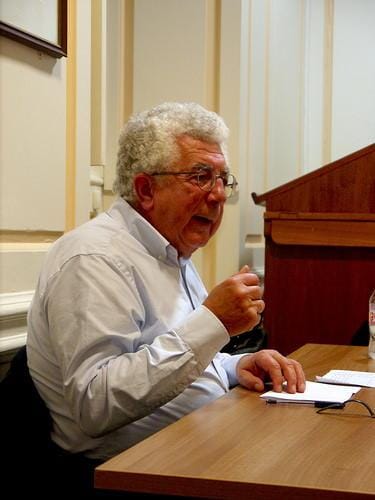
Shlaim described Zionism as a “settler-colonial movement” which created Israel as a “settler-colonial state.” Under the Balfour Declaration of 1917, “the British government supported self-determination for the Jews and denied it to the Palestinians.” At the time, the Jews represented 10% of the population and Arabs 90%. The British Mandate in Palestine, which prepared for the eventual Zionist state, lasted from 1917 to 1948. “I can summarize it for your listeners in one sentence,” he said. “Britain stole Palestine from the Palestinians and gave it to the Zionists.”
Bartov explains how the Zionist movement carried on the British imperial tradition when Netanyahu pushed through the Basic Law in 2018, by declaring Israel the “nation state of the Jews and the whole land from the Jordan to the sea as Israel’s property.” The Basic Law was adopted instead of living up to the promise made by the Zionist leadership—including the most prominent figure and first Prime Minister, David Ben-Gurion—to draft a constitution!
The Law states, “The Land of Israel is the historical homeland of the Jewish people…. The State of Israel is the nation state of the Jewish people, in which it realizes its natural, cultural, religious and historical right to self-determination. The realization of the right to national self-determination in the State of Israel is exclusive to the Jewish people.”
To the limited extent there are rights extended to the Palestinians, they are subordinate to those of the Zionists. Given the belief of the Greater Israel fanatics that the Jews are the “chosen people,” uniquely entitled to the Land of Israel, it is not surprising that regime officials such as National Security Minister Itamar Ben-Gvir and Finance Minister Bezalel Smotrich speak of the Palestinians as “beasts” and “animals” who should be killed or driven out of their native country, as they have been since the Nakba at the time of the founding of the State of Israel in 1948.
It is this outlook which has led to the isolation of Israel, viewed by much of the world as a rogue state, one whose citizens either support the genocide committed in their name, or are able to deny what everyone else sees.
Avrum Burg on ‘Chosenness’
Former Speaker of the Knesset Avrum Burg has provided a much-needed, insightful analysis of the concept of the Jews being a “Chosen people.”2 Burg identifies the problem derived from the paradox within the idea of “Chosenness.” In contemporary Israel, the Greater Israel zealots treat this as though the Covenant with Abraham was a kind of real estate contract, in which God offers a land title to the Jews in return for commitment to obeying His Commandments. At its heart, the issue addressed by Burg is whether being Chosen means being elevated above others, defining Judaism as superior to other religions, or defines a mission for the Jewish people, to be “a light unto all nations.”
This ambiguity comes from the words of a prayer from the Days of Awe, between Rosh Hashanah (New Year) and Yom Kippur (Day of Atonement): “You chose us from all peoples, loved us and desired us, and raised us above all tongues.” Burg writes that the repetition of these words, over many generations, turns them into “part of the operating system of the social and political psyche.” As such, these words have “helped nurture the contemporary idea of Jewish supremacy, along with the racial doctrines that can flow from it.”
He continues:
It was not always this way. For thousands of years in exile, the consciousness of chosenness carried immense importance. It kept the heads of Jews above the waves of humiliation. It gave purpose and dignity to a people that was discriminated against and powerless. No persecutor could strip the Jewish believers of their place before God. Generations of Jews could whisper to themselves: they may humiliate us in this world, but we are the Creator’s chosen in the world to come, for that all this suffering has meaning…. In that sense, chosenness was a remarkable mechanism of spiritual survival.
But what protected a persecuted minority became dangerous the moment it turned into the governing consciousness of the Jewish minority wielding power over others. What enabled the powerless Jew to preserve his dignity took on an entirely different meaning once that same Jew possessed a state, army, police force, judicial system and the power to impose violence against other human beings.
In Israel of this era, the Genie of religious consciousness has escaped the pages of the prayer book, entered the machinery of power and transformed the political meaning of the chosen people into a terrible one. It became the mother of all discrimination. The source of the violence of soldiers and settlers, of dispossession, killing, and the denial of basic freedoms to millions of Palestinians.
He resolves this paradox by rejecting the idea of Jewish supremacy, or exceptionalism. Throughout the generations, he writes, Jewish thinkers “recognized this danger and tried to transform chosenness from a claim of superior nature or ancestry into something else: an added responsibility that Jews take upon themselves. We were chosen, in this reading, not to rule over others but to assume a greater responsibility for repairing the brokenness of the world.”
He concludes by reiterating that if the notion of being chosen becomes an instrument of domination, it “cannot be democratic. If we wish to save Israeli democracy, we must part with the claim to stand above all other nations. This is required, not because we have ceased to be Jews, but because the time has come to be Jews who no longer need the inferiority of others to give meaning to our own identity.”
Notes
- Omer Bartov, Israel: What Went Wrong? Penguin Random House UK, 2026, p. 3.
- Avrum Burg’s Substack, “Chosen by God versus Chosen by Ballot,” Sept. 18, 2026.
