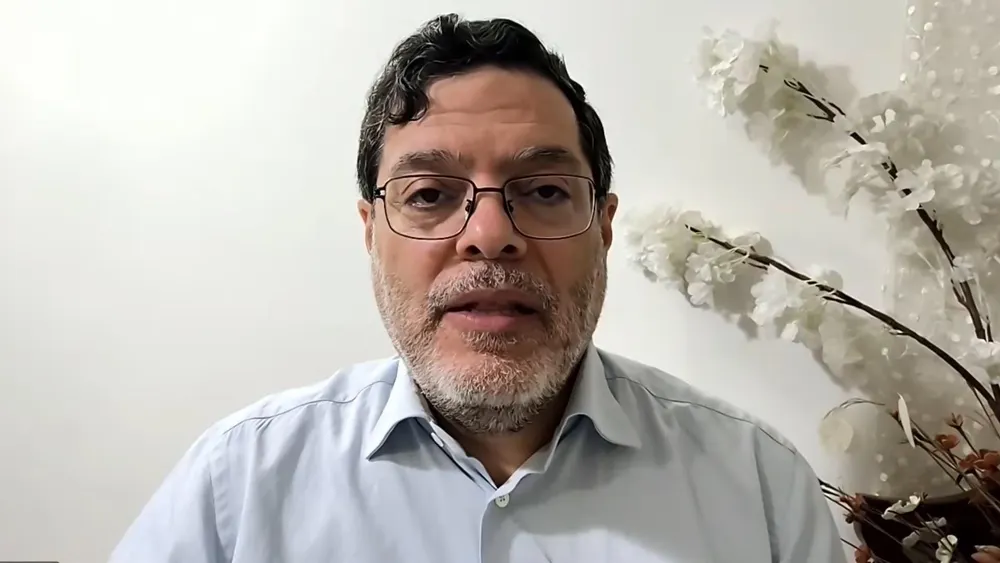
Dr. Seyed Mohammad Marandi, professor at the University of Tehran, is a scholar, political analyst, and former advisor to Iran’s nuclear negotiation team. The following is the edited transcript, with subheadings added, of remarks by Dr. Marandi to the International Peace Coalition on Sept. 25, the 173rd consecutive weekly meeting of the IPC. He was introduced by Harley Schlanger, EIR U.S. political intelligence director, who noted, “Since the U.S.-Israeli wars against Iran were launched, Professor Marandi has become very familiar to Western audiences for his efforts to counter the psychological warfare deployed against Iran, and the false narratives created to promote the wars.”
Thank you very much, Harley, and thank you all for inviting me. It’s a great pleasure being among friends. I have really little to say, I’m sure, because all of you, and those whom I know from among you, are better equipped to discuss these issues than I. I’ve been in discussions with at least two of our colleagues here in the past, and I am concerned that I may make this a boring few minutes.
First, I’d like to point out that the war that we’re seeing today, has its roots in Iran’s independence, and in the fact that after the revolution [Jan. 1978-Feb. 1979], Iran chose a third way: not to remain in the Western camp and not to join the Eastern camp. In the entrance of the Foreign Ministry building, there is a neither East nor West slogan, meaning that Iran doesn’t want to be in the capitalist bloc, nor does it want to be in the communist bloc. And I think that that was one of the most unforgiving aspects of the revolution.
The second point is Iran’s support for resistance movements, and the two major movements at that time which caused enormous sensitivity were the struggle against apartheid in South Africa and, of course, the issue of Palestine, which remains today the most problematic and painful event. The events that are taking place there today are the most painful that we can see on this planet. Every day we wake up in the morning, in our social media feed, we see more misery, more slaughter, more murder in this ongoing genocide.
So, with the collapse of the apartheid regime in South Africa, which was to a degree a lesser issue for the West; they had invested more in Zionism than, I think, in apartheid South Africa in the later years of the apartheid regime. But with the collapse of that, the focus was on, basically, Iran’s independence and Iran’s support for the Palestinian cause. Iran’s support for the people of Cuba, for the people in Venezuela, and elsewhere was, of course, something that angered the United States and the Israeli regime, but the focus was always on Palestine.
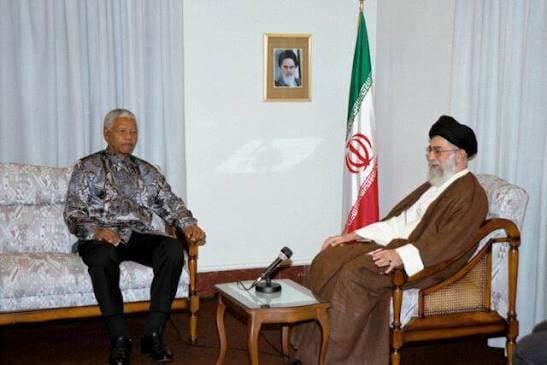
I should point out that the martyr Ayatollah Ali Khamenei, who was murdered by this coalition on the first day of the war, had traveled to the frontline states in Southern Africa when he was President. And when Nelson Mandela was freed from prison, one of the first places that he visited was the Islamic Republic of Iran. When he met Ayatollah Khamenei, he called him “my leader” out of respect and out of gratitude for the support that Iran had given to the resistance in Southern Africa during the years when Mandela was in prison.
I had the privilege of being a student at the University of Tehran when the late Nelson Mandela was awarded an honorary doctoral degree at our university. It was a massive crowd and a day to remember. So today, I think when we look to what is going on, it would seem extraordinarily foolish, this war.
And I think there’s more or less a consensus among the sane people who follow politics, that this war took place in the first place due to hatred of Iran, and that it continues despite the failure of Netanyahu and Trump in the pursuit of this war. But the real reason, as I said, is not based on reason and rationality; it is based upon a contempt and hatred for Iran, because it is independent.
Iran Supports Resistance to Extremism
More importantly, in my opinion, are the fact that Iran refuses to accept Zionism, the Israeli regime, and the fact that the Iranians actively support the Palestinian cause and, of course, the resistance movements, collectively called the Axis of Resistance—that is what is unforgivable. That is why, today, the world economy is reeling, because the United States under U.S. President Donald Trump has launched this war at the behest of the Zionist lobby and the Israeli regime. But the price is being paid by billions of people, literally across the world.
So, the root of this war lies in Zionism. It does not have anything to do with Judaism, but with Zionism. It does not have anything to do with Christianity, but it is Zionism, Christian Zionism. Jewish Zionism is [to Judaism as groups] like ISIS and Al-Qaeda and other Takfiri groups are to Islam. Muslims—Shia, Sunni—reject this Takfiri ideology, and the same is true for the mainstream Muslim view, which is opposed to this sort of extremism and the brutality and the murder and slaughter that accompany it. The same [rejection] is true with Jews and Christians across the world.
We have seen recently in polls carried out in the United States, where Zionism is most powerful, that young Jews have turned against the Israeli regime. Many were always against it, but the numbers have grown dramatically, and it was reflected in the recent election of the mayor of New York, [Zohran Mamdani] but also in the polls that have taken place across the country. So, this is only about empire and about Zionism, and it does not reflect upon any religion or any nation or any people. People in Iran, fortunately, understand that.
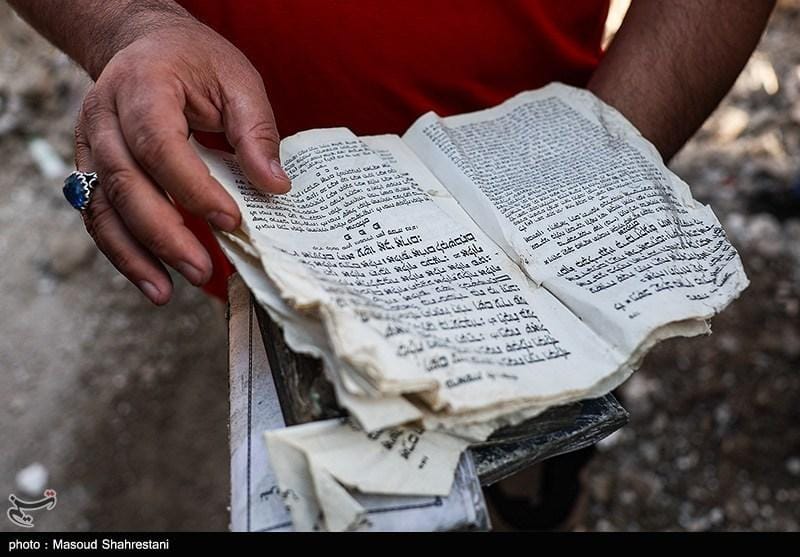
In fact, one of the places that was bombed in Tehran, as some of you may know or perhaps all of you have heard, was a synagogue. One of the Tehran synagogues was bombed by the Israeli regime, and it is quite extraordinary, because this synagogue is actually surrounded by a part of the Jewish community. In other words—this is something that I discovered more recently—it would seem quite natural that the houses and buildings around the synagogue were full of Jewish families, because it is a center of their community. So, obviously, people would prefer living nearby.
When the missiles struck—and there were multiple missiles that were fired by the Israeli regime, not the Americans—when the missiles struck, imagine the terror that Jews in Tehran, living in that neighborhood, experienced. Imagine the terror that Jews who would go to other synagogues would experience, because I assume that they, too, lived in fear of their synagogues being targeted by the Israeli regime.
Jews in Iran Live in a Safe Environment
There is one interesting thing about Tehran which I didn’t know, myself, until friends of mine, such as Max Blumenthal and George Galloway, came to Tehran and visited numerous synagogues, especially Max. Max did a documentary on synagogues in Iran, and he traveled to Isfahan and perhaps other cities as well. One of the things that I had discovered was that the synagogues in Tehran—because I know a couple of them—but the synagogues in general are not protected by the police. There is no one. You could walk by the synagogue just like you could walk by a local mosque or a local church in Tehran, and you wouldn’t notice it unless you looked up and looked at the sign saying that this is a synagogue, because there’s no threat, because no one has ever attacked a synagogue in Tehran that I know of.
No one has ever assaulted members of the Jewish population in Tehran, who have kosher restaurants—and I have been told recently by a Jewish friend that the food is quite good, and I’ve been promised to be invited to dinner or lunch at one of these restaurants. The point is, that contrary to the belief that one would have if one were to listen to Western media and Western elites and Western think tankers, Jews in Iran live in a very safe environment.
In fact, Iran’s parliament, in accordance with the Constitution, has a seat for the Jewish population. So, while the Jewish population is small, if, hypothetically speaking, there was only one Jew in Iran, that Jew would be very lucky, because he or she would have to be a member of parliament, because the Constitution says there has to be a Jewish MP in parliament. There could be more Jews if they’re elected, but one Jew has to be in parliament. So, this is the Constitution of this terribly evil, evil country that is out to destroy the world.
Paradoxes of the Narratives on Iran
In fact, one of the paradoxes of the narrative on Iran is that, on the one hand, it is collapsing. The “regime,” as they love to call it, is deeply unpopular. It is terribly corrupt. It is about to implode, and this has been happening for 47 years now. It’s always about to implode, and it is incapable of governing itself, because it is so deeply corrupt. But at the same time, this regime that is always about to implode, is a growing menace. It is a growing threat, not just to the region but to humanity. So, on the one hand, it is so fragile that it is on the verge of collapse, but simultaneously, somehow it is also a growing menace to human existence on this planet.
I would just like our friends and colleagues to read a couple of books on Iran that I think are useful, because most of what exists in the West is of little use. One is a very good book by Flynt and Hillary Mann Leverett called Going to Tehran: Why America Must Accept the Islamic Republic of Iran (Picador, 2013). These two personal heroes of mine—Flynt, a Catholic, and Hillary, a Jew—were working in the White House. They were in President George W. Bush’s White House, and Flynt resigned over the Iraq war, because he was the head of the Middle East section in the National Security Council under Condoleezza Rice.
These two very principled people wrote a book on Iran. They traveled to Iran three times and wrote a very good book, and because of that book they became outcasts in Washington, and they remain outcasts. I don’t agree with everything in the book but I think it’s outstanding, and these two people are heroes.
Another good book to read is called Resistance: The Essence of the Islamist Revolution (Pluto Press, 2009), and it was written by Alistair Crooke. I think it is very much worth reading.
The two other books are on the nuclear program. One was written by Peter Oborne, who is a journalist in the UK and was very mainstream until he began to say things that increasingly became unacceptable. It is called A Dangerous Delusion: Why the West Is Wrong About Nuclear Iran (co-author David Morrison; Elliot & Thompson, 2015). It’s a small book, very much worth reading.
The fourth book is by Gareth Porter, called Manufactured Crisis: The Untold Story of the Iran Nuclear Scare (PM Press, 2014). The last two books are on the nuclear program. None of these books are very new, but I still think all four of them are very much worth reading, and I would advise people to read especially the first book Going to Tehran. I would encourage others to read these books, because I think, as the narrative across the world is changing, and as people are waking up to the reality behind the narrative of Western media and the empire and the Epstein class, it is a good moment to better understand Iran through the eyes of people who are decent and objective, and who have been heroic at a time when it was very difficult to speak truth to power.
Iran Is a ‘Normal Country,’ Opposed to War
Remarks from the discussion period, after hearing from other speakers, including former President of Guyana Donald Ramotar, and U.S. analyst and commentator Garland Nixon.
Well, again, thank you very much for inviting me. It was a pleasure listening to the President [Ramotar] and, of course, Garland and Harley, our old friends. And I thank you for this opportunity to allow me to speak in front of this audience.
I just like to point out that one of the means through which empires are able to convince their own populations that another people or another nation is inferior, or that the others are not of the same status as they are, is by depicting them as abnormal. And the reality is that Iran is a normal country. I’m glad that the President [Ramotar] has visited Iran, and he could perhaps explain a bit more about his trip to Iran later on in this discussion.
But that is the reality of Iran. Iran is a normal country, where people aspire to have better lives for their children and their grandchildren, just like in all other countries across the world. They do not seek war; they do not seek death and destruction. There’s no cult of martyrdom, or a cult of death. In fact, the reason why the Iranians and the resistance in Lebanon and Yemen and Iraq and elsewhere is so deeply opposed to the Zionist regime, is because they value the life of Palestinian children, women, and men whose only crime is being Palestinian, and who’ve been expelled from their homes and live in terrible conditions, or have lived in terrible conditions in Gaza before the genocide. And now we’re increasingly seeing the situation being repeated in the West Bank.
So, the most important thing is to remind people that the people of Iran, the people of Palestine, the people of Russia, the people of China—they are all human beings. They think similarly about their children, their grandchildren.
No one wants war. And the only way in which a country like Iran would go to war is as a result of aggression.
This is the third war that has been imposed upon Iran in the last 47 years. In all three cases, the United States directly got involved in the war. When the United States and the West supported Saddam Hussein, gave him chemical weapons to use against Iran, the West—under the leadership of the United States, ultimately, during the last months of the war—the United States became militarily involved on behalf of Saddam Hussein. The same Saddam Hussein whom they later attacked. The same Saddam Hussein whom they overthrew in the name of the chemical weapons that they provided to him; in the name of al-Qaeda, which they created in order to deal with their adversaries.
We know that Zbigniew Brzezinski and President Jimmy Carter began funding groups in Afghanistan to encourage the Soviet Union to invade the country. It was not even as a result of the Soviet invasion. The U.S. National Security Advisor at the time [Brzezinski] wanted to create a Vietnam for the Soviet Union. In other words, the country of Afghanistan was the sacrificial lamb for this rivalry between the United States and the Soviet Union. So, Saddam Hussein ultimately was overthrown because of chemical weapons which they gave to him, and al-Qaeda, which they helped create with their proxy regimes in the Persian Gulf region.
Today, I think that people are far more aware of the reality and have woken up. That is something that Garland has addressed in his talk, and that makes me optimistic.
Even though I think the days and weeks and months ahead will be hard, and perhaps the next couple of years will be hard for all of us, I think it does provide an opportunity, this awakening that is partially as a result of the hardships and the pain that we’ve been seeing in Gaza, the suffering and genocide that we’ve been seeing, that will help us get through this crisis and hopefully create a better future for everyone. And that’s why your work is so important, and I’m very grateful to all of you for allowing me to speak among people who are pushing for an extremely important objective. Thank you.
