The following is a slightly edited version of the simultaneous English interpretation of the remarks delivered in Spanish by Sara Madueño to the 180th meeting of the International Peace Coalition, on Nov. 13, 2026. Mrs. Madueño is EIR’s bureau chief in Lima, Peru. Subheads have been added.
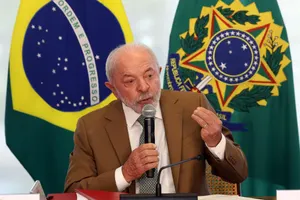
The visit of the Pope to Peru is occurring in the context of the visit that the Pope is making to three countries in South America. These visits are also occurring in the context of a global political scenario, where we see a defeated [U.S. President Donald] Trump, a defeated [Israeli Prime Minister Benjamin] Netanyahu, and a victorious Lula [Brazilian President Luiz Inácio da Silva—ed.]. It occurs at a time when the United States is trying to make South America its next victim with its policy of the Shield of the Americas. We’ll see how that turns out. The Pope has sent a message: Hold on a second; it’s not going to be so easy to do that.
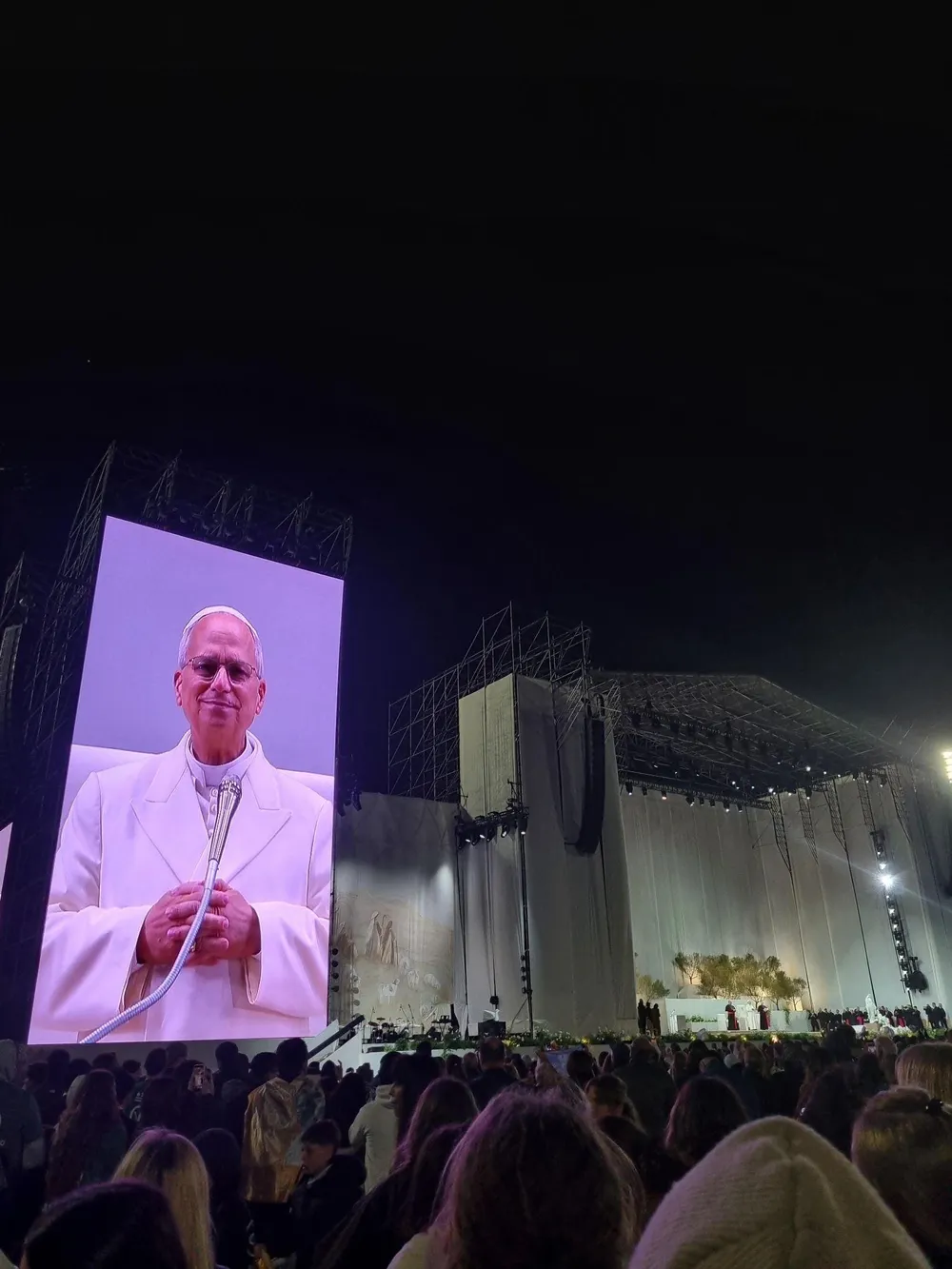
The visit of Pope Leo XIV, I think, is going to have effects and repercussions that are unsuspected right now, not only because of the hope and the courage which he has transmitted to the population; not only because he has transmitted the idea of defending their rights; but also because he has addressed a population which has been very much relegated to the backstage of the world situation, and subjected to ongoing destabilizations that affect their future. So, I think the repercussions are going to be really great, not only in the Americas, in the West in general, but also beyond that internationally. We’ll see what these are going to be.
It is most interesting that the Pope’s choice of the three countries he visited in South America was not arbitrary. He chose them in a way such that the choice itself sends a message. The three together, and each of them separately, represent the social scenarios, the political situations which the different countries of South America are facing. Let’s start with Uruguay.
Uruguay and Argentina
Uruguay is a small country which is generally considered to be a secular country. It has a population of 3.5 million, and only 20% of the population are self-professed Catholics. As a secular nation, they have legalized euthanasia and abortion. So the Pope arrived in Uruguay, and his message was very targeted to the nature of the country and its situation. He focused on talking about the importance of the dignity of human life; the importance, he told the youth, of the fact that the human being is not only a body, but is above all a soul, and that men and women are not objects.
In that context, he talked about the importance of education, that we have to be very careful with the use of artificial intelligence, and he also referred to his encyclical, Magnifica Humanitas, where he said that people come before algorithms. His speeches, his sermons, also addressed the importance of the family. And he said that war is the most horrible thing that the world is currently going through.
Various commentators have noted that the Pope’s visit to Uruguay was a watershed: there is a “before” and an “after” in that country.
After that, Pope Leo went to Argentina. Argentina has a population of 46 million, and 57% of them are self-professed Catholics.
It is a country that in the past was a highly developed country, a country that had among the highest per capita incomes in the world. But with its current President, who is an ultra-liberal nutcase, a friend of Netanyahu and Trump who has terrible policies, Argentina has devolved and is a shattered country with an unprecedented economic crisis. That same President Milei, who now hypocritically welcomes Pope Leo, the same President Milei referred to the prior Pope, the Argentine Pope Francis, as “the representative of Satan on Earth.”
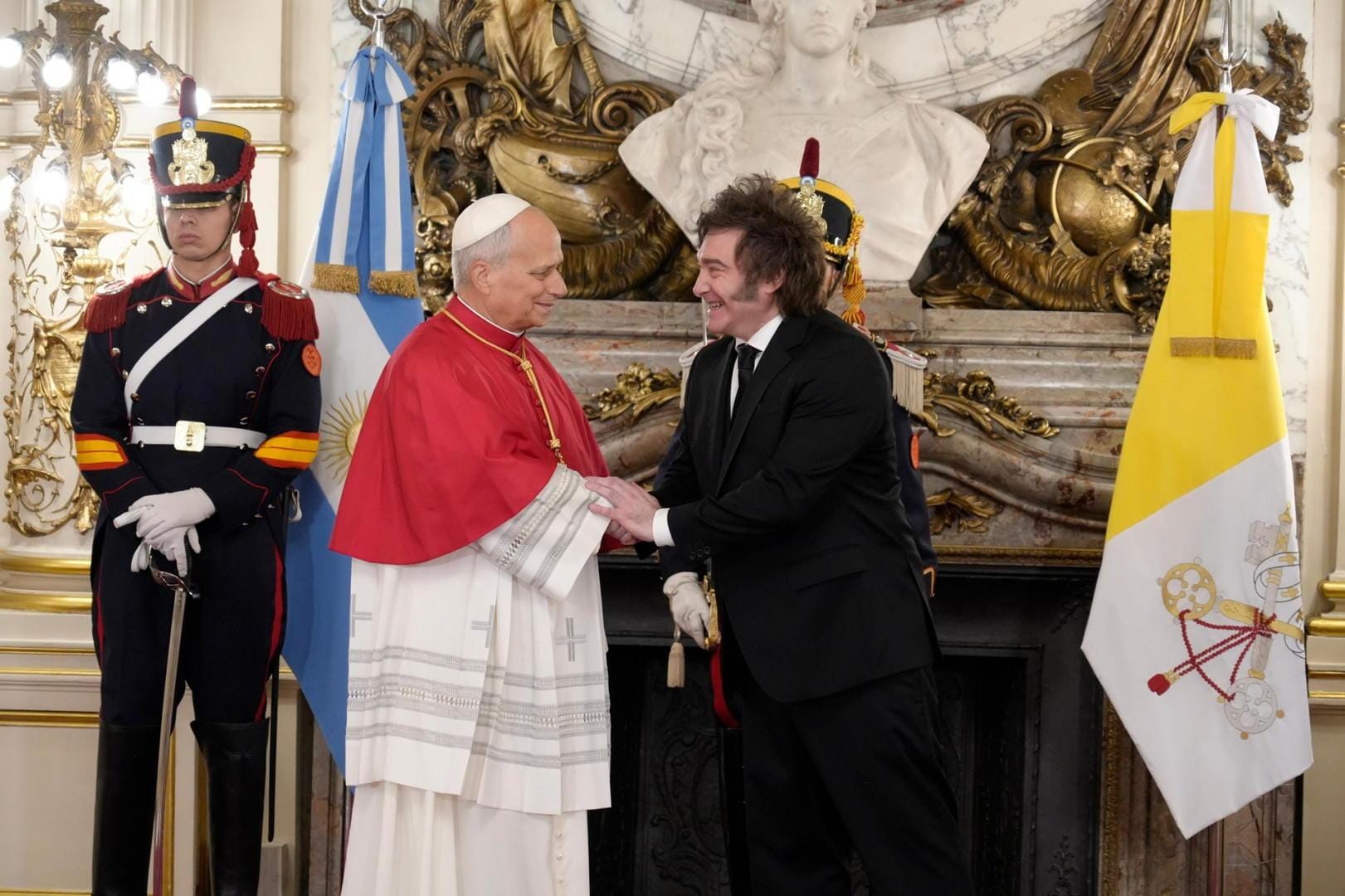
Before departing, Pope Leo made it clear he was going to visit the people of Argentina. Of course, there was protocol, ceremonies, and so on with authorities.
In Argentina today, according to official statistics, 32-33% of the population are poor, and the percentages are higher for youth. This is a country that once was really highly developed. So in the meeting that the Pope had with Milei, he very intelligently took advantage of the opportunity and he delivered a much-needed shellacking.
This led the Argentine people to go out into the streets with hope for the future, after so many years. They have hope because they realize that the Pope has opened up people’s consciences. He has displayed infinite love toward the country.
So, in his conversation with President Milei, the Pope immediately addressed Argentina’s problems and said that the key problem is the economy. The economy, first and foremost, has to be at the service of men and the common good, not the other way around, not that the men should serve the economy. The Pope wasn’t sarcastic; he was very direct; he spoke simply. There are Argentines who have lost wages; there are handicapped people who have had their income cut. And the Pope said that these layers are the priority of any government that claims to be a government.
He then referred to some things that you might consider superfluous, but they are actually important, given President Milei’s personality and his insulting behavior toward the Argentine people. The Pope said the authorities must treat people properly every day, and they need to be careful what words they use. They must be prudent, and they must recognize the limits of power.
The Pope also spoke of the fact that Argentina is a country that is very rich in natural resources, but it is also a country that is rich in human capabilities.
And in that regard, he spoke of the importance of education, of universities, of research, and he called for Argentina to return to its course. He said that emigration is often the fault of those in government, because talent is fleeing, there is a brain drain as people are forced to look for jobs in other countries.
An Ecumenical Call in Argentina
In the final analysis, the Pope issued a call to rationality, which President Milei is clearly lacking, but which the people are capable of, and he urged them to set aside ideological differences, and reach agreements that are of great importance to be able to change the world.
The Pope’s message, without going into the details, was really very strong. The Argentine media say that he really socked it to President Milei. And as you know, the Pope is a very warm person, very personable, and he said it all with his kind approach, as a shepherd of the people.
Pope Leo also referred to the recent peace meeting in Assisi, Italy, with different religious leaders. There were Christians, there were evangelicals, there were Catholics, Orthodox, Jews—it was an ecumenical meeting, almost like a service but with different religions present. In Argentina, he also held a meeting with representatives of the different faiths which exist in Argentina, and he told them: We agree that we must preserve human dignity. We agree that it’s necessary to search for justice and peace. Love of human beings is the link which exists across the generations. My call to you, he said, is that we should have a constructive dialogue to be able to build a better future for Argentina. It was really very tender.
Another important thing happened during his visit, which is that the Pope reminded people of an Argentine businessman who lived in the 1940s and ’50s, Enrique Shaw, who is now being promoted for beatification. He came from a very wealthy family, which had the largest glass factory in all of Argentina, and what happened is that this gentleman changed the company’s established rules and converted it into an enterprise dedicated to the common good.
He worked to put limits on the hours worked per day, to have a minimum salary sufficient for people to support their families, and so on. But what’s interesting is that, in discussing this, the Pope sent a message to the entire business community of Argentina, especially those who are now backing President Milei. So, as with what happened in Uruguay, the Pope’s trip to Argentina created a “before” and an “after” in that country. There were massive, truly massive turnouts, with an estimate of 8 million people or more that came out to listen to the Pope in different locations in Argentina.
Coming Home to Peru
With regard to Peru, which is the Pope’s homeland, as he has said on various occasions, one of the most incredible things is that he sang the national anthem along with us. He also sang a popular song called “My Peru.” He was at home, and he said, “I’ve finally come back home.” This was very emotional for all of us.
On the route from the airport to the official reception in the government palace in Lima, three million people lined the streets, according to Vatican News.
Peru is a country which has faced terrorism going back into the last century from constant political destabilizations. We have had eight governments in the last 10 years. There have been efforts to cause a confrontation between the left and the right in the country, in order to ensure that there is permanent instability.
We have 35 million people in Peru, and what’s interesting is that it’s a country which is unusual because 76% of the youth between 12 and 30 years old are Catholics. The percentage drops as people get older—it’s a lower percentage for adults. Actually, evangelical sects are proliferating very rapidly in the country. And according to official statistics, poverty stands at 26% nationally, and 35% in rural areas.
I don’t have to recount the personal story of the Pope. He lived here. He came to Peru when he was 27 years old. He lived here and did amazing things. He became a Peruvian citizen in 2015, sending a really impressive letter directed to the President of the country at the time, saying that he had decided to spend his life in Peru. So this is the context in which the Pope visited us.
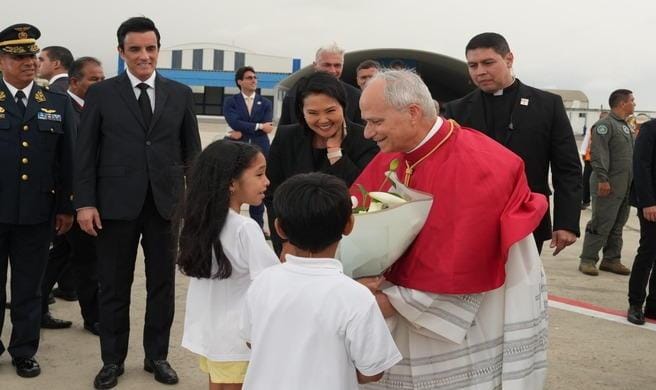
His first meeting was with the President, Mrs. Keiko Fujimori. The President welcomed him with a very good message. Besides reviewing the life of the Pope in Peru, she began by saying that the problem which Peru faces are the disagreements among Peruvians.
Peru, she said, needs “national reconciliation,” and she asked the Pope to “help us overcome our differences and confrontations which have shaped this country, to help us strengthen dialogue as a pathway to find agreements that allow us to address the needs of the population. Our differences, the President said, should be resolved through democratic mechanisms in discussions, in institutions, and these should create space for convergence that allow us to work for common objectives. That was the tone of her speech.
There was great warmth between the President and the Pope. The Pope is really an exceptional person: he exudes goodness and hope. He’s a very unusual person. in terms of his intellectual capabilities, his personal approach, and his human qualities, his ability to transmit those profound messages to the population.
But in any event, the Pope, in his response to the President’s message, also recounted that he had taken on Peruvian citizenship in 2015. He said that this action was a statement of his connection to this country, which has had a huge impact on his life. He said: “Today I understand how much of this land remains with me and how much of my own story also belongs to you…. That is why I can tell you, with deep gratitude, that I am also returning to my homeland.”
You can well imagine the reaction of the population to that—no need to elaborate.
The message of the Pope was very heartfelt. He talked about the importance of defending the family; receiving a fair wage; combating violence, including family violence; the right to justice. He talked about education, having adequate medical attention, respect for women. All women should be encouraged to develop their capabilities, he said. Here in Peru, in earlier times, in periods of destabilization, women were the ones who actually established soup kitchens to feed the population in tough times. The Pope also called emphatically for the defense of young girls.
As for migrants, throughout his visit he spoke about the plight of migrants, because one and a half million Venezuelans have migrated to Peru. He said that those who come to Peru also come with stories and hopes that must be welcomed and respected. On the internal confrontations that Peru has faced, the Pope was very specific. He said: “Peru, too, has gone through difficult times that have tested the ability of its people to live together in harmony. Past events deserve to be treated with justice and sensitivity, leaving room for harmony to grow and for differences to be addressed with respect. Democratic life implies recognizing that no one has all the answers and that differences do not prevent us from sharing a sincere concern for the good of the country. I would like to encourage everyone to cultivate honesty, integrity, and a willingness to engage with others—qualities that sustain trust among people and give strength to the life of institutions.”
He also talked about the international situation. He said: “The wars and tensions that afflict so many peoples call for patient diplomacy—diplomacy that keeps dialogue open, respects international law, and seeks agreements that protect the lives and dignity of people. Every nation has legitimate aspirations, but none can regard the fate of others as extraneous to its own concern.”
So, he also encouraged Peru to continue to contribute to the world.
His message to the youth was very warm and loving. He said, “You are the hope.” He underscored the importance of the family, unity, and the impact of digital technology, which often divides rather than unites families.
Right now, as we are speaking, the Pope is on his way to Chiclayo, which is a coastal city in the north of the country. It was the city where Pope Leo became a bishop. Out of the more than 40 meetings he will hold over the course of his visit to Peru, the one that is happening right now in Chiclayo is expected to draw more than one and a half million people. In fact, there are already 10,000 Ecuadorians who have crossed over the border to listen to the Pope. He’ll also come back to Lima for a send-off, and a similar number of people are expected to turn out here.
We, as the Schiller Institute, were present at both the Presidential Palace and the Central Plaza in Lima to share with foreign and domestic journalists, in particular, the open letter which we sent to the Pope reiterating our call for a peace summit meeting of the three world leaders.
So, that’s what I have to say for the moment. Thank you very much.