Editor’s Note: This article was first published in 21st Century Science & Technology, Vol. 13, No. 2, Summer 2000.
This is Part Three of a three part serialization of the above titled article. Part One is available here, Part Two here.
3. The Legitimate Object of War
It used to be elementary competency in the training of modern civilization’s higher military ranks, as typified by General Douglas MacArthur, that the object of warfare, is to produce and offer to one’s opponent the circumstances in which his own moral conception of his self-interest efficiently requires him to cease warfighting. Such, as I have already stated, once again, in this report, were among the crucial lessons which modern, pre-Versailles Treaty Europe had learned from the 1648 Treaty of Westphalia. Such had been, earlier, the practical implication of the Augustinian principle of justified warfare.
However, there has never been a known instance of a durable application of this principle under any form of society corresponding to what “globalization” represented under the ancient Babylonian and Roman empires, European feudalism, or a region of the world under the hegemony of the Anglo-Dutch imperial model of modern financier-oligarchical rule, up to the present time.
Therefore, it is the proper leading concern of the strategist, to ask himself: Under what conditions, is there no likelihood of willingness on the side of the attacker, to relent, or his target to submit? Such expressed conditions, either in a distinctly military form, or otherwise, are the circumstances under which the existing society will probably destroy itself through either continuing or recurring warfare, rather than that the war be concluded by that society.
Such were the perpetual wars of the ancient Mesopotamian dynasties, the Roman Empire, European feudalism, the lunatic prolongation of the U.S. war in Indochina, the continuing genocidal warfare against the people of Iraq, and the contemptible folly of United Kingdom Prime Minister Tony Blair’s and U.S. Secretary of State Madeleine Albright’s—in fact—continuing warfare against the Balkans as a whole. Such is the implied outcome of the present strategic and related “globalist” dogmas and strategies of the currently reigning Anglo-American power.
On the one side, the fact that the object of warfare should be an early exit to a durable peace, should be clear to any rational, literate, and intelligent person, especially to those who have studied the history of such matters. The evidence, that powerful civilizations, such as those of Mesopotamia and Rome, have preferred to destroy themselves, and much of mankind as well, rather than enjoy available benefits of peace, poses the kind of issue of strategic policy-making which is of the utmost, overriding importance today. Pax Romana always meant endless war, as long as that policy persisted. Comparing those cases to the way in which Alexander the Great established, so suddenly, a new system, ending the millennial nightmare of chronic warfare specific to Mesopotamian imperialism, is a case in point.
The starting point for such comparative studies, should emphasize the notable successes of the modern European civilization on this account, as during the period 1648 to 1901, in contrast to the general failure, on the same account, of all civilization prior to the Fifteenth Century emergence of the first modern sovereign nation-states, the conclusion of the Hundred Years’ War by Louis XI’s France, and conclusion of the Wars of the Roses by England’s Henry VII.
Why, on balance, has the modern sovereign nation-state been, relatively speaking, a successful institution in its search for durable peace, relative to all known earlier forms experienced by the recent 2,500 years of globally extended European civilization? Why, in contrast, despite that superiority of the modern sovereign nation-state on this account, have such horrors as Portuguese, Dutch, British, and French colonialism persisted—actually, recently escalated in the name of “globalization” and “rule of law,” up to the present moment of writing; and why did European civilization allow itself to become enmired in the plot of Britain’s Edward VII to drown much of civilization in World War I? Why, after the lessons of 1914-1917, did the 20th Century continue to be the kind of recurring nightmare which World War I typified, as characteristic of the history of that century as a whole?
To restate the same point in the most relevant terms, it is a flat lie, if also popular fools’ babble, to say that the existence of the sovereign nation-state is the root of the impulse toward war. It is the opposition to the sovereign nation-state, which has been the principal cause of warfare and related pestilence, throughout the history of globally extended European civilization.
For example, the history of globally extended European civilization, during approximately 2,500 years to date, shows that the mere existence of those impulses associated with the post-1945 drives toward what Russell et al. defined as “world government,” represents a condition which ensures the perpetuation of forms of warfare, such as the continued, senseless, genocidal bombing of Iraq, and the recent NATO war against Yugoslavia. That pattern of conditions, unless overturned, as the 1648 Treaty of Westphalia did, can have no ultimate outcome but a “new dark age,” such as the collapse of the Roman Empire in the West, the Fourteenth Century “New Dark Age,” and the 1618-1648 Thirty Years’ War.
That is precisely the pattern of doom which looms as an immediate menace before this planet as a whole, unless the current fads of “globalization” are now abruptly obliterated.
Indeed, because of the new kinds of epidemiological and related conditions existing worldwide today, the eruption of a “new dark age” as the result of the kinds of policies currently advocated by Prime Minister Tony Blair’s United Kingdom, or the U.S. candidacies of Governor George W. Bush and Vice President Al Gore, typifies the greatest potential threat to mankind since at least the beginning of modern civilization in ancient Classical Greece.
Notably, all of the major European wars of the Sixteenth and early Seventeenth centuries, were wars organized by Venice’s financier oligarchy and its allies, in the effort to suppress the effects of the Fifteenth Century Golden Renaissance, and to prevent the rise of modern forms of sovereign nation-states, such as those which had been established provisionally under Louis XI in France and Henry VII in England. The religious wars which erupted, at the instigation of Venice and Padua, in the wake of the defeat of the League of Cambrai, religious wars which thereafter dominated all of Europe until the 1648 Treaty of Westphalia, were nothing but products of the same impulse which the Venice-modelled financier oligarchy of London and the Netherlands launched, in their effort to abolish technologically progressive forms of modern nation-states, such as the wars launched from William of Orange’s and Marlborough’s Netherlands and Britain during the late Seventeenth and early Eighteenth centuries.
The latter was a pattern of imperial warfare conducted at the instigation of the Anglo-Dutch-centered financier oligarchy, a pattern extended over the entire span of time following, up to the presently escalating, genocidal campaigns for looting and recolonization of the territories of the former Portuguese, Dutch, British, and French colonies, today.
As I have summarized the matter in my recent Bad Schwalbach address, “On the Subject of Strategic Method,” since the Roman subjugation of the higher form of Hellenistic civilization, at the outset of the Second Century B.C., until the present, the only factor which ever lifted globally extended European civilization up, from the plunging cultural degeneration represented by the Babylonian tradition of pagan Rome, was the so-called “neo-Platonic” current defined by the Christian Apostles’ adoption of the legacy of Plato’s Athens Academy, as an integral part of the cultural resources adopted by Christian civilization. The murder of the Apostles Peter and Paul by pagan imperial Rome, like the earlier crucifixion of Jesus Christ under the order of the Capri-based Emperor Tiberius’s son-in-law Pontius Pilate, typifies the central issue of all European civilization and its legacy, the conflict between the respective Classical and the Romantic legacies of pagan Rome and the latter’s corrupting principle of vox populi—the degenerate Walter Lippmann’s public opinion, from then to the present day.
The crucial feature of strategy which provides for a durable form of exit from war to peace, is the same principle enthroned in the opening paragraphs of the 1776 U.S. Declaration of Independence and the Preamble of the Federal Constitution. The appearance of that principle in the U.S. struggle against the force of evil represented by the British monarchy then, was a product and reflection of a long struggle rooted in the work of the early Christian Apostles. It was an expression of the revolutionary policy introduced by France’s Louis XI and copied by England’s Henry VII; it appeared in the Declaration of Independence as a perfected expression of the same motive which inspired the architects of the 1648 Treaty of Westphalia to bring to an end more than a century of religious warfare. Just as the United States was conceived as a republic, to promote the general welfare of all of its people and their posterity, so the principle of the general welfare had exerted its rightful higher authority over factitious religious issues, and over the claims of supranational governments’ interests, in the Treaty of Westphalia.
The only durable basis for peace, is the commitment of victor and vanquished to the common purpose, of the general welfare of each and all equally. Thus, according to that principle, President Abraham Lincoln, at the conclusion of an awful civil war, in his final public address, shortly before his assassination by a British intelligence service’s operation, proclaimed that each and all of the states briefly associated with the cause of the treasonous Confederacy, should be returned to the union as if they had never left it.[[1]]
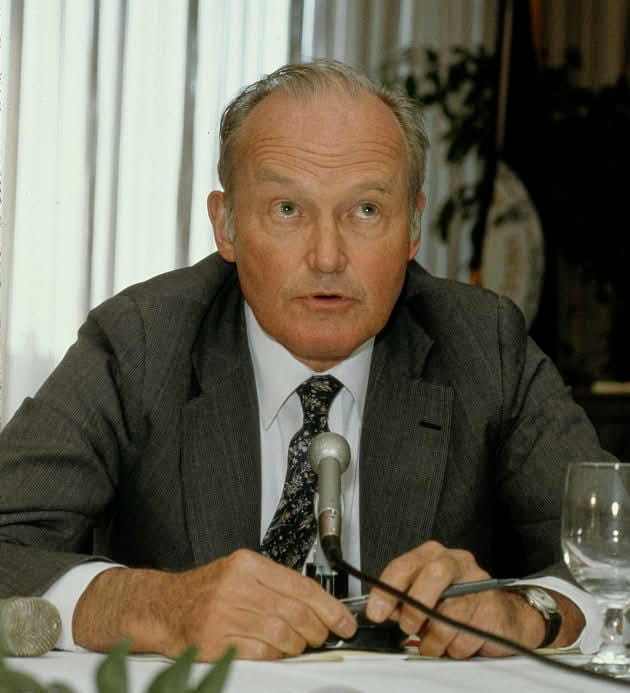
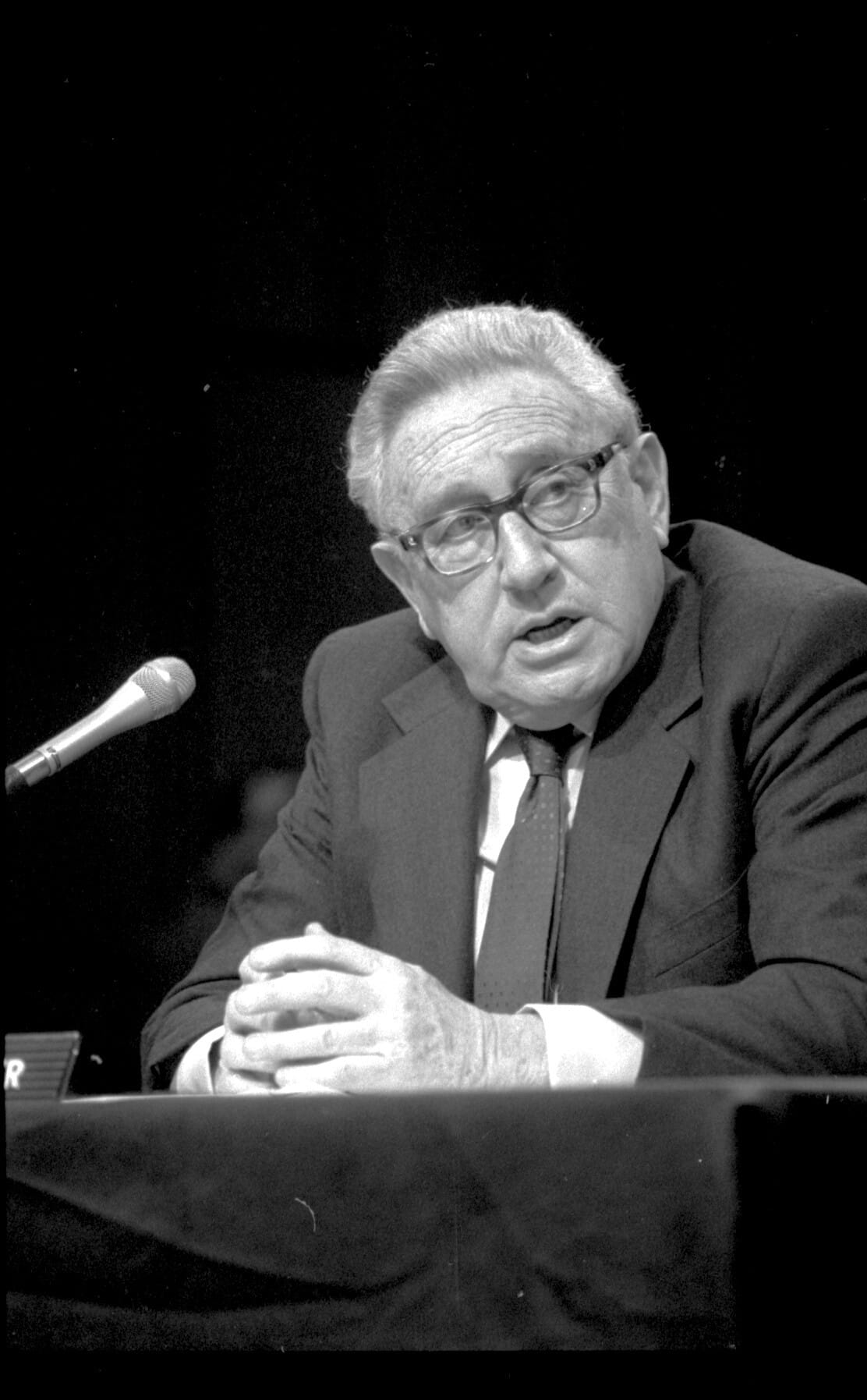
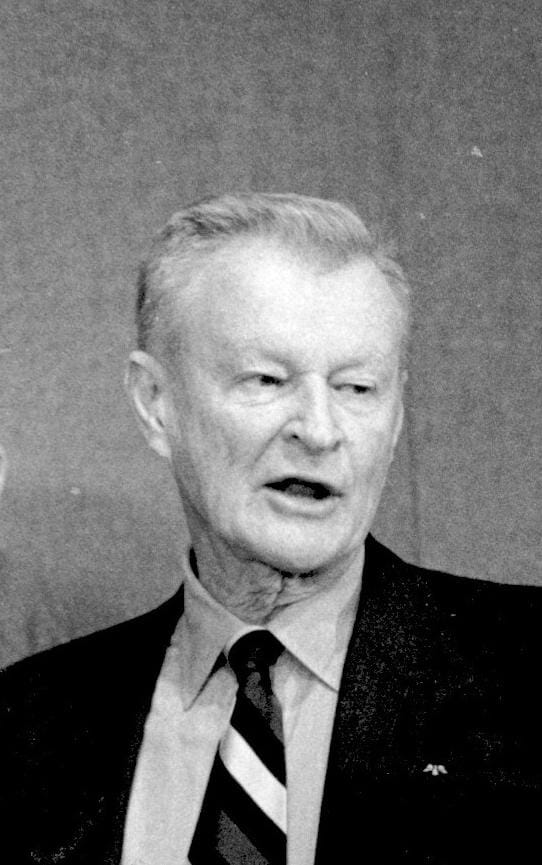
Left to Right: McGeorge Bundy, Henry Kissinger, Zbigniew Brzezinski. Credits, left to right: Library of Congress, EIRNS/Stuart Lewis, EIRNS/Stuart Lewis. “The currently ruling political authority in the United States today, despite its widespread, fashionable, and baldly hypocritical ‘antinuclear’ and kindred protestations against so-called ‘weapons of mass destruction,’ does not desire, either to end the reign of the nuclear-missile threat, or to secure a peaceful state of relations among all, or any, of the existing nation states.” Here, some examples of the ruling “generalized warfare faction,” past and present.
In contrast to the nobility of Lincoln’s stated “exit” from warfare, consider the morally degraded, hate-brimming politics of revenge of the victor, of reparations and retribution, such as the legacies of Versailles; the recent NATO war against Yugoslavia, and the genocidal measures against the population of Iraq still continued by the U.S.A. and the United Kingdom, are the marks of governments of victor-nations which, among their other offenses, are neither Christian nor civilized in any meaningful sense.
The policy of the founders of the U.S. republic, the policy of my fellow American Whig Abraham Lincoln, was not an inclination peculiar to some U.S. patriots. It was the aspiration of all of the greatest souls of modern Europe, notably those figures from all Europe’s nations, who have contributed what they might to bring forth in North America, the kind of republic, committed to the general welfare, which they desired to spread back into aching, oligarchy-oppressed Europe. The basis for durable peace lies within the victor’s commitment to the freedom and general welfare of the vanquished, that as much as for himself. That was Wolfgang Mozart’s reworking of the script for his The Abduction from the Seraglio, and is also the implicit lesson of the Treaty of Westphalia.
The problem is, that the legacy of our republic’s deadly adversaries, is a powerful force of anti-republican financier oligarchy, within our nation today, as it is worldwide. Thus, among the nations of Europe and the Americas, and Asia and Africa, too, the desire for a durable peace represents a still-viable charter for the application of the lessons of the 1648 Treaty of Westphalia to world affairs. However, that peace will never exist, until we defeat its opposition; that fight for peace, against the continuation of oligarchical rule; that is the only legitimate pretext for justified warfare.
That opposition, which is to be defeated, is represented by the oligarchical forces—chiefly, today, the London–Wall Street–centered financier oligarchy—rallied behind the neoimperial cause called variously, “globalization,” “free trade,” “rule of law,” and “world government” today. We can not have peace anywhere on this planet, until we remove from power those specific types of oligarchical forces, merely typified by the followers of H.G. Wells and Bertrand Russell, which remain fervently dedicated to imposing the institutions of a “New Age” of world government, even at any cost to humanity as a whole.
Locate the solution to this paradox in the domain of science-driven strategic thinking.
Science: The Power for Peace
From a moral standpoint, it were virtually impossible, to repeat the following point too often:
The essential folly underlying all official U.S. discussion of missile defense today, is that the currently ruling political authority in the United States today, despite its widespread, fashionable, and baldly hypocritical “anti-nuclear” and kindred protestations against so-called “weapons of mass destruction,” does not desire, either to end the reign of the nuclear-missile threat, or to secure a peaceful state of relations among all, or any of the existing nation-states. Quite the contrary, the current policy of the United States is, still today, that announced by Governor George W. Bush’s father nearly a decade ago, and avowed by Vice President Al Gore today: a neo-Romantic’s new world order.
That intended new world order, is still, today, a parody of the old pagan Roman Empire, under whose reign no nation is sovereign. As under the ancient Caesars Tiberius, Claudius, Caligula, and Nero, and as seen in the foreign policy of practice of Mrs. Albright, all peoples are subject to the caprices of whatever so-called “globalization” decrees in the name of “universal rule of law” the presently ruling Anglo-American financier oligarchy happens to concoct, as pretext, at that moment.
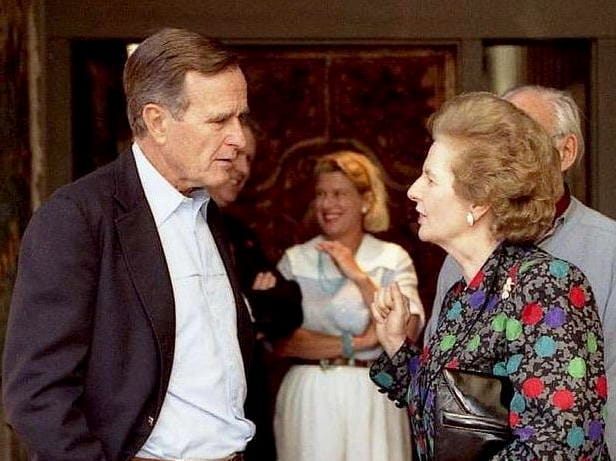

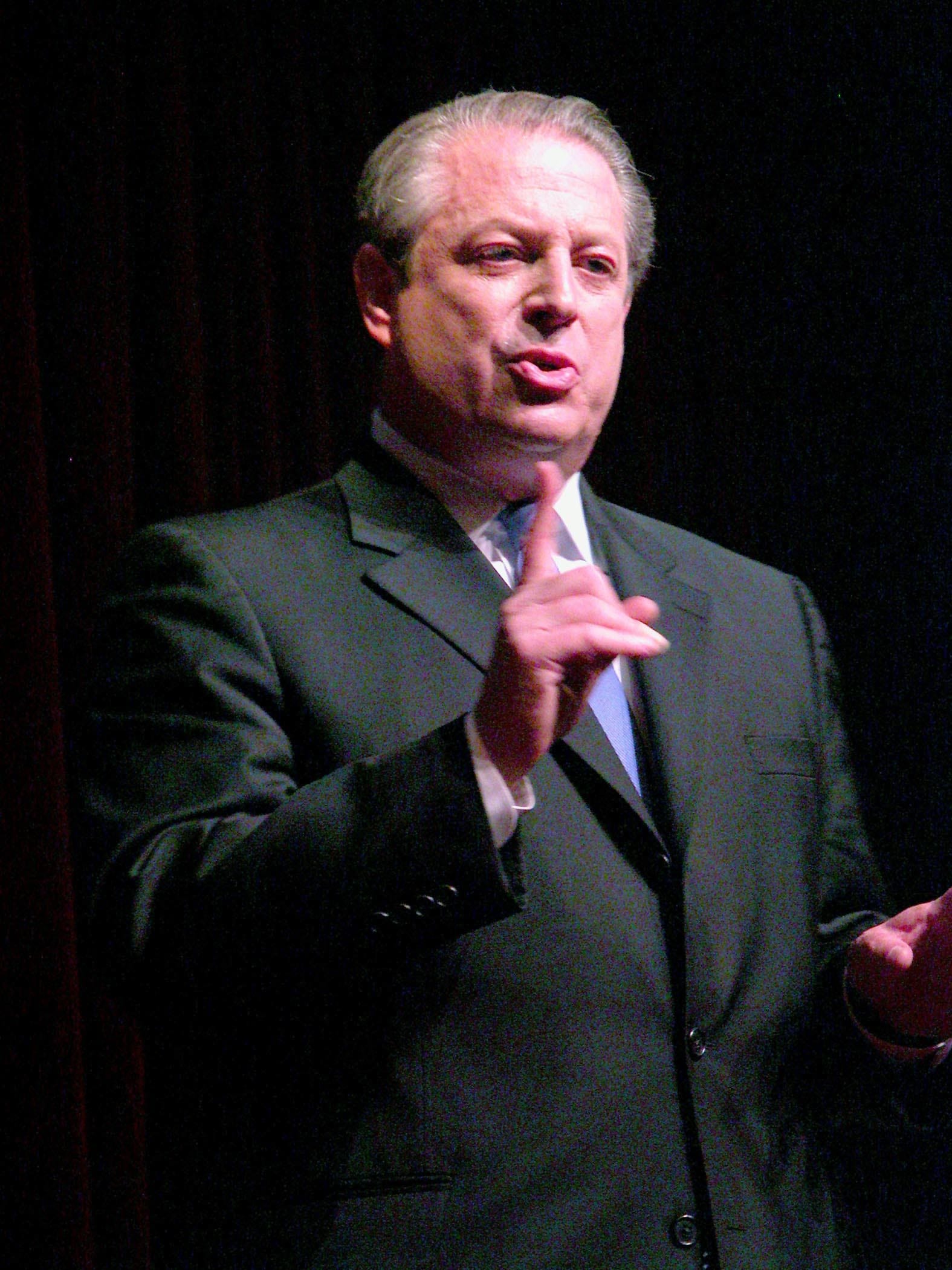
Left to right: George H.W. Bush with Margaret Thatcher, Tony Blair, Al Gore. Credits, left to right: Public Domain, Public Domain, EIRNS/Stuart Lewis. “[T]he current policy of the United States is, still today, that announced by Governor George W. Bush’s father [President George H.W. Bush] nearly a decade ago, and avowed by Vice President Al Gore today: a neo-Romantic’s new world order.”
As we have seen above: in the proposals for missile defense against a threat to peace from alleged “rogue states,” what the authors of that rhetoric intend, as Zbigniew Brzezinski and other present-day Mackinders have insisted, is to settle the last obstacle to permanent Anglo-American imperial power, by preparing to go to, or beyond the brink of geopolitical war, over the issue of their lust for control of the raw materials in the region of Central Asia bordering the Caspian Sea. Just as Adolf Hitler cried “Peace!” when he intended to seize Czechoslovakia on the road to an intended world war, so today’s would-be Anglo-American Caesars cry “Peace,” or “rule of law,” or “missile defense,” when their intentions could have no outcome but generalized warfare.
Nor are these presently hegemonic oligarchical circles motivated by concern for the welfare of the population of even the U.S.A. itself. As we see from the consistently worsening secular trend in the welfare of the lower eighty percent of U.S. family-income brackets, since the time of President Jimmy Carter’s 1977 inauguration, there is no intent on the part of the presently reigning Anglo-American financier oligarchy, to satisfy the welfare of the general populations of even the imperial U.S.A. and United Kingdom themselves. Indeed, as the U.S.A. itself plunges toward the deepest world depression in more than a century, the current Congress and Administration are seized by an obscene zeal to remove all of those protections of our people, such as the Glass-Steagall Act, which were adopted, under President Franklin Roosevelt, as lessons in law learned from the brutish debacle of the last depression.
These would-be mad mass-murderers of today and tomorrow, are like the modern Caesars, Napoleon Bonaparte, Benito Mussolini, and Adolf Hitler before them, or Tony Blair today. They are the old pagan ruling class of Rome in modern plebeian disguise. Today’s Blairs and their like, are the Caesars who proclaim themselves, once again, as Hitler did, the humble-as-Uriah-Heep, dutiful servants of the popular will, of inevitable, remorselessly unstoppable current trends in public opinion, as innocent instruments of the Zeitgeist, Weltgeist, and Volksgeist, of the fateful spirit of the age: The New Age. “We, who are about to die, salute you!” “Duce! Heil Hitler!” Nietzsche hailed the Anti-Christ, who, perhaps, had been Tiberius lurking on Capri. So, the pattern unfolds. The cry is often different; but the evil is the same.
Let us end the reign of ideology over the empty minds of the sightless crowd of what Wells follower Walter Lippmann defined as manufacturable public opinion. It is time to trash that glitter of cheap tinsel called today’s popular opinion. People should cease cheering for slogans, and examine instead, the issue of what those slogans mean in practice. When we speak of security, whose security do we mean? What kind of security do we mean, provided by whom, and for whom?
What, then, are the essential elements which must be brought together for the sake of peace?
First, there must be the desire for true peace, a desire which is stronger than other motives.
Peace requires not merely the bare desire for peace from both the prospective victor and vanquished alike. It requires an efficient form of such desire. There exists no efficient desire for peace among any of the leading powers of the world today; there will be no peace, until that condition is radically, and suddenly, changed. The very early resignations of Mrs. Albright, Vice President Gore, and Tony Blair, might be merely a suitable, token first step in that blessed direction.
The state of mind of both victor and vanquished, which elevates “peace” above the level of self-righteous hypocrisy, is a belief, by both parties, especially the victor, in the general welfare of all mankind. It means, therefore, a state of mind which has rejected what the modern English-speaking tradition recognizes as the Hobbesian conceptions of human nature, power, and conflict. Unless those preconditions are satisfied, peace will come, if at all, falsely, like hyenas at night, like Christians being slaughtered in the Roman arena, solely as the death-like subjugation which those too powerful impose upon those too vulnerable.
Granted, my subject here is the role of science in strategic defense; but, only a fool could avoid the challenge of asking and answering the question: who will bring such peace, by what means, and, above all, out of what personal motivation?
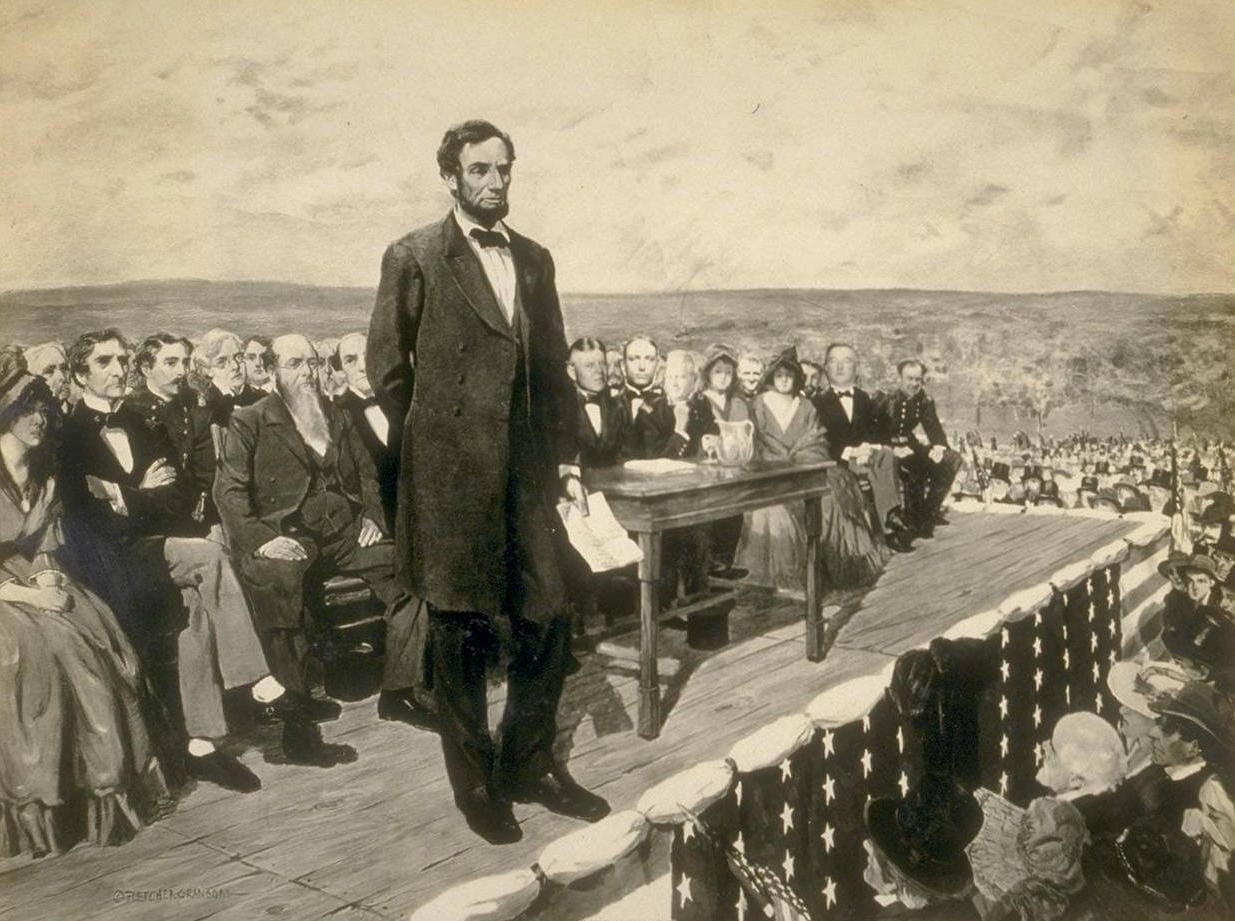
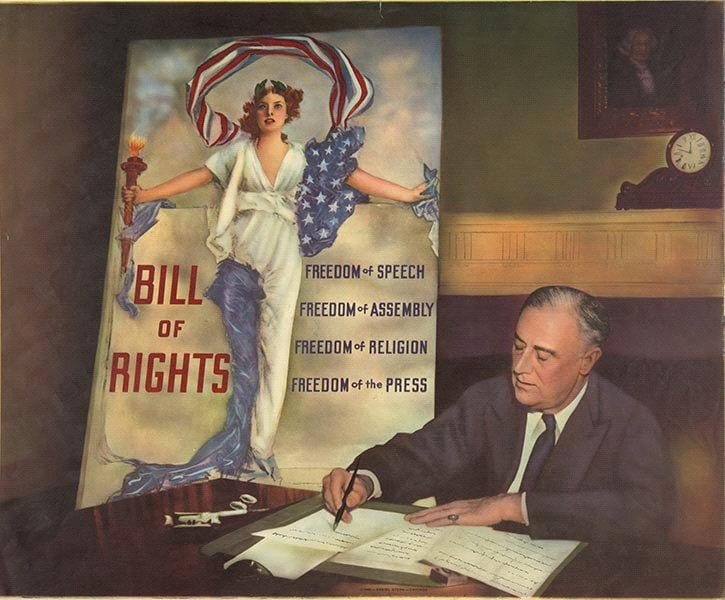
(Right) President Franklin Roosevelt in 1941, looking at a Norman Rockwell illustration of the Four Freedoms. “Even if great public works, and so forth, were not otherwise needed, we must provide them, even if no other reason for that effort were proposed, but the uplifting moral effect of constructing them.” (Left) Lincoln at Gettysburg. “The true peacemakers do not merely act; they act to raise mankind to a higher state of relationship to the universe at large.” Credit for both images: Library of Congress
(Right) President Franklin Roosevelt in 1941, looking at a Norman Rockwell illustration of the Four Freedoms. “Even if great public works, and so forth, were not otherwise needed, we must provide them, even if no other reason for that effort were proposed, but the uplifting moral effect of constructing them.” (Left) Lincoln at Gettysburg. “The true peacemakers do not merely act; they act to raise mankind to a higher state of relationship to the universe at large.” Credit: Library of Congress Library of Congress
Peace could never come, except to the degree that the rule by oligarchy is outlawed, as the opening paragraphs of our 1776 Declaration of Independence and the 1789 Preamble of our Federal Constitution prescribe. As long as oligarchy’s claims are tolerated—whether Babylonian, Spartan, Roman, feudal, or financier—there is no peace on this planet, and can be no peace, except that of the grave.
Second, therefore, there must be the all-too-rare individual peacemakers.
View this matter of motive from the vantage point of what Plato defined as agape, as this is presented in I Corinthians 13.
Peace is not the artefact of a legal contract. Peace is not a utopian’s set of rules. Peace exists only to the degree it is brought into being, over the opposition of a corrupt popular will, by those rare persons rightly known as the peacemakers.
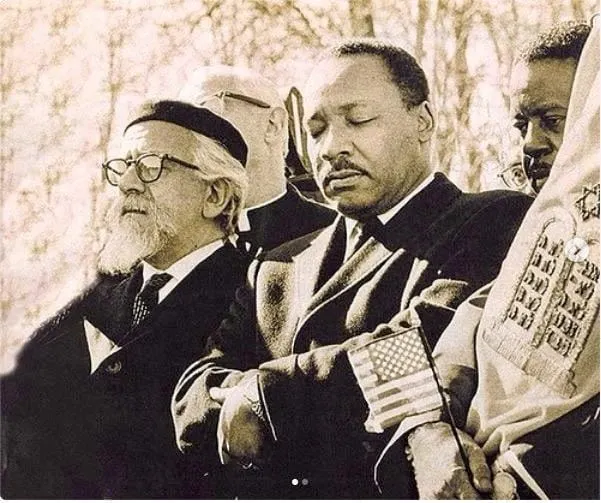
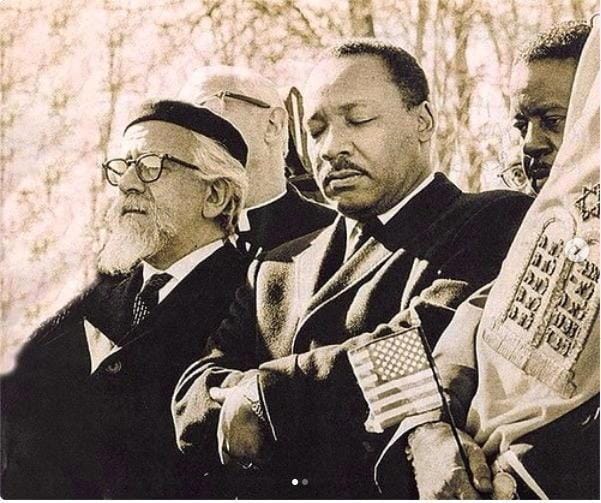
The study of history should have informed the literate, that, contrary to popular, foolish paeans to the empyreal delights of “democracy,” the true peacemakers are not popular opinion, but the still rare individuals of each relevant time of crisis. These peacemakers are, like our memory of the officially martyred Rev. Martin Luther King, Jr.,[[2]] the egregious personalities of their time, who act, not out of what they enjoy from the immediate fruits of mortal life, but what will satisfy them about their having lived, when they think of one’s future identity as one deceased. These exceptional individuals, the peacemakers, express a natural quality of human nature, a quality which appears only when a certain maturity has taken over their being.
So far in history, instances of such individual moral maturity have been relatively rare.
That heretofore rare, but only normal concern of a morally matured, redeemed member of our species, is that defined by the nature of our species, as distinct from that of the lower forms of life.
Moral maturity means to reconcile the fact of individual mortality with some special sort of joyful reward which might surely endure in some efficient way, even after all of the pleasures of sense perception have vanished into one’s grave. So far, in the known history of cultures, only a tiny fraction of the individual members of society has grown to the moral maturity of that point of view. It is upon such still rare individual leaders, that the effective leadership of society for times of great peril has always depended. These, sometimes described by Plato as our “philosopher kings,” are the only true peacemakers for times of great peril to entire cultures, or mankind in general.
The fate of mankind, in such moments, depends not upon the blind instinct of masses, but upon the heretofore exceptional existence of such individual, usually egregious peacemakers, and the role they attempt, and are permitted to play in opposition to such creatures of Mephistophelian evil as Bertrand Russell and Madeleine Albright’s H.G. Wells.
Such is personal motive of the truly great and moral physical scientist, for example. The peacemakers are those, who, above everything else find the meaning of their personal mortal lives in their contribution to the future peace and welfare of humanity as a whole. They are what are sometimes described as men and women “of Providence,” as the great Classical tragedian Friedrich Schiller presents the case of the Jeanne d’Arc who made Louis XI’s reconstitution of France possible. Only such leaders of society, the Solons and Platos of their time, are to be entrusted by the people with making the policies which, in times of greatest crisis, will prejudge the future welfare of mankind.
These true peacemakers have an additional distinction. Their moral maturity enables them to see that the true form of action, is that which raises the human condition to a higher level of power within the universe, as valid discoveries of universal physical principle do. The true peacemakers do not merely act; they act to raise mankind to a higher state of relationship to the universe at large.
Third, the peacemakers must bring what is called an “exit strategy” from warfare.
For example: several times, but in one ironically notable moment, President Bill Clinton has attempted to play the part of a peacemaker. Unfortunately, he failed to live up to that promise.
This Classically tragic failure of U.S. President Clinton, was expressed, and typified by his failure to adhere to the exit strategy he had outlined a few weeks prior to the close of NATO’s war against Yugoslavia. This case aptly illustrates the point. What Mr. Clinton had proposed, from the time of his notable address on this subject, to a group of West Coast journalists, had been a well-considered “exit strategy” for that war, a policy which was in accord with the 1648 Treaty of Westphalia. Suddenly, at the close of the bombing, he changed: disaster! Vengeance and retribution transformed the cessation of ill-conceived and bungled NATO hostilities, into a farce which threatens, a year later, to ignite the tinder remaining in the war-torn underbelly of Europe, into a spreading holocaust worse than the recent Balkan wars themselves.
What was required, instead of that tragic turnabout, was, as the President had strongly implied, a “Marshall Plan” style of generalized reconstruction for the Balkan region as a whole. The physical means for such an undertaking existed, in fact, if not in the will of the NATO member-nations as a whole. What had been done in war-torn post–World War II Europe, notably in France, the western part of Germany, and Italy, under the provisions of the 1945-1958 Bretton Woods system, could have been repeated, promptly, in the Balkans as a whole.
Consider, as an example of the point about strategic defense we are developing here, the way in which such an “exit strategy” could have produced, rather quickly, a condition throughout the Balkan region better, for each and all, than had existed since the war there had first been provoked and unleashed by the Anglo-American circles associated with the preceding “Desert Storm” adventure. Look at this example, first, and then compare the implications of that example with both what I and President Reagan had proposed as SDI cooperation with the Soviet Union, and the contrasting farce of the missile-defense proposals being emitted from the U.S.A. today.
Consider three aspects of the implementation of such an “exit strategy.”
1. It has the general effect of tending to shift the axiomatic world outlook of increasing portions of all those nations, and their benefactors, too, from a pathetically Romantic, Nietzschean-like bestiality, deeply imbued with murderous, vengeful cultural pessimism, into an opposite direction, that of pro-Classical cultural optimism.
The post-war moral decline of the populations of that region, relative to the earlier moods, even during the heat of those wars, is sickening; but, it is merely a lawful expression of the consequences which the NATO allies have imposed upon each and all of the nations of both the Balkans and the immediately adjoining regions of the Danube and eastern Mediterranean. The promotion of Hobbesian-like conflicts among nations, ethnic groups, and so forth, tends to transform men and women so affected, into feral beasts, beasts whose every reference to “my interests” resonates like the cry of a predatory hyena.
2. The most general consideration, in adopting the kind of “exit strategy” which President Clinton had advocated prior to his reversal of that policy, is located in the effect of two contrasting forms of labor upon the mind of the individuals and households engaged in that labor. As we in the United States should have learned from observing the American family farmer and the industrial operative, when a spirit of technological progress, and increased physical productivity of the economy arises, the cognitive factors tend to predominate.
First, the operative whose work calls upon his or her cognitive potentials, rather than merely repetitive, cattle-like labor, is more culturally optimistic, more moral, less likely to beat his wife and children routinely. Second, even if the form of labor does not produce significant tangible benefits for the individual operative, the fact that the society is visibly on an upward track, fosters optimism about each individual’s participation in the work which promises a better future for coming generations.
3. Great public works, as typified by the effects of the Tennessee Valley Authority upon the population of that region of Tennessee and Alabama, have an important, most positive philosophical impact upon the culture of all affected. These kinds of enterprises, hold up the mirror to mankind, reflecting an optimistic image of man in the universe. The net result, is the tendency of the individual to think, less of what he or she is acquiring, than of the importance his or her existence assumes as a contribution to the benefits enjoyed by a larger humanity, that of the course of generations yet to come.
Thus, even if great public works, and so forth, were not otherwise needed, we must provide them, even if no other reason for that effort were proposed, but the uplifting moral effect of constructing them. It is as Benjamin Franklin’s early mentor, the great American patriot Cotton Mather, once warned, the axiomatic root of remedies for nearly all human afflictions, is the simple passion “to do good.”[[3]] Science, as I have defined it in this report so far, is the appropriate example of the motivation otherwise to be described as the commitment to do good.
Fourth, the commitment to do good must be defined not as a commitment to take a specific action, but as a principle of continuing action. Here, on this point, we touch the core of the issue, the issue of the role, and the corresponding, corrected definition of science. We must supply a relevant correction for the popularized misdefinition of science.
For reasons already given above, today’s customary definition conflicts with two sets of facts. First, in the relatively lesser degree, it conflicts with the hylozoic view, as echoed by Vernadsky. Second, it ignores the fact that so-called physical science itself, to the extent it has any experimental validity, is a product of human cognition.
On this latter account, it should be acknowledged, that the categorical separation of knowledge from a standard of truth is false, and, similarly, that the separation of so-called physical science from Classical forms of artistic composition, is the common fraud of such Romantics as the empiricists and Kantians. Thus, to summarize this point: the required functional redefinition of science, subordinates what present convention terms “physical science” to the higher authority of Classical artistic composition.
Once science is so properly redefined, then we are able to say that science, and scientific progress, are the form of action which constitutes the essence of human nature, the essence of the distinction between mankind and lower forms of life.
This has crucial implications for defining appropriate policies respecting war and peace.
From this corrected view of science, it follows, that morality, as I Corinthians 13, for example, rather than a set of shibboleths, defines morality, requires the individual, and society, to act in all matters in a specifically human way. By human, one should signify scientific progress, as I have corrected the definition of science here. That is to say, that morality is to practice scientific progress, as I have corrected the definition from the standpoint of a science of physical economy, for its own sake.
In other words, mankind must follow its own nature, this nature, as I have just defined it. It is to the degree that this is done, that mankind progresses, and that present generations find in the future they help to bring forth in a fully practical way, the immortal importance of their individual mortal lives.
It is, thus, if and when mankind acts according to that perceived immortal self-interest of the mortal individual, that recognized self-interest impels us to embrace the general welfare of mankind as the most intimate and compelling interest of each and all among us. It is to the extent, that we respond to all problems of society by a scientific imperative of the quality I have identified here, that the natural compulsion for peace will assert itself in a most durable way.
It is by practicing that scientific way of life, that we embrace the moral impulse called agape, the impulse accessible to us. If we reject the impulse, or simply fail to nurture it, we lose a practical sense of that which sets us apart from inferior forms of life. If we affirm that impulse in practice, we affirm our true nature, affirm the immortal, universal interest of our mortal individual selves. We may then take joy in being ourselves, joy in experiencing the discoveries of universal physical principle, and their application, and joy in that Classical artistic composition which expresses the essence of cognitive relations among human beings.
In this connection, the very nature of science, so correctly defined, demands the primacy of the role of the perfectly sovereign form of nation-state republic. Since the relations among cognitive individuals are primarily, axiomatically of a Classical-artistic form, the role of language, in the most general sense of the development and use of language, has the dominant role of the medium through which cognitive relations are developed and maintained. Hence, a language, defined and viewed more or less as Dante Alighieri specified the necessity of nation-states premised upon a literate development in popular language, becomes the foundation for the moral existence of political society.
The essential feature of a literate language, has nothing in common with mathematical or related forms of symbolic deduction. The essence of the cognitive function of language, as expressed typically by great Classical poetry, or by the paintings of a Leonardo da Vinci and Raphael Sanzio, is Classical metaphor. It is the posing of ontological paradoxes, by means of Classical forms of language—in the broadest definition of language—and the sharing, similarly, of the discoveries of principle which overcome those paradoxes, which is the essentially, specifically human, cognitive quality of language, to which Dante’s imperatives refer.
Hence, the sovereign nation-state does not separate humanity as much as it is an essential instrument for uniting peoples. It is in the translation, for practice, of the metaphors posed and shared within one language, with the speakers of another, that the common efforts of humanity are united in a specifically human way. Thus sovereignty does not divide humanity, but, rather, is the only efficient way to unite it, through the medium of the interstices among its sovereignties.
Thus, to dissolve the sovereignty of the nation-state, is to bring on a descent into the barbarism of a Tower of Babel, such as those of “information society.” Such has always been, and will always be the case.
It is for the cultivated state of affairs among the sovereign nations of mankind, and that alone, that we are allowed, and sometimes compelled, not only to make, but to win war, when war were necessary, that with nothing but that goal, that “exit strategy,” in view.
Thus, on that account, strategic ballistic missile defense, as I have defined it, as President Reagan proposed on March 23, 1983, is essentially nothing differing from the most natural expression of a properly cultivated, moral way of life. The proper motive for all important policies, is not limited to a specific calculable proximate outcome; the proper motive for every policy, for action, is to affirm, constantly, continuously, being a person, and part of a society, acting in accord with the special moral nature of a member of the human species.
End of Part Three.
Notes
[[1]]: Address at the White House, April 11, 1865; Collected Works of Abraham Lincoln, Roy P. Basler, Ed. (New Brunswick: Rutgers University Press, 1953, Vol. VIII, pp. 399-405).
[[2]]: The echo of Murder In The Cathedral comes to mind among those who have studied the still-continuing record of official complicity in the case of Reverend King’s assassination.
[[3]]: Cotton Mather, Essays to Do Good (1710), as cited by H. Graham Lowry. How The Nation Was Won: America's Untold Story (Washington, D.C.: Executive Intelligence Review, 1988).