Editor’s Note: This transcript is being published in EIR for the first time.
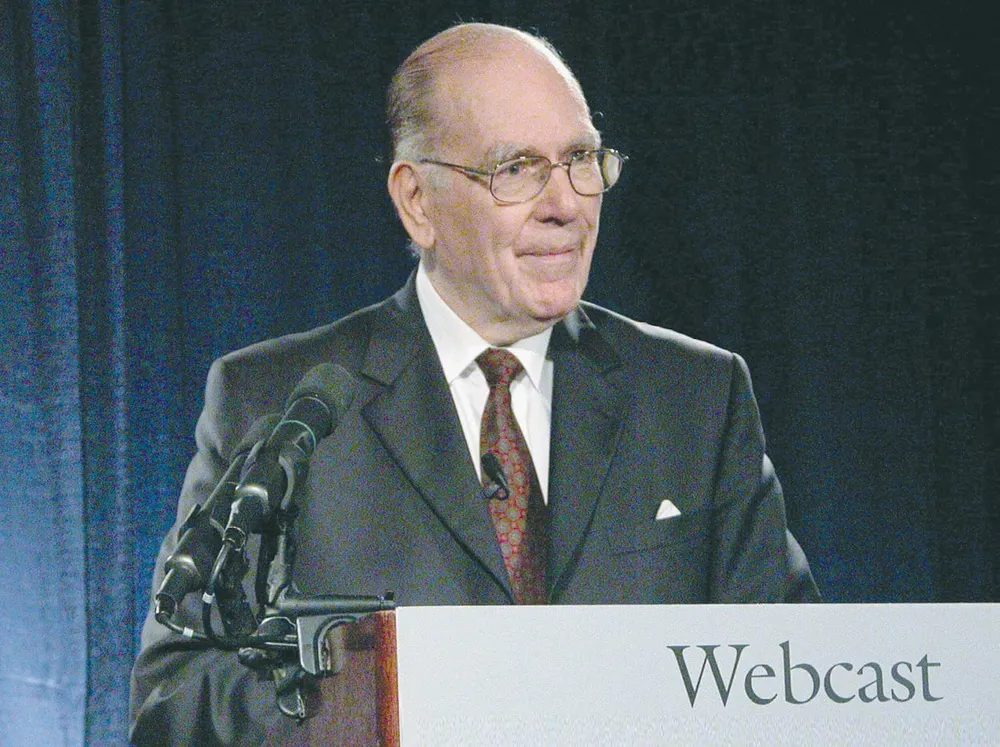
The following is a transcript of Lyndon LaRouche’s opening remarks of a webcast event on Nov. 11, 2004, which featured participation from a number of university campuses in Argentina and Peru. Subheads have been added.
Thank you very much. As you know, the problems of Argentina are not regional, they’re international. If there were any doubt of that, we have the case of the IMF involvement in the problems of Argentina, and other countries. Thus, what is happening on a world scale will reverberate into whatever we discuss in any part of the world, and notably this part of the world in the Southern Cone region of South America.
At present, the most recent event affecting world events, has been the death of Yasser Arafat, the longtime leader of the PLO. His death opens questions about the fate not only of the so-called Middle East, or Southwest Asia, but the world as a whole. And, as you know, Arafat was a fighter, a hard fighter for the Palestinians, against, in particular, the Israelis. Now we are in a situation where we are still trying to get peace between Israelis and Palestinians, a peace which is indispensable for the region of Southwest Asia, which includes Turkey, Armenia, Azerbaijan, Iran, and the Arab states, including Egypt, of course. And what happens there will tend to determine what happens on a global scale.
It’s the way history is in the long run, and very much the way history is today. So, to understand this problem we’re about to face, we have to start with consideration of that, and what happens in Israel and in the Middle East, on the occasion of the death of Arafat, whether or not somebody will step forward, now, to bring about an effective peace negotiation between the leadership of Israel and Palestine, will determine very much what happens to every part of the world at large, including in this case Argentina, as it affects the kind of international constellation of forces which will affect the fate of Argentina.
Fascism and the Synarchist International
Now, our problem is today, as in the late 1920s and early 1930s, an international cartel of financier oligarchical interests, who are not banks as much as they are controllers of banks, as a kind of Venetian oligarchy. This system, which was known in the 1920s and 1930s and early 40s, as the Synarchist International, gave us the spread of fascist states across most of continental Europe, and only the intervention of the United States prevented Britain from joining Hitler during the spring of 1940. The Roosevelt intervention in the situation, by backing Britain’s resistance to Hitler and by rewarding the Soviet Union and other measures, made possible the rescue of civilization from a nightmare which would otherwise rule the world today.
Now, once again, we have come, as in the 1920s, to a great international monetary-financial crisis, and also an economic crisis. This process, especially since 1971-72, has been crushing the world; the floating exchange-rate system. It has crushed Argentina, which was once one of the wealthiest countries in the world in terms of standard of living, and we need not detail here what the condition is today. This deterioration of the condition of life in Argentina, as in other countries in South and Central America, as in Mexico since 1982, is a result of the role of this international Synarchist financier interest which has been controlling international monetary financial policy thoroughly since that time—and we have been resisting.
Now, we’ve come to the point that that system is finished. Whatever happens, nothing can save the IMF system in its present form. There is no measure, no magic, no method by which the IMF as presently represented, will continue to exist, because the international monetary-financial system is hopelessly bankrupt. It is not bankrupt in the sense that it could be reorganized in its present form. The only thing that could happen with the IMF, would be that governments, a concert of governments, put the IMF and related banking systems, central banking systems, into receivership, for reorganization of these banking institutions.
Now, what would have to be done at that point, is of course what Franklin Roosevelt did in the United States in March of 1933 and thereafter. Remember, our Constitution in the United States, as little as it is observed now by the present government of the United States, nonetheless makes the United States unique among republics, in that our Constitution provides for the non-existence of any central banking system, even though we have had some snuck in here and there, like the Federal Reserve System. Under our Constitution, only the federal government has the power to create currency. The Federal government is responsible to manage currency and credit on behalf of the nation. And the government is compelled by its Constitution, by the Preamble of the Constitution, to use its power, including the power over the currency, to defend the absolute sovereignty of the nation as a republic, to defend the general welfare of all of the people, and to defend both the sovereignty and the general welfare at present, for future generations, for posterity. Roosevelt did that.
Presently, that’s what we have to do. All nations around the world, the entire system is about to go under. We are on the verge of a greater depression than Western European civilization has known since the 14th-Century Dark Age. This is much worse than the depression of the 1930s, and it’s coming on fast and cannot be prevented now. The only way the effects of the crash can be prevented is by the intervention of a concert of sovereign governments, to put the international monetary financial system into reorganization.
The Case of Argentina
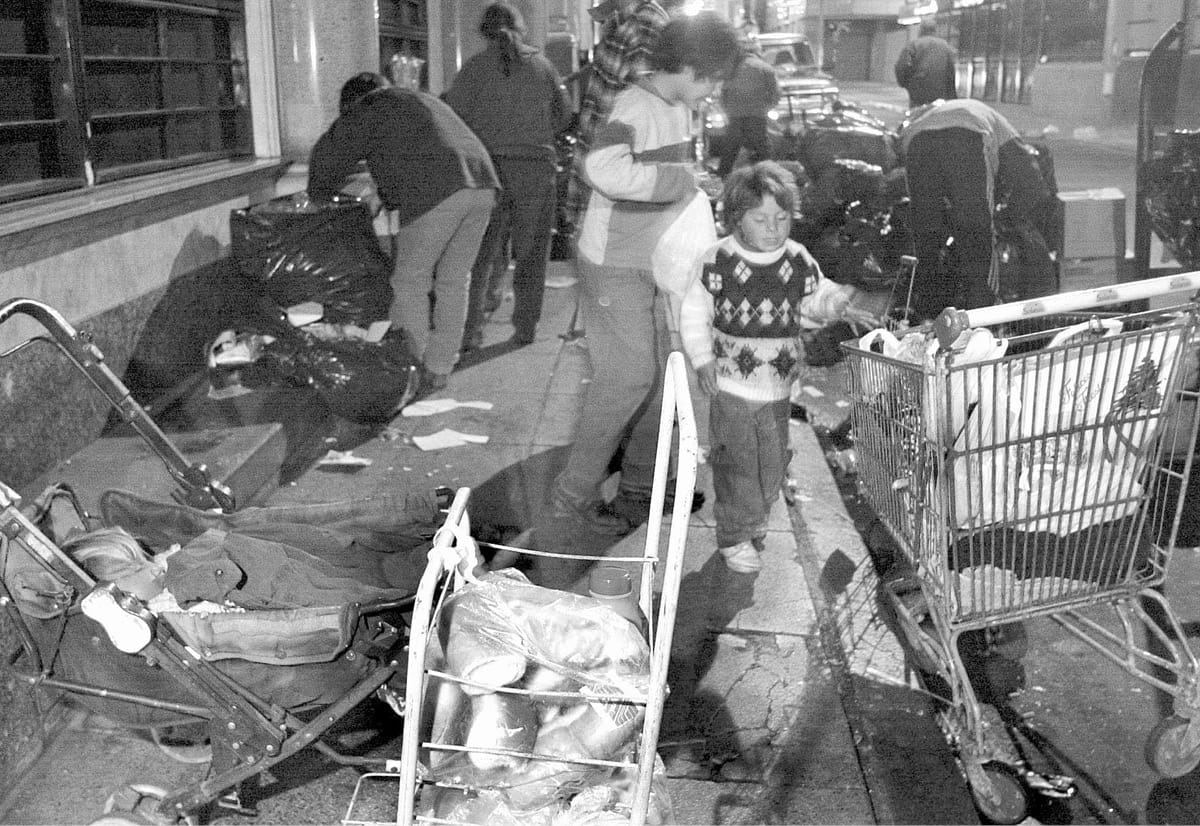
You see what is happening now; the case of Argentina. The demands of the bankers, including the IMF, is to impose upon the people and nation of Argentina, conditions which amount to genocide, to turn all of Argentina into a vast concentration camp, and to squeeze Argentina’s people and resources for what the country no longer has. It no longer has the means for payment of these debts, and therefore, to proceed with these would be a Hitler-like or worse, genocide against the nation and people of Argentina. The same thing threatens South America and Central America as a whole. It also threatens other parts of the world.
So therefore, we have come, at the time of Arafat’s death, to a point of crisis, a turning point. We’ve now had a recent election in the United States. The election is not concluded. George [W.] Bush is not yet the re-elected President of the United States. The process has to go through the Electoral College, and several things could happen during the course of the proceedings through the Electoral College, including the effects of the present examination of the way the election was conducted, and what the results are. Also, if the Electoral College cannot resolve the differences, then the matter goes by our Constitution into the Congress, which has to take over, when the Electoral College has failed, in choosing a President and Vice President of the United States.
But, under the putative new President of the United States and the presently incumbent President, there’s no indication of any policy which will prevent the conclusion of the worst financial collapse in world history. That’s where we’re headed.
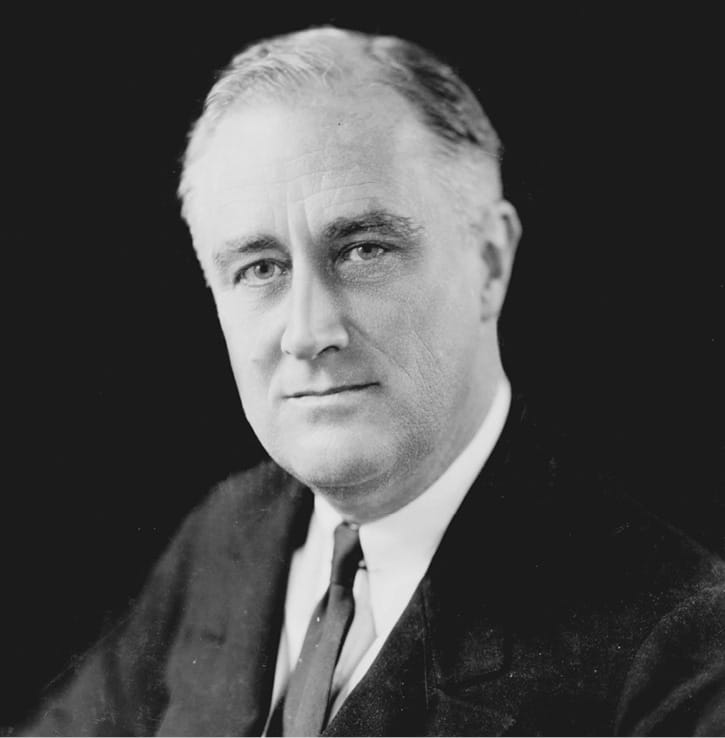
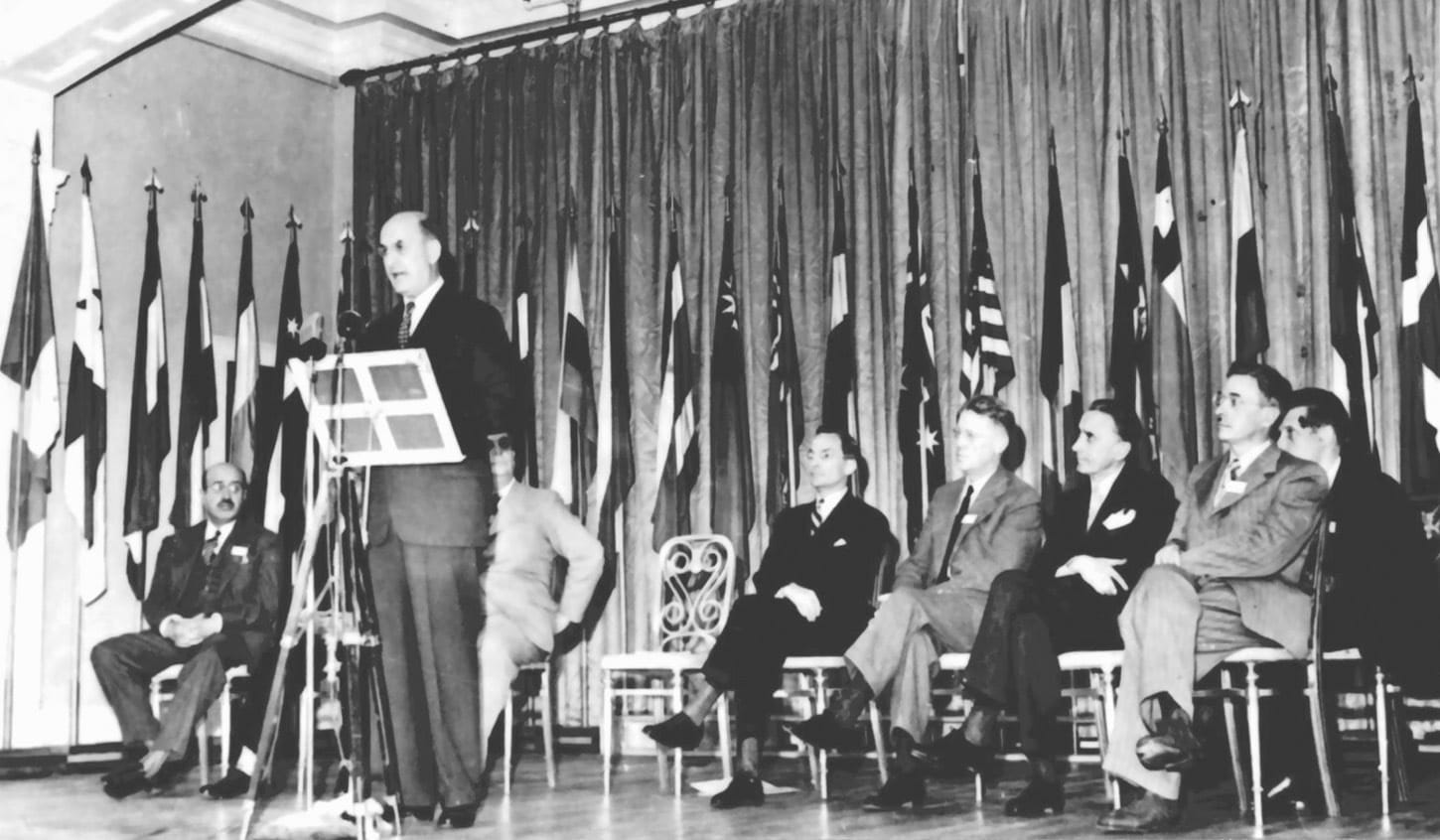
Therefore, the question is to find leadership in this difficult time, to lead nations in putting this financial system through reorganization, to restore something similar, on a world scale, to what was established at Bretton Woods by Franklin Roosevelt, in 1944: to establish a new world monetary system of fixed exchange rates, a new system of credit, and a mobilization of credit to rebuild the economies of the world. We can do that. That will work. Physically it’s feasible.
The question is, which way are we going? If we go the way of the present Bush Administration policies, the present policies of the European countries—Western and Central European countries—the policies of the IMF, then humanity is going to plunge into a dark age. The question is, whence comes the leadership, and the will to bring nations together, to force the necessary change in international as well as national institutions, required for people to survive? Our objective can be no more nor less immediately, than ensuring nations the rights they had prior to the onset of this crisis, prior to 1971-72 in terms of rights. The rights to rebuild their economies by that standard, that yardstick of performance. We must ally to that end, among ourselves. We must agree to that. We must find governmental and other influential forces which can induce governments to make the kinds of decisions we require for them.
Do not believe that, even if Bush is confirmed, that the present policies of the Bush Administration will go forward. This is not the end of things. This is not the end of time, the fact that Bush might be elected again. Because Bush faces problems. The United States is bankrupt. The housing system, the mortgage system of the United States, like that of the United Kingdom, is bankrupt; is ready to blow. The United States has a current account deficit. It’s bankrupt.
The price of petroleum is now around $50 a barrel, internationally, headed toward $100 a barrel. Soon, that increased price of petroleum will hit every part of the consumer sector of the economies of the world. We have a vast speculation in raw materials, a speculation which is concentrated in the United States, in Western and Central Europe, in a different way in Russia, and China is not a holder of raw materials, but it is the biggest bidder for raw materials in the world today, as you see in neighboring Brazil, where China has shown a great interest in Brazil, and also more recently, China has now shown a similar interest in Argentina. So, the world is dominated by great raw materials cartels, buyers and sellers, in a crashing system.
But there is, generally, in Europe and elsewhere, there is no concern for rebuilding the economy in the sense of the productive powers of labor and the general welfare of populations.
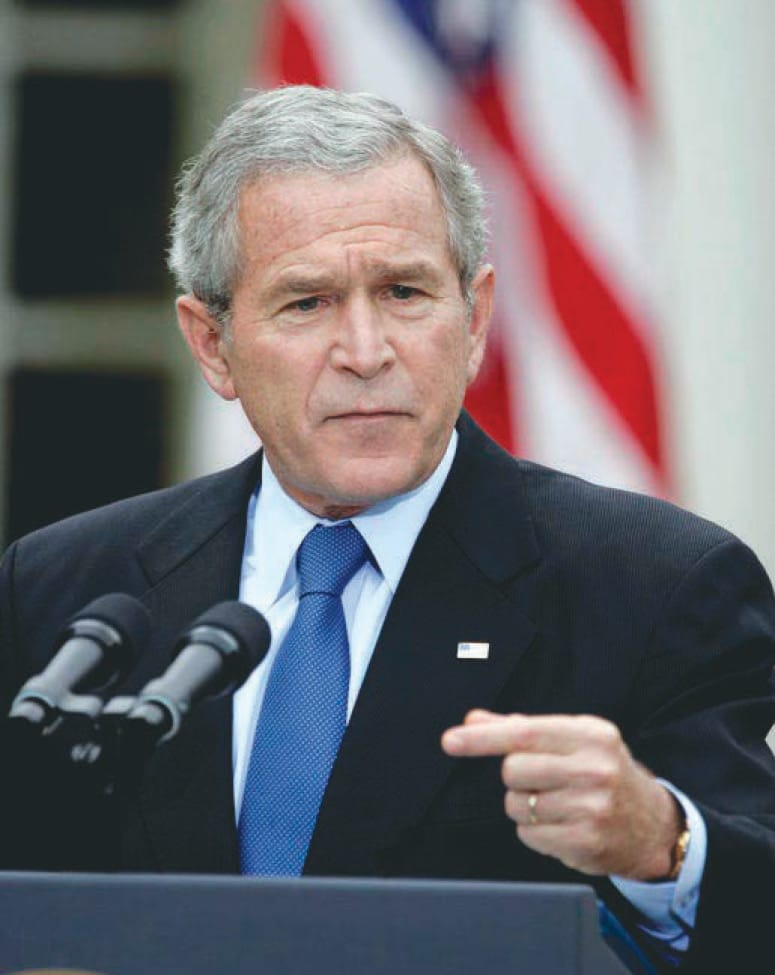
So, and this government of Bush is going to face that. The European governments are going to face that. Their banking systems, the banking system of the United States, the banking system of Western Europe, is hopelessly bankrupt. It cannot be saved in its present form. It cannot be reorganized in its present form, in its own terms. Only government intervention, to put the banking system through drastic reorganization, in bankruptcy, in order to protect the population, to maintain the continuity of essential physical economic functions, can save the system.
We have to bring about a condition under which governments will make that—and the U.S. government, among others, is going to face the challenge of this crisis. You’re going to see upheavals in the U.S. government, whoever is the government. It cannot be avoided. This is a very dangerous period, a period in which wars and revolution can spread. Generally, asymmetric warfare planetwide.
The Concept of a Republic
There is a solution. The solution is essentially a concept. It’s the concept on which the United States was founded at a time that the situation was seemingly hopeless. In 1763, the Anglo-Dutch liberal system, at a treaty in Paris, in February, had established the British Empire as a fact. That is, the empire of the British East India Company. The situation for Europe was then almost hopeless. This empire was about to gobble up everything, including the remains of the Habsburg Empire. But some in Europe supported the cause of the United States, in particular, and they also supported people in various parts of South America, as in Colombia and other states of the Americas, in the hope of building republics in this hemisphere, with the hope that such republics would make a reform in international affairs, which would lead in return to the establishment of true republics in Europe as well as in the Americas.
The United States was the first and only successful effort, but the French Revolution, which was organized by the British East India Company, prevented France from making the change which Lafayette, Bailly, and others, wanted to make; to make a constitutional monarchy modelled on the same principles as the recent U.S. Constitution. That did not happen. Hell broke out, and Europe has not had a true republic as a government ever since. We had approximations under Charles de Gaulle at a certain period, high point of the Fifth Republic, a serious effort of building France as a true republic. We’ve had desires in that direction in other countries. But today, the United States remains the only nation with that kind of constitution, even though we abuse it.
The time has come, when we of this planet, realize we cannot continue to have wars, of the types of wars we have now. We cannot resolve the problems of humanity by going to aggressive war. We cannot resolve these problems by going in with military force, to try to change governments or social systems by force. We must now return to the principles of the 1648 Treaty of Westphalia, to establish a system throughout the world of perfectly sovereign nation-states, committed to the principle of promoting the general welfare, the sovereignty of nations, the welfare of their peoples, peace among nations, and cooperation for posterity.
Because we cannot fight wars anymore, the way we used to. Nuclear weapons and the terrible effects of asymmetric war today, are such that a general warfare would mean the extinction of civilization on this planet. Therefore, we must find a peaceful solution.
It does not mean we give up defense. But defensive warfare is far different from the kind of aggressive war which Vice President [Dick] Cheney, for example, has been pushing in recent periods. We must end aggressive war on this planet forever. We must bring about conditions where peace is expected, where peace is the exit strategy for all conflict, and where just solutions are proposed. And thus, while we don’t know definitely what will happen in the future, we don’t know what will come out of this period because we don’t have the governments in place who are presently committed to the right ends.
But we have a great crisis, in which governments which have failed are going to be put to the test, in which the will of the people can intervene effectively. And if it intervenes amongst a number of countries effectively, we will have changes in the behavior of governments. We will have the opportunity to come out of this crisis alive. That’s the condition we face. The development of a system of fraternity among sovereign nation-states, the promotion of the existence of sovereign nation-states, and the promotion of economic progress and technological progress throughout the planet, these are the objectives around which we must mobilize.
If I were President, or had been elected President, I could promise you great things. I’ve not been elected President, obviously, and am not about to be elected President within the near future. That’s obvious. But my objectives are still valid. I have been a part of the Democratic Party’s campaign for seeking the Presidency. We will continue on the course we’re working out, and we will hopefully make a contribution to this process.
So, I cannot promise you anything, except my dedication and the dedication of people like me, to the kinds of ideas I represent. But I can say, we do have a chance. There’s always a chance for humanity. And there’s nothing worth doing, except fighting to build that chance for humanity. Any other choice of action would be foolishness. Thank you.