
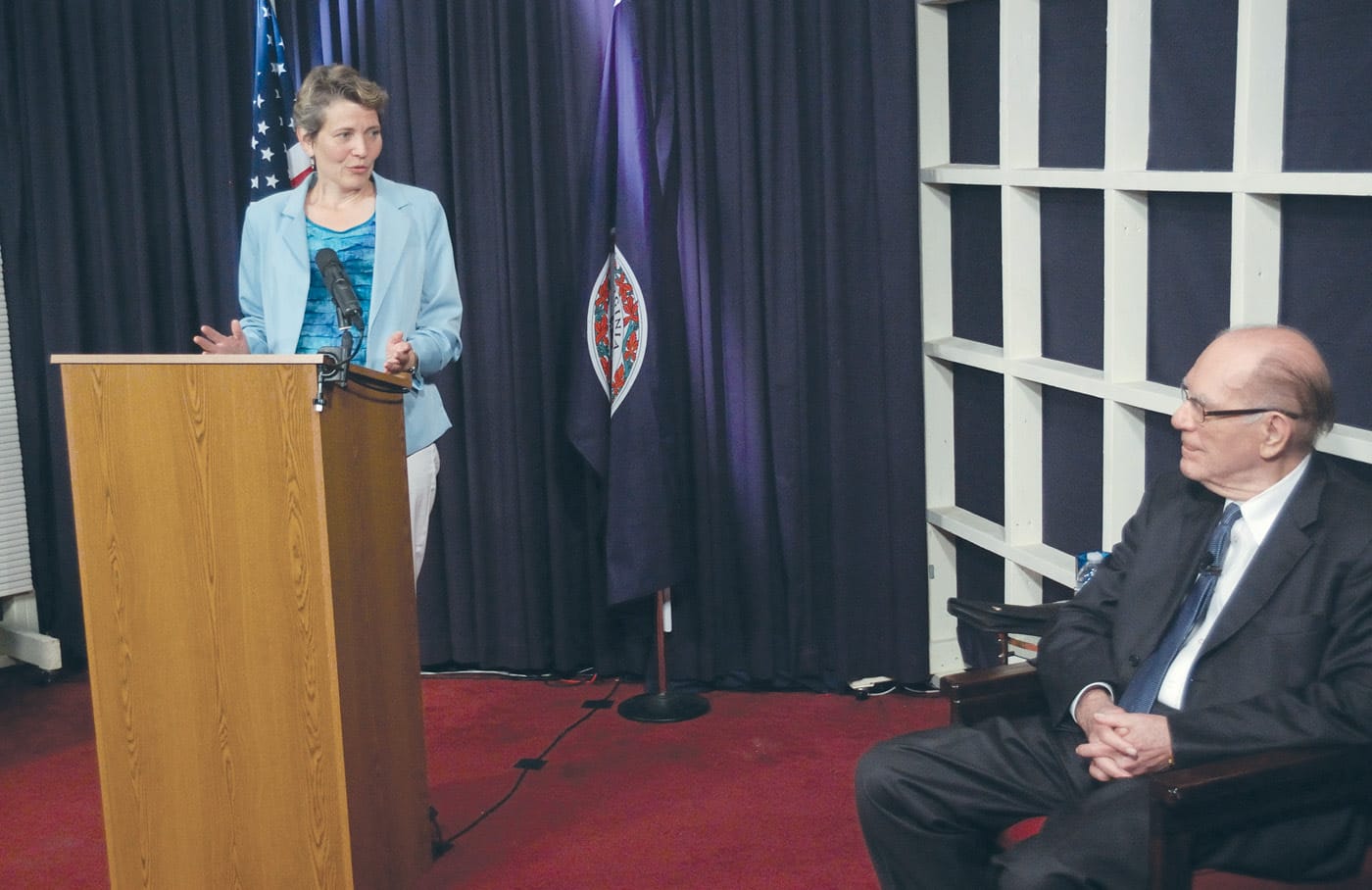
The following is an edited transcript of the March 25, 2026 EIR interview with Diane Sare. Mrs. Sare is an independent LaRouche candidate for President of the United States, running in the 2028 election. The interview was conducted by EIR’s Harley Schlanger. Subheads have been added. The video is available here.
Harley Schlanger: Hello, and welcome to Executive Intelligence Review Reports. It’s March 24, 2026. I’m Harley Schlanger, and I will be your host. We have a very, very special guest today, Diane Sare, who’s a candidate for President of the United States. I was involved with Diane in her first campaigns for the U.S. Congress, and can tell you that she’s someone who has the qualities of toughness and creative thinking that are needed, especially at a time like this.
Diane announced she’s running for President on January 10, just a few months ago, a full two years before you would be inaugurated if you win. The others who announced this early in the past have been Donald Trump and Lyndon LaRouche. So, I’d like to ask you, what prompted you to begin a presidential campaign at this point in time?
Diane Sare: Actually Harley, it would be three years before I would be inaugurated in 2029. So, it’s quite, quite far in advance. And a lot of people have asked that; some people haven’t understood it. But I will say, I looked at the strategic situation, and it’s clear that we have a President who is dysfunctional, who I believe is failing mentally, much as our previous President Joe Biden was, although not in the same way—he doesn’t exhibit the same symptoms. And if you look to the so-called Democratic Party opposition, they are completely unqualified. In fact, it was their policies that laid the groundwork for the situation we have today: the genocide in Gaza, the Ukraine war.
So, here you have a dysfunctional President and a dysfunctional opposition. And I thought a voice of reason from a presidential perspective was urgently needed. And I guess you would say I definitely took that idea from Lyndon LaRouche and his work over eight presidential campaigns.
Schlanger: Helga Zepp-LaRouche has been emphasizing that this is an extremely dangerous moment right now, where we could be heading at a very quick pace toward nuclear war, especially after Israel and the United States launched this attack on Iran. Now, obviously, the attack on Iran is not going as expected. You’ve developed some strategic and military analysts who have been working with you, and have been discussing this with you, people like Scott Ritter and Garland Nixon.
And you’re also working very closely with the founder of the International Peace Coalition, Helga Zepp-LaRouche. In the last couple of days, President Trump has done what I would consider to be an imitation of [Germany’s former Foreign Minister] Annalena Baerbock, with a discussion of doing 180 degree turns and 360 degree turns on policy. What’s your assessment of what’s going on with the President?
Sare: I think it’s multiple factors, and I don’t think we know how each of them weighs. I mean, you have the recently resigned head of the National Counterintelligence Center, Joseph Kent, who implied that the same people doing intelligence don’t get access to Trump; that he’s chosen to surround himself with what I would call the [Jeffrey] Epstein class, some handpicked people who are close to [Israeli Prime Minister Benjamin] “Bibi” Netanyahu. We just heard this morning, apparently, that Netanyahu spoke with Trump just a couple of days before he [Trump] began this illegal, unprovoked invasion of Iran, and told him, “Oh, the Mossad is ready to go. As soon as we get rid of [Iranian Supreme Leader Ali] Khamenei, the opposition will come in.” Of course, that was just a complete pipe dream. I don’t know if Netanyahu believed it at all, or just said that.
Fear of Assassination?
The other factor which Kent raised—and I do want to remind people that just maybe a week before we began this crazy war, there was a gunman at Mar-a-Lago who was shot dead. And I think—and Kent brought it up also—the question of threat of assassination. President Trump was nearly assassinated in Butler, Pennsylvania. You had the assassination of Charlie Kirk, one of Trump’s close friends and confidants who was very opposed to war with Iran. So that may also be a factor.
And I’m not sure, I hope he’s done a 180 and not a 360 [degree turn]. I am concerned, given the pattern of Trump’s actions in the past, that this five-day extension—I’ll put it this way, it would not surprise me if the United States did start bombing Iranian power plants in the middle of this five-day period. I hope that doesn’t happen. It would be completely destructive of whatever interest Trump feels he has in the region. I think that it’s likely that his intelligence people barged through the door on Sunday or Saturday night after he put out that 48-hour ultimatum and said, “Do you have any idea what you’re unleashing when Iran retaliates, as they said they will, and destroys the power production of every single nation in the region: Bahrain, Qatar, United Arab Emirates?” Those all are supposedly allies of the United States. They’re not going to work with the United States anymore if all they get for working with us is to be obliterated and have mass suffering and economic upheaval.
Schlanger: If you were President now, what would you do to get out of what some are calling the Iran trap that Trump fell into?
Sare: I think I would immediately call for a ceasefire. I would get together with [Russian] President [Vladimir] Putin, [Chinese President] Xi Jinping, probably [Indian Prime Minister Narendra] Modi, who’s been there recently, and some of the leaders. I know that Oman, the Foreign Minister [Sayyid Badr bin Hamad Al Busaidi] who was in the midst of the negotiations, had put a proposal for a regional peace agreement on the table. I think that’s the only thing that would work. That’s what Helga Zepp-LaRouche has been saying.
Unfortunately, there is nothing that will work between the United States and Iran. There is no pairwise solution because the United States has so thoroughly made itself an untrustworthy partner that it really would, I believe, be pointless to talk to Iran directly. Of course, if I came in as a new President, I might have a little credibility and be able to do that. But I think you really have to look at the area from India to the Nile to the Caucasus. You’re going to have to address the Israel-Palestine situation. You’re going to have to address the Pakistan-Afghanistan situation. This cannot be solved piecemeal.
Schlanger: Now, as you brought up, we’re not sure whether Trump is going to follow through with what he said. Will he launch another attack? There’s also a concern that if he’s serious about ending the war, that Netanyahu has another idea and might use a false flag to give himself an excuse to carry out these kinds of absolutely destructive attacks, including the possibility of nuclear weapons. What can you do about that?
Sare: I think we have to recapture the United States, frankly. If Netanyahu really thought that the U.S. would not back him up, then I’m not so sure what he would do. Maybe he would do something crazy, but then we don’t back him up, and at least you can perhaps stop the escalation. Apparently, Israel is being very hard hit. The missiles that hit near Dimona—where their nuclear weapons probably are, and their nuclear [research center]—were only two. Israel cannot say that they shot down 80%. There were two missiles headed their way. They didn’t hit [either] of them. I think that may make them feel very desperate.
Trump’s Armageddonist Advisors
As people know, but it’s not admitted, they do have nuclear weapons. Under those conditions, would they start a nuclear war? That is just an extremely dangerous scenario, and more dangerous because instead of cool-headed, analytical advisors surrounding President Trump, you have these religious fundamentalists like [U.S. Secretary of Defense] Pete Hegseth. I don’t know what he thinks. Is he thinking he’s going to bring on Armageddon so he and his third wife can be raptured? What is his purpose with all of this?
Schlanger: You’ve mentioned a number of times the importance of the American people being mobilized, getting away from entertainment, sports, comfort zone, and to actually take responsibility for the future. I was just looking at some statistics today. Only 73% of those who are eligible to vote are actually registered. Last election, which was supposedly a very large turnout, only 65% of those who were registered voted. What can you do to get more people activated on a higher level?
Sare: First of all, I hate to say it, but I don’t think voting is an indication of their activity. I think the U.S. elections are very fraudulent, and I don’t think by small margins. I think the election fraud—and I’m not talking about illegal immigrants voting; that’s not where the problem is. The problem is in the entire system itself, the transmission, the electronic coding, etc. I think it’s part of the covert war against the American people, just as the news media tries to make everyone who opposes genocide that is being perpetrated by the Israelis [against the Palestinians] believe that they are a tiny minority—when the evidence is they are not a minority, they’re the majority. You’re beginning to know it. The American Israel Public Affairs Committee is beginning to have less control, even at the elections.
I think people will [be more likely to] vote, if they feel like their vote actually counts and makes a difference, and they’re not so isolated. In the United States, people can walk in and go see their Congressman, and more people have to do that. I had a really delightful meeting last night with 10 or 11 people who were running for office, all independents, minor parties, or mavericks.
One young woman, who’s a third-generation auto worker in Michigan, said, “Well, I decided to run in the Democratic primary, but I’m really regretting it, and I hope none of you hold it against me, finding it to be so horrible.” Mavericks, and one of them is a substantial woman named Nadia Milleron, whose daughter died in a Boeing 737, the one that crashed in Ethiopia [in 2019]. I think people will remember because Boeing was doing budget cuts and shortcuts to get their planes supposedly upgraded, but not going through the standard safety protocols, and you had a number of these planes crash. She actually went to Congress and got legislation passed to address some of these issues, and she was rather ferocious in our conversation last night, telling people that you have to make your Congressman uncomfortable; that you are responsible to go to your Congressman and make them uncomfortable and let them know that you know what they’re doing and what they’re not doing, and if their name is in the [Jeffrey] Epstein files or whatever—and I think that’s really important.
In the United States, the people have much more power than we tend to use.
Schlanger: You mentioned the Epstein files. They’re definitely putting a spotlight on the corruption and depravity of what some are calling the Epstein class, that is a small group of elites, the establishment, the billionaires who make policy, but they also control the media and control the education system, the think tanks—and that has a lot to do with people not really understanding what’s going on. What can you do about that? Is there something more you think could be done to bring out the corruption?
Sare: Well, Harley, on the Epstein class, I would say you’re the expert at the moment, having just written a series of articles, and I’m really happy that Executive Intelligence Review put out that pamphlet, “The Empire Has No Clothes,” and your latest, “We Were Sent by God To Kill You.” I think these things are really important.
What Would George Washington Think?
And then for my part, what I’m doing is asking people, here we are on the 250th anniversary of our Declaration of Independence. How do you think George Washington would feel knowing that the current Congress and the American people seem to believe it’s acceptable to have a bunch of criminal pedophile perverts running the nation? Because these files were released now several weeks ago. As far as I know, not one other person has been indicted. There’s been no grand jury convened. There’s no criminal investigation. They brought in [former First Lady, Senator and Secretary of State] Hillary Clinton and [U.S. Commerce Secretary] Howard Lutnick, who lied. They told lies that were provably lies by documents released, and the Congress didn’t even call them on it.
So, I think this is an area where the American people really have to demand accountability. Do you really think that this is who should be making policy in this country? And I think it also, given that they view human beings as commodities, perhaps this has something to do with why, after two years of a genocide that’s visible on television, you haven’t been able to get people mobilized to actually stop it.
Schlanger: Do you think it can be made compelling for people that we have this tradition, and what this tradition is? People say, “Make America great again,” and you think they’re basically talking about baseball and hot dogs and beer, as opposed to the citizen responsibility, the Greek farmer tradition. Talk a little bit about that, because I know that’s very important for you.
Sare: Okay, well, first let me say, I think that one thing that’s going to be a great gift to us is the price of gasoline. And I just mean that it’s going through the roof, and it’s going to affect everybody’s life, and we may discover that there are shortages of commodities at the grocery store, because diesel fuel is back over $5 a gallon, etc. And most Americans tend not to think about what is the physical process of production.
Now, the question of our republic—and you know, it’s funny, Harley, because when I was preparing my speech for my campaign launch on January 10, I was going to say that there are two false views of the American Revolution. One is the 1619 Project people, who say it was just a bunch of rich, white oligarchs who came here and got rich off slavery, and then what the so-called right-wing people are saying, which I realized was the same thing—that we are simply a white-Christian nation! And I thought, “Oh my gosh! Both sides, both extremes of the political spectrum, actually have the same view of the American Revolution.” It’s just that one group thinks it’s bad, and the other group thinks it’s good, but that’s actually not what it was.
This was the fruit of a long conspiracy, you can say going all the way back to Socrates, Plato’s Republic, the efforts of Joan of Arc, who went on to lead France and create, in a sense, the potential for the first republic. And then you had the Council of Florence, you had Nicholas of Cusa, Gottfried Wilhelm Leibniz, who were all grappling with this question of: What is human freedom? If human beings are created in the image and likeness of God equally, then why should one person have a divine right to rule over everybody else? And it was Cusa in his Concordantia Catholica who really developed this question of the consent of the governed: that you do have to give consent to someone because you can’t have—the United States has 342 million people or something. You could not run a committee of 342 million. So you say, “Okay, I trust you, I give you my consent.” That’s the point of an election: to make policy, to make decisions.
You Are Your Brother’s Keeper
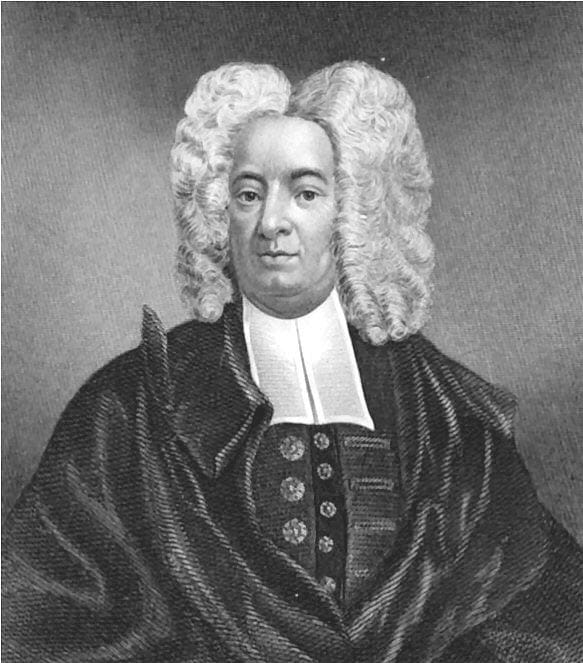
And I want to also raise Cotton Mather, whose Essays To Do Good really, I think, encapsulates the intent of the pilgrims who were, after all, fleeing religious persecution. He said there can’t be too many people; every person, every problem which presents itself is an opportunity to do good. And if you’re Christian, you’re going to care for the orphan, you’re going to care for the people who are poor, it’s your responsibility, you are your brother’s keeper. And I do want to say, I know we have to actually, I think, revisit what happened with the Native American population here, because it was very mixed. I actually just got a book that I’m excited to read about a chieftain who was a close friend and collaborator of George Washington. So, I’m hoping to gain more insights on everything that happened with that case. But that was the intent. And they said, form a more perfect union.
Many of the founders were vehemently anti-slavery. Many of them, like Hamilton in particular, wanted to work with the Native American population as collaborators. And they knew that we were falling short; we couldn’t get rid of slavery. There were other issues. So, in a sense, the Constitution is a living document. I see it as a challenge for the American people to keep working on that perfection question. And I’m afraid, over the last 70 or 80 years, we’ve been stampeded in the wrong direction.
Schlanger: Obviously, there are two aspects to that. One would be to read the Constitution and think about it. And then secondly, this idea of acting for the future, when you don’t really know what the future is going to be, you have to have imagination and creativity.
Now, on that point, you’ve mentioned that Lyndon LaRouche ran for President eight times. And you worked closely with him up until the end of his life. He left an incredible legacy, that I think is something that people are beginning to discover. I mean, I hear it all the time, people will say, “My mother used to tell me about LaRouche when I was a little girl, and I didn’t appreciate it. And now I do.” But I think many people think that he should have been President.
What did you learn from him about the quality of statecraft and leadership?
Sare: It’s really hard to answer that simply, because he really was a universal genius. And of course, having worked with him and been his spokesman on a number of those presidential campaigns, people who would meet him, like Norbert Brainin, the first violinist of the Amadeus Quartet—he would say, “Lyndon LaRouche knows more than I do about Classical music.” And other people would meet him and say, “LaRouche knows more than I do about fusion or chemistry or whatever.”
The Power of Agape
But I think the most important thing actually was his conception of agape, of love, the power of love, and not as some liberal thing, but that that’s the power that actually moves things, because it’s rooted in a principle of natural law; that if you allow yourself to have the humility of looking at the development of the universe as an anti-entropic process, and therefore man’s role not as being destructive, but as part of this ongoing creation of the universe, then you have an optimistic view.
I remember in dire moments I would try to think about what Lyndon LaRouche would have to say about the current one, which I think is much more dangerous. But he warned about this. He saw it coming; he warned. Actually, I was thinking a lot about Peter Thiel and this whole operation, because he [LaRouche] was identifying Norbert Wiener, the cybernetics. He had his finger on the pulse of that assault on human creativity; [the attempt] to linearize things, to assert that man is no better than a computer, or worse than a computer. He was fighting that in the 1950s.
He really had an insight and he thought, like you said earlier, in terms of the future; “If we don’t change X, we are on a trajectory to Y. So, we have to change this. If we don’t, then we’re going to be at such and such a place.” And I think that’s really urgently needed in leadership. Xi Jinping thinks that way. Putin thinks that way. I think [Brazilian President Luiz Inácio] Lula [da Silva] is a substantial person. Actually, I think the Foreign Minister of Iran, [Abbas] Araghchi, strikes me as a very insightful, substantial person. They think in terms of the future, in terms of consequences of your actions, where you want to go.
There are very few people in American leadership, if any—I’m sort of pressed to think of one—who think from that standpoint, the future coming back to the present.
Schlanger: And when you mentioned leaders, I noticed there was an absence of Europeans on the list. What’s your sense of what’s going on in Europe? I mean, I’m here in the middle of this. I can’t believe the low quality of thinking coming from the politicians and the anger in the population—but it’s suppressed. They try not to go out and say something because they’re embarrassed. What do you think about the situation in Europe?
Sare: I think you’re right. And I don’t know if people are just embarrassed or if they’re afraid they’re going to be put on a sanctions list, or thrown in jail, or have the police banging down their door because of something they posted on social media. And in a way, it’s sort of epitomized by that dreadful press conference of the then-German Chancellor [Olaf] Scholz with [President] Joe Biden, when Joe Biden basically announced, if Russia invades Ukraine, Nord Stream [the natural gas pipelines] will be finished, knowing full well that the U.S. was going to blow up Nord Stream, right? And then Scholz says, “Oh, zusammen, zusammen. We’re with you. We do everything together.” I mean, what is that? That is a sick relationship. And in a sense, you don’t know who’s running who, because I have to say, nobody likes to look at the British, but they certainly are figuring out ways to play one against the other, which is their typical way to somehow leverage things so that they come out looking—they come out of the outhouse smelling like roses.
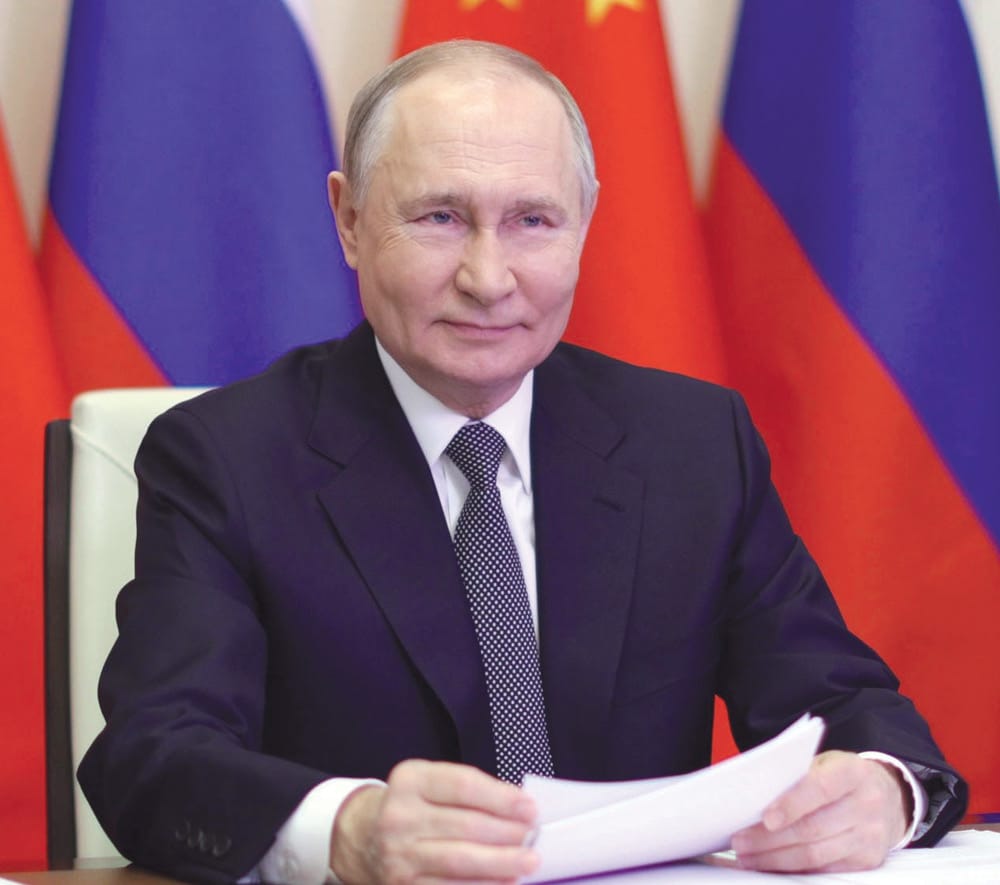
Schlanger: I have a final question for you about some comments that Vladimir Putin made about seeking harmony in discussions. And he said it’s not a harmony of one voice, a unipolar order, but many voices. But he made the point that these are not voices just singing the same notes. You’ve been involved in music and culture your whole life, ever since I’ve known you anyway. And on the day of the official announcement of your candidacy, I said that your experience as a choral director might be your best qualification to be President. What has that experience taught you about finding higher harmonies in the midst of contrapuntal sequences?
Sare: I really love that because—and I thought Putin was quite wise to use that analogy. If you look at a symphony orchestra, a trumpet is different than a double bass, and the piccolo is different than a violin or an oboe. You have very different qualities of sound, different ranges, and in the hands of a great composer and a conductor, this comes together in a way that is much more powerful than what you would think of the sum of the parts.
A Transcendent Unity of Effect
And a few years ago, we were looking at the Beethoven Missa Solemnis, and I discovered there were 13 different so-called melody lines going on at the same time; thirteen distinct parts on different instruments. Now, if you did that arbitrarily, or suppose you had people starting at different times, as opposed to under the baton of a conductor, everyone just chose their own arbitrary tempo or something, it would be chaotic, it wouldn’t be beautiful. But when you have a conductor who pulls it together so that these things happen in the right sequence, in time, you have a unity of effect which is transcendent.
And I think that that’s a beautiful way for the human race to think about itself. We don’t want everyone to look the same, have the same religion, have the same language, but we do want to have the same goals, the same respect for human life, and human dignity. And I think if you have leadership that’s working in that way, then you could really have this beautiful musical effect that Putin was talking about.
Schlanger: Diane, what do you have planned coming up for the campaign? What are you going to be doing about intervening in the strategic situation and getting people moving? What should people be looking for?
Sare: I am working with Jose Vega [a congressional candidate] in the Bronx [15th congressional district, New York] to actually provide some leadership on policy to these delightful, courageous, maverick candidates for Congress [and other public offices] around the country. And there may be 50, 100, I don’t know how many of them there are. We’ve probably now spoken with 20 or so. Because in this way, we can develop leadership around the country.
Also, as you know, I’ve done now a couple of press conferences. I did one together with [former U.S. Marine intelligence officer, UN weapons inspector in Iraq] Scott Ritter on the day that the New START Treaty was allowed to expire. And I did another in response—I actually did it before Trump’s State of the Union, because I already knew what he was going to say. And I thought, why respond to something that you already know? Why not say what he should say?
So, in that sense, I think of myself as a President in the wings, or a President in the ether, trying to provide leadership and policy direction. That hopefully will be heard and picked up and perhaps help to lead the nation out of this extremely dangerous mess that we’ve gotten ourselves into.