Editor’s Note: This article was first published in EIR, Vol. 28, No. 43, Nov. 9, 2001.
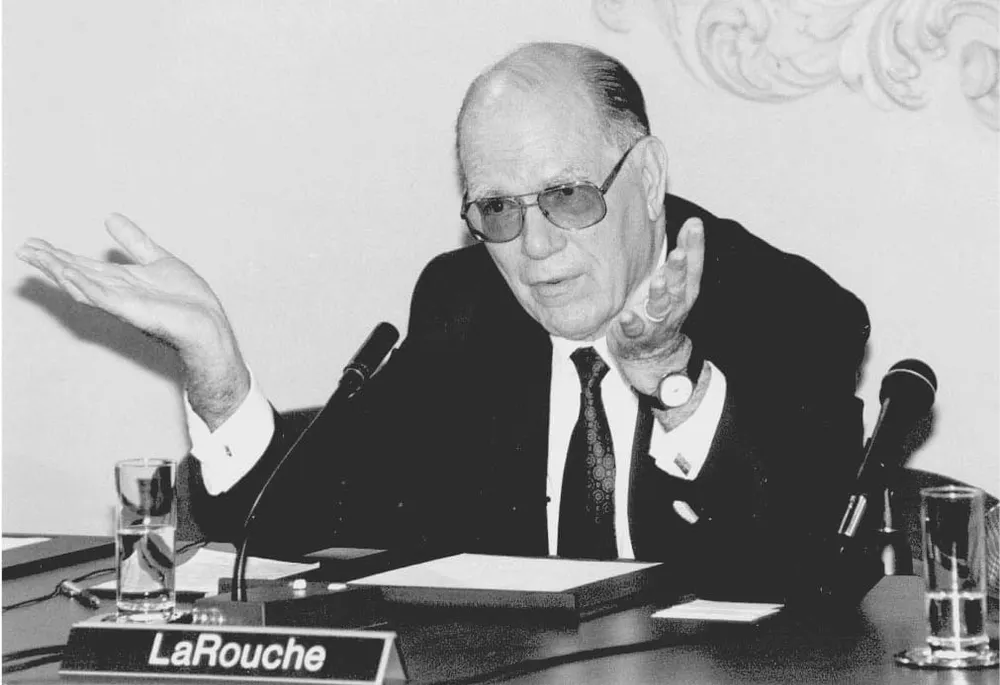
On Oct. 16, 2001, Lyndon and Helga LaRouche, in Rome for a few days of meetings and discussions, were invited to address an informal seminar held at the Italian Institute for Asia, an organization which for years had been promoting economic cooperation, cultural dialogue, and contacts between Italy and all the countries of Asia and the Middle East. About 20 people, including senators and parliamentary deputies and a delegation of the International Civil Rights Movement Solidarity (Movimento Internazionale per i Diritti Civili Solidarietà), participated in the event. Below is an edited transcript of LaRouche’s opening remarks.
Well, we are in a typical situation today. We have the disintegration of the world’s present monetary and financial system. And we have the danger of things like world war. We’ve had, despite the newspaper reports, an attempted coup d’état in the United States, against the Bush Administration. And, unfortunately, that is the thing we must first consider, because otherwise we would completely misunderstand the world situation in all its aspects.
The monetary and financial crisis has been foreseen. There have been for some years, discussions of policy to be taken in case of such a crisis. All these discussions recently are based on the assumption of the post-Soviet period. With the collapse of the Soviet Union as an adversary of the United States, the question was whether the Anglo-American powers, and with the Israelis, could establish a Roman Empire. It’s a special kind of Roman Empire, like that of ancient Venice, when Venice ruled the Mediterranean as a maritime power, of a rentier-financier form. We have today, with the Netherlands developments, in modern times, and with the developments of England, Britain, we have an international interest, which is centered in London, with a chief ally in New York, which is a world rentier-financier imperium.
Increasingly, since the period 1966-1971, this imperial power has dominated the world with a new monetary system of its own. The change from a fixed-exchange-rate system, to a floating-exchange-rate system, in 1971-1972, established a new world monetary and financial system. This system is now disintegrating. So, therefore, you have an Anglo-American rentier-financier imperial power, which is threatened with the extinction of its system.
The character of this is demonstrated by the attempt, since 1989, to establish what’s called “globalization.” For example, in 1975-1976, with the launching of the attempt to globalize Italy, under the IMF conditionalities, there’s been the attempt to reduce even all existing nation-states, of European advanced nation-states, to essentially colonial dependencies of an international rentier-financier power. So, essentially, the conflict has been, and is now, a conflict between the modern form of nation-state, sovereign nation-state, and an imperial power of a rentier-financier form, a new kind of Roman Empire.
So, therefore, the conflict is essentially between the force behind this, and the forces which represent the interests of the modern sovereign nation-state.
The implication of this is seen clearly, when you think about what do we do, as nation-states, in the case of a collapse of the financial system? Under natural law, as it’s been defined in Europe since the 15th-Century Renaissance, as established by Nicholas of Cusa’s Concordantia Catholica, the only legitimate basis for the existence of a nation, a national government, is the efficient commitment of that government to promote the general welfare, the common good, of all of the people, and among nations.
Now, despite the problems of the religious war period of the 16th and 17th Centuries, we have managed to maintain that legacy of the common welfare, the common good, as a general fundamental principle of law of civilized society—which means, in a time of crisis, the state, the sovereign state, must intervene, in collaboration with other sovereign states, to reorganize the financial system to ensure the protection of the general welfare. Thus, the modern nation-state, in this form, is the greatest enemy of the attempt to create a new empire.
We have, therefore, the significance of what is happening in Asia, which has two chief dimensions: On the one hand, we have, with the developments around President Putin of Russia, as with Prime Minister Primakov before him, a tendency to bring the nations of Asia, and Europe, into contiguity. The second problem, which is posed by that, is, we have two basic cultures on this planet. We have, not Western civilization, but European civilization. By European civilization, I mean something which began in Egypt, which developed in Greece around figures like Solon and Plato, and which became a new European culture through the apostolic mission of John and Paul.
The Basis for a Dialogue of Cultures
Now this culture, European culture, is based on a conception of man in the image of God, which is the basis of the notion of general welfare in law. This includes the Reform form of Judaism, as typified by Moses Mendelssohn. It is also an influence on Islam; it is the origin of Islam. But when we go to South Asia, and East Asia, we find a different culture. The idea of the conception of man as in the likeness of God, does not prevail as a cultural standard in these cultures. You have an approximation of this in the influence of Islam…. Certain aspects of Hinduism are not entirely hostile to this. Nor is the Confucian tradition in China hostile to it. But when you deal with Asia, you do not have an acceptance of the most fundamental, and most precious principles of European culture.
So, on the one level, it is not difficult for us to approach China, Japan, India, and so forth, and say, “We want respect for the perfect sovereignty of nation-states.” But when you say, what does that mean, you come to the conception of culture, the conception of man. In that case, you can not have— If you try to approach it one way, you end up with an impossible, and a self-defeating policy. If you say we’re going to respect the opinion of other cultures, you create an order which is like the Roman pagan Pantheon, and we see in the plan for a Clash of Civilizations, precisely how that works.
We have in the history of civilization, in ancient Babylon, for example, to the present, all empires were based on the principle of the Pantheon. And the way that the emperor ruled the empire, was to play the different religions of the Pantheon against each other. What Brzezinski is proposing, is exactly that: a war among cultures, to define the planet as a Pantheon, and to make war among the different religions and cultures of the Pantheon. That is the Islamic “Clash of Civilizations” thesis of Zbigniew Brzezinski.
So, from the standpoint of our Christian tradition, you can’t approach this from a standpoint of doctrine. You must approach it from a missionary standpoint, from an apostolic standpoint, not a doctrinal standpoint. Rather than saying, “what are the differences between us,” you have to say, “what is the agreement among us?” It means, there has to be, as Khatami has proposed,[1] the President of Iran, there has to be a discussion of the agreement on an idea, a certain idea of man. And there must be a discussion, with agreement to the idea of man, but a continuing discussion of what that means.
You can never unify people except around a common principle. You can never unify people around a Pantheon. We see this in Babylon, we see this in the delphic cult of the satanic Apollo, we see it in pagan Rome, and so forth. You can never— You see it in the doom of Byzantium, which doomed itself in the same way the Roman Empire doomed itself, by trying to organize civilization around a Pantheon. There must be a conception of man. We must do that. So, this is our problem.
The Coup Plot
Now, the enemy is well aware of this. So now we have—the crisis is coming on, the financial crisis. Nothing can stop the collapse of the system, in the system’s present form. Any attempt to perpetuate the system will only make things worse. Forget the financial markets, they’re doomed anyway. What the financial market does this month, or next month, or the month after that, is totally unimportant.
The world economy, including the U.S., is going through a hyperinflationary, monetary-financial expansion, and a deflationary economic collapse. And the people who had planned this coup d’état against the United States, have accepted that.
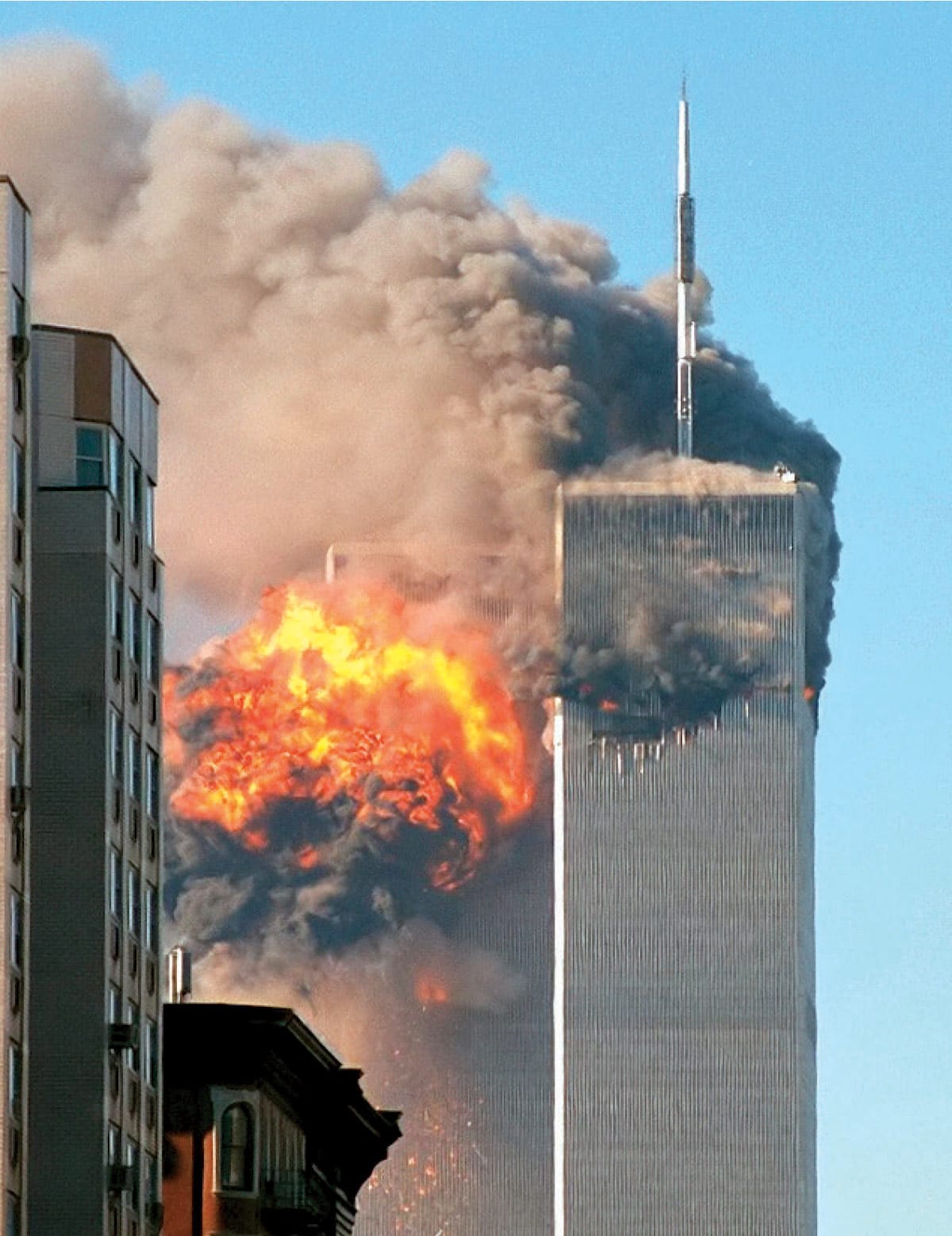
Now, we don’t know who the coup plotters are. What we know is, the fact is, that there are certain technical features of the attack that occurred on Sept. 11, [2001], that could not have been done by anybody outside the United States. This had exactly the form of a military coup d’état. Anyone who has studied coups d’état, of that type, knows exactly that, by looking at the facts. Every state has certain security provisions against coups d’état. These are more or less efficient, when used. Even if the coup might work, it probably will be caught, and be aborted. The plotters must be assured that either the security measures are not functioning, or that they are able to shut them down.
Now, this kind of knowledge does not exist so much in police departments; it exists largely in intelligence services, and military services. And always, when a coup is made, it’s made because the people who are making the coup, are a minority in that interest. If they were the majority power, they would simply take power. So, a coup d’état is a method of taking power by cheating.
Now, for example, you may start a fire in a theater, and the people will panic in response to the fire, and then you’ll be able to do certain things, in consequence of a few people having panicked many. That’s a simple explanation of the way a coup d’état works.
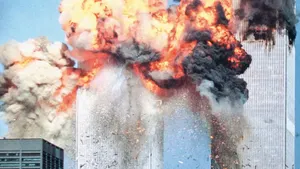
What they did is, they set fire to the buildings in Lower Manhattan, and the Pentagon, attacking personnel. There were tens of thousands of people in those buildings, of whom maybe 6,000 were killed. They aimed at the Pentagon. If they’d gone just a few feet higher when they came in to the attack on the Pentagon, they would have taken out the Joint Chiefs of Staff. All the security arrangements which should have been functioning, to prevent this from working, were down. The maneuvers were highly sophisticated. No Arab government, no Arab terrorist organization, could by any means have done it. It could have only been done from inside the United States command.
Now, there could have been foreign accomplices, but this is the crucial question.
Now, what does this imply? This means, on the one hand, we know from the character of the act, it was a coup attempt. What else do we know? What was the purpose of the attack? The purpose of the attack was, get the United States into a Clash of Civilizations war. Now, we know who has this policy. There are three places where this policy exists: the military command of Israel; the Blair government of England; and a lot of financier circles in the United States, typified by Henry Kissinger, Brzezinski, and so forth—many others. There are people inside the U.S. government who share that view. Wolfowitz, the Assistant Secretary of Defense. Armitage, the number two at the State Department. Similar people. Ashcroft is obviously part of this thing. Does that mean these people did it? Not necessarily.
In a coup d’état, what you have is, you have a large agreement among some people on a policy. Then some people, who have this agreement, now say, “We are going to make it happen.” So that inside the administration of power, you have Mr. X, Mr. X, Mr. X, who also has a uniform, or has an official position, and he has a double position: one as a member of the authority, the establishment; another as a member of the coup plot. It’s a true conspiracy—a true conspiracy. They exist, contrary to mythologies. Conspiracies actually exist. Some are silly, some are dangerous.
So therefore, what we’ve seen, is, you have a group which tried to set fire to the United States, to push the United States into supporting Israel, under its present command, in launching general war against the Arab world, to the purpose of geopolitics, to destroy the attempt at cooperation between Europe and Asia. So, we don’t know who the perpetrators are, but we have seen that the present government of Israel, the Prime Minister of England, the United Kingdom, Blair, and others are behind this operation, this policy. It was Blair who pushed through NATO this Article 5 agreement, which otherwise had been resisted. So, the push was to blackmail and terrify the President and others in the United States government, into bombing Afghanistan, which is silly. Supported by a lot of the U.S.-controlled mass media, which have been trying to panic the people into this state of hysteria, about going against, killing all the people who are Arabs, or something.
So, that’s the situation. And it becomes clear when the fight between Bush and Blair breaks out, as it did the last two days. When Bush says, “We must have a Palestinian state established,” Blair says, “No,” Sharon says, “No,” and the Israeli military command says, “We’ll kill.” Now the character of the coup comes out into the open.
How Do We Deal with This Crisis?
Now, how do we react to this? Do you have to go in and find the people who planned the coup? That is the wrong way to go at it. While you’re chasing them, you’ll not be dealing with the problem. The point is, is how do you defeat the purpose of the coup? Well, if the people will not accept the result of a coup, then it won’t work. A coup d’état depends upon the predisposition of the people to accept the fait accompli.
So, how do you establish the rule of law? You have to take measures which address directly the problem, which is, to use the principle of the nation-state, to bring about cooperation in Asia, Eurasia, around the basic economic and related problems, and get cooperation from the United States and others to support that. If the nations of Eurasia say, “We will not tolerate this,” it will not happen.
My concern is to try to get the United States to say, it won’t happen. And if that occurs, if that won’t work, then what has to be done is to address the real problem, which is the financial, monetary crisis, which is what I propose, and others have proposed, as a New Bretton Woods approach. Or the idea of the Eurasian Land-Bridge is a very specific way of creating an economic policy, which supports the idea of a New Bretton Woods. It’s obvious, it’s very obviously needed. Europe, Western Europe, can not survive economically under present conditions. Unless Europe can again export, open up its exports, for technology products, especially into Asia, it can not survive.
In order to do that, we have to reach agreements on economic development in Eurasia, and then we face the problem of how do we transform a perception on the part of Japan, of China, of India, of Southeast Asia, how do we have an understanding on their part, as well as ours, of how we are going to work together? What principles, what ideas are we going to have, which are positive ideas of cooperation, not just trade? We must then have a conception of the issue of man. We must have a dialogue of cultures, but a dialogue not within a Pantheon, but a dialogue of cultures on the subject of the nature of man. A minimal objective should be to establish the same principle which was set forth by Cusa in Concordantia Catholica, and was also articulated by Secretary of State John Quincy Adams of the United States, a community of sovereign nation-states, a community of principle. The principle is rooted in the nature of man. The principle is, the common good, the general welfare. So, you must have enough agreement among Christians, various Chinese currents, Japanese currents, Indian currents, and so forth, an agreement on principle on the nature of man, insofar as it enables us to define agreement on the common good, the general welfare.
Ordinary treaty law, positive law, will not work to such purpose. It must be very simple law. The notion of the general welfare, of the common good, that whenever there’s a crisis, the decision has to be, the deliberation must be: what is the general welfare? What is the common good? Because we must put this planet back together again. For as long as we know, human beings in large groups have been killing each other. There are those in the empiricist tradition, who say that will go on forever.
I think, contrary to Bertrand Russell, actually, that with the development of nuclear weapons, we reached the point that we should recognize that warfare has a limit. How do we reach this limit of warfare? We recognize that the solution does not lie in creating a Pantheon, as Bertrand Russell and company suggested; not turning the human race into a zoo, but by finding a common principle of law, true common principle. A law which is made clear to us by nature itself: the nature of man.
Man is a cognitive being, with the power to make discoveries of principles, which no animal can do: to transform nature, and to transform man’s relationship to nature. The communication of these concepts of discoveries, which are discoveries in the arts as well as physical science, within a population, and from generation to generation, this should be the law. And that, I think, is the only hope. We must work, we must understand, there’s a limit to warfare. Modern society has reached the point that warfare, in any case, can be made so terrible that it’s unfightable. So, we must have the kind of thinking that is appropriate to that reality.
So, we come to a point in history, at which there’s an attempt to plunge all humanity into a Dark Age; and that’s what would happen if Brzezinski’s ideas prevailed. We must enter into the kind of dialogue of cultures I’ve indicated, around the practical question of bringing together the nations of Eurasia for cooperation in dealing with this crisis. And we must involve Africa and the Americas in that process. If we succeed, we shall have probably accomplished the greatest thing in all political history. We may have begun the adulthood of the human race.
So, that, in capsule, is my view.
Notes
- Iranian President Mohammad Khatami, elected in 1997, promoted the idea of a “Dialogue of Civilizations” during his time in office. A resolution endorsing Khatami’s proposal was passed by the UN General Assembly in 2001. Speaking at a conference shortly thereafter, Khatami summarized his concept as follows: “We should listen in earnest to what other cultures offer, and by relying on profound human experiences we can seek new ways for human life. Dialogue is not easy. Even more difficult is to prepare and open up vistas upon one’s inner existence to others. Believing in dialogue paves the way for vivacious hope: the hope to live in a world permeated by virtue, humility, and love, and not merely by the reign of economic indices and destructive weapons. Should the spirit of dialogue prevail, humanity, culture, and civilization should prevail.”