
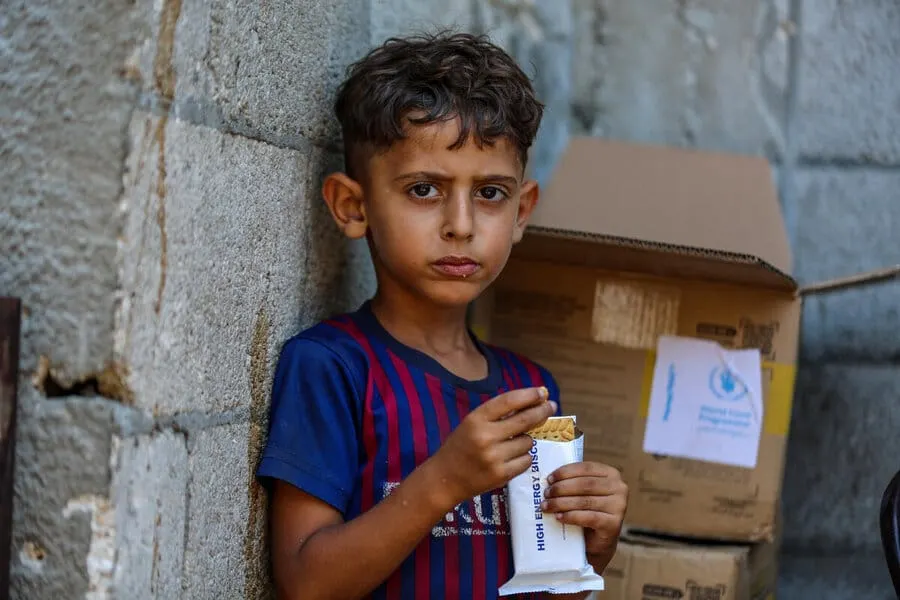
Addressing the United Nations’ World Food Program Executive Board in Rome on Monday, with WFP representatives joining online from around the world, Pope Leo XIV posed a question too rarely heard when discussing world hunger: not how to intervene more effectively, but why the existing global order keeps producing crisis in the first place.
“The world today could live without hunger… the capacity of food production exists,” the Pope stated. Yet “conflicts are ‘fed’ more readily than people are nourished. This reality reflects … a fundamental imbalance in political and moral priorities” that must be changed.
The crisis, he argued, stems from the fact that “the human person is no longer consistently placed at the center of international action.” Basic human needs—food, water, healthcare—"cannot be subordinated to market considerations or geopolitical interests.” Access to adequate food, he insisted, is “a fundamental human right grounded in the dignity of every person,” and meeting this need is not only a humanitarian act but addresses “underlying causes of geopolitical instability. Indeed, food security is an essential component of global and integral security.”
The Pope put the structural question directly. Crises, he noted, have “evolved from isolated events into persistent realities” of chronic food insecurity and social conflict, and this requires asking “a fundamental question: what configuration of the global order is capable of producing, reproducing and, at times, normalizing such conditions? The issue is no longer limited to how to intervene; rather, it extends to understanding why the system constantly produces the very problems it is then forced to correct.”
Hunger, he continued, erodes social cohesion, heightens the risk of conflict, fuels forced migration, and undermines the capacity of states to build resilient institutions and sustainable development—perpetuating “cycles of fragility that affect the broader international community.” Humanitarian action, in this light, is not “extraneous to the international order” but the test of whether that order recognizes “the inherent God-given dignity of every human person.”
Pope Leo appealed for renewed multilateral cooperation in what he called an “increasingly fragmented and multipolar world,” in which no single state can address global challenges alone. “Such an approach requires a firm political will capable of transcending short-term perspectives and investing in global public goods,” he said.
“In this spirit, I wish to appeal to the governments and peoples of the world to renew and strengthen their commitment, to increase the resources dedicated to combating hunger and its root causes, and to remove the obstacles that prevent aid from reaching those in need.”