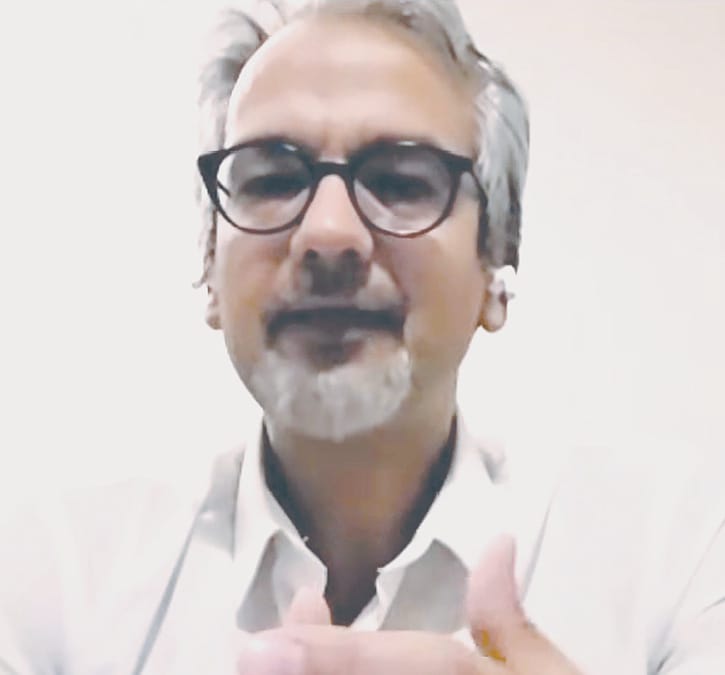
The following is an edited transcript of the address by Dr. Mostafa Maleki to Panel Two of the May 30-31 Schiller Institute Berlin conference, “The End of 500 Years of Colonialism: For a Dialogue of Civilizations—The Urgency of a New Global Security and Development Architecture.” Dr. Maleki is the press attaché of the Iranian embassy in Germany.
Ladies and gentlemen,
When we speak of Hafiz and Goethe, we are not simply speaking of two great poets, we are talking about two kindred spirits.
We are talking about an encounter that never took place and yet continues to have an impact to this day. About an encounter between Shiraz and Weimar, between Iran and Germany, between the Orient and the Occident. Perhaps today, in a time of new conflicts and new dividing lines, we are talking about something we need more urgently than ever: the art of wanting to understand the other.
As a diplomat, I encounter the story of Hafiz and Goethe time and again. Hardly any event on German-Iranian relations goes by without these two names being mentioned. In times of good relations as well as in times of political tension. There is a reason for that.
This story is more than just literary history: It is cultural capital. It is a reminder that spiritual kinship can outlast political estrangement.
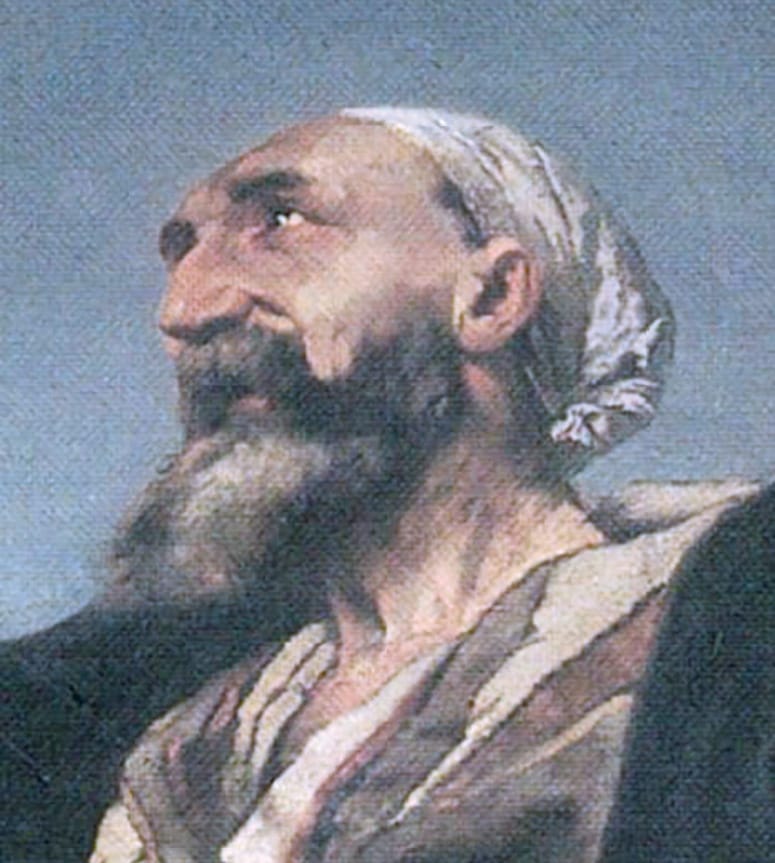
1819 was a pivotal year for the reception of Persian literature in Germany. Goethe’s West-Eastern Divan was published, Friedrich Rückert turned his attention intensively to Oriental literature, and both had access to the groundbreaking work of Joseph von Hammer-Purgstall, whose translation of Hafiz paved the way for its introduction to Germany.
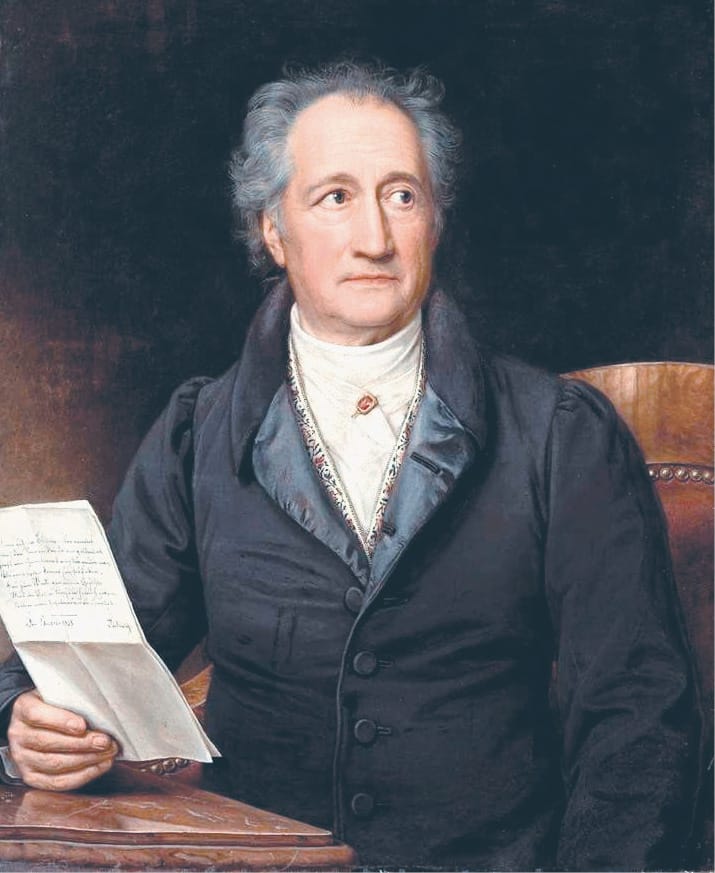
But what matters is not merely that Goethe read Hafiz. What is decisive is how he read him. Goethe did not find an exotic stranger in Hafiz: He found a brother, a conversation partner, a “twin brother in spirit.”
That was by no means a given; for Goethe did not discover the Orient at a time of particular openness toward the Islamic world. He did not turn to Hafiz in an era of cultural harmony. Prejudice, ignorance, and distance were widespread.
Dialogue in a Time of Tension
That is precisely why his move holds a message for our time. Dialogue does not begin where there is agreement. Dialogue begins where differences exist.
Goethe’s greatness lay in recognizing the human behind the foreign. He did not seek reasons for separation, but opportunities for encounter. Perhaps that is the most important lesson the West-Eastern Divan has bequeathed to us.
Goethe was by no means uncritical. He saw many things differently. He remained a free spirit. But his criticism never led to a refusal of dialogue. He understood something we sometimes threaten to forget today: Understanding does not mean agreement. One can disagree and still listen. One can offer criticism and still show respect. One can recognize differences and still feel a sense of connection.
This is precisely where one of the highest forms of intellectual and diplomatic culture lies. “Those who know themselves and others will recognize here as well: the Orient and the Occident can no longer be separated.”
These famous verses are often quoted. Yet they are rarely fully understood. Goethe does not simply say that the East and the West are connected. He says: Those who know themselves and others will recognize this connection.
This connection is therefore not a given. It is a task. It demands curiosity. It demands education. It demands a willingness to go beyond one’s own horizons.
That is why the dialogue of civilizations is not a state that is achieved once and for all. It is an ongoing process. A movement. A ceaseless striving for understanding.
Friendship between nations works this way, too. Peace works this way, too.
The Living Spirit of Iran
Ladies and gentlemen, Hafiz is not a historical figure in Iran. Hafiz is lived. His verses accompany people in their daily lives. Almost every family owns a Divan of Hafiz. His poems are read, quoted, and rediscovered time and again. Anyone who wants to understand Iran must also understand Hafiz. And anyone who understands Hafiz understands something of the heart of Persian culture.
Hafiz and Goethe have accompanied me not just as a diplomat, but since my student days. I still remember well the first semesters of my German studies. My German was still far from perfect back then. Nevertheless, I ventured to translate Goethe’s “Mahomet’s Song” into Persian. Perhaps that was when my own journey between worlds began—between the German language and Persian culture, between Goethe and Hafiz. Since then, these two great poets have never let me go.
I also remember my time as a tour guide for German-speaking visitors in Iran. Time and again, I witnessed German travelers waiting impatiently for a specific place: Shiraz. They wanted to see Hafiz’s tomb. Not infrequently, this visit was one of the most moving moments of their journey.
When we look at the image of the Hafiz Mausoleum today, we see more than a tomb. We see a place of cultural memory. A place where people from different countries and cultures are connected.
This connection lives on to this day. It lives on in the works of Günther Uecker, who dedicated a significant series of works to Hafiz. It lives on in the encounters between artists, scholars, and cultural figures.
And it lives on in a particularly moving project: The German artist Knut Reinhardt, together with his wife, Ingrid, created a light sculpture of Goethe and brought it to Shiraz. Goethe, who was never able to visit the grave of his spiritual brother, thus symbolically arrived there after all. A symbol that cultural closeness can be stronger than political and geographical distance. A symbol that the dialogue lives on. Perhaps this is precisely what leads us to the true relevance of Hafiz and Goethe today.
When Goethe calls Hafiz his twin brother, he does not mean that the two were the same. Twins are not identical. Each has his own voice. His own experience. His own story.
Perhaps this is precisely the message for our time. The European tradition has given humanity the idea of individuality—the dignity and freedom of the individual. Persian wisdom, as we encounter it in Hafiz, reminds us at the same time that human beings are part of a greater whole and that true fulfillment lies not only in the self, but also in connectedness. One without the other remains incomplete.
Perhaps the encounter between Hafiz and Goethe still touches us so deeply today because here each culture recognizes in the other something that complements it. Not superiority. Not subordination. Not fusion. But complementarity.
A shared world culture does not arise from the disappearance of differences. It arises from differences becoming fruitful.
Dialogue in Our Time
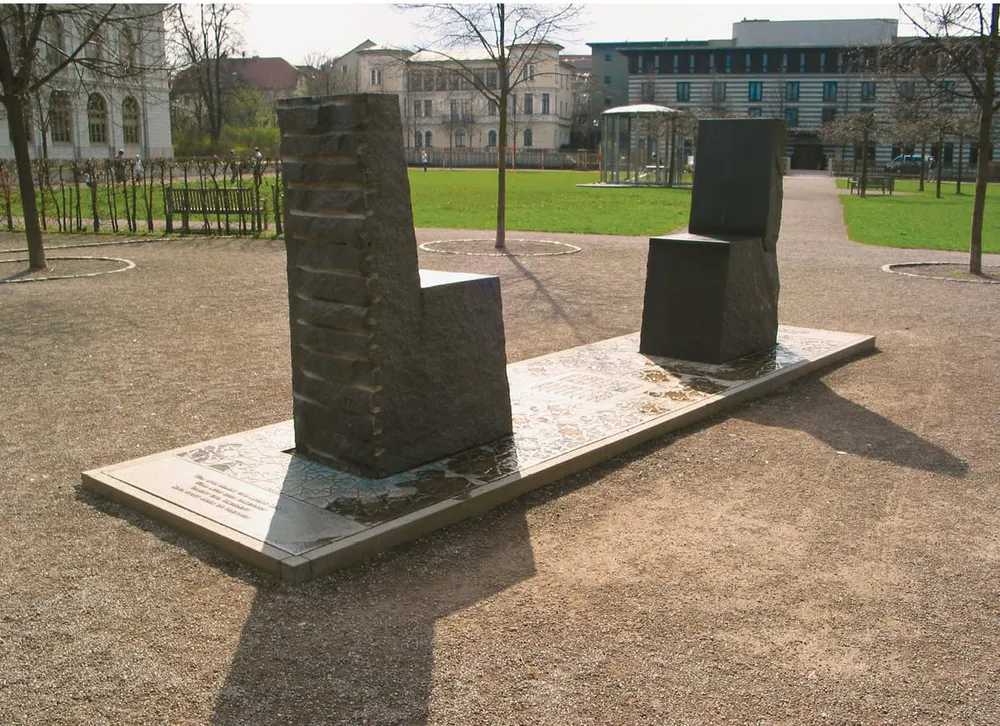
Ladies and gentlemen, the Goethe-Hafiz monument stands in Weimar today. It does not depict the two poets: It depicts two chairs facing each other. Two empty seats. Perhaps that is precisely where its deepest message lies. For the dialogue between Hafiz and Goethe is not over. The chairs await new conversation partners. Germans and Iranians. People of different religions, cultures, and political experiences.
The question is not whether Hafiz and Goethe spoke to one another. The question is whether we are ready to continue their conversation. Especially today. In a world that often judges faster than it understands. In a world where geopolitical conflicts frequently obscure our view of human and cultural reality. The greatest danger to dialogue does not lie in differing opinions. The greatest danger lies in the loss of the will to understand the other, and in the loss of the reason to treat them with respect. Those who no longer wish to understand can no longer connect.
Hafiz and Goethe teach us something different. They teach us that cultural encounter is not a weakness. It is a form of intellectual strength. It requires self-confidence. Education. Curiosity. And the willingness to let oneself be enriched by the other.
Perhaps this is the true message these two great poets leave us at the end of an era of dominance, confrontation, and cultural arrogance: The future does not belong to walls. The future belongs to bridges. And few bridges between Iran and Germany, between the East and the West, shine as brightly today as the one Hafiz and Goethe built together.
In closing, I would like to give the floor to Hafiz himself. For no speech can express his thoughts better than his own verses.
[Dr Maleki concluded by reciting a poem by Hafiz in the original Persian, with traditional musical accompaniment.—ed.]
English Translation:
Plant the tree of friendship, for it will bear the fruit of heart’s desire.
Uproot the sapling of enmity, for it will bring countless pains.
Be honorable with the revelers like a guest of the tavern,
For my dear, worrying will only bring you a drunken hangover.
Treasure the night of companionship, for after our time,
The universe will turn many times, bringing many nights and days.
Guide Layla’s camel, whose cradle is the Moon,
Please God, place it on Majnun’s path.
O heart, desire the spring of life, otherwise this meadow every year
Will bear a hundred narcissus and a thousand nightingales.
Oh God, since my heart has formed an attachment with your curl,
Command the sweet ruby to quickly join the rendezvous.
In this garden, God willing, aged Hafiz will sit
By the edge of a stream, with a cypress tree beside him.