
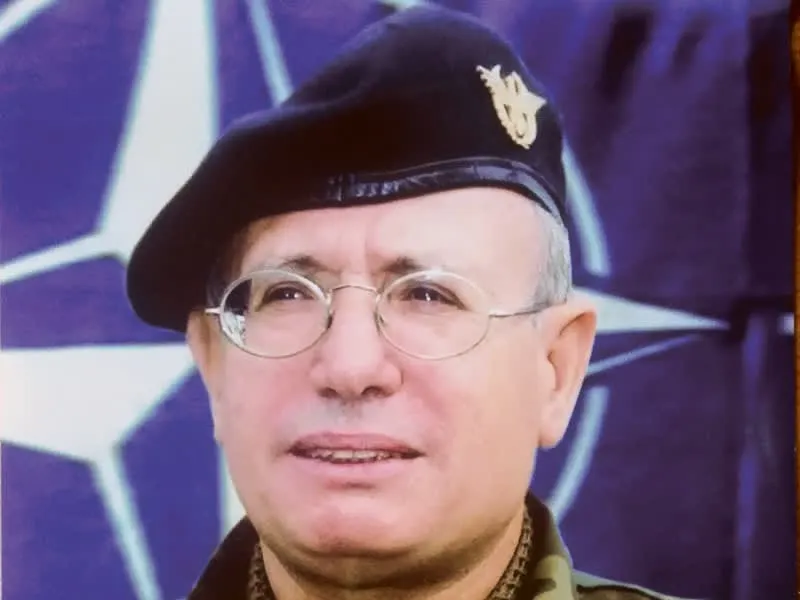
The following is an excerpted, edited transcript of a Feb. 25, 2026 EIR interview with Fabio Mini. A retired Italian Lieutenant General, Mini commanded NATO forces in Kosovo (KFOR) from 2002 to 2003, and served as Chief of Staff of NATO’s Southern Europe Command. He currently works as a military analyst and writes on military strategy and war ethics. The interview was conducted by EIR’s Claudio Celani. Subheads have been added.
EIR: Good evening, I’m Claudio Celani, editor of the EIR Strategic Alert Service weekly newsletter. Our special guest today is Fabio Mini, a former lieutenant general in the Italian Army. He was head of the General Staff of the NATO Command for Southern Europe, and beginning in January 2001, he led the Joint Command for Operations in the Balkans. From October 2002 to October 2003, he commanded the NATO-led peacekeeping operation in Kosovo as part of the KFOR mission, Kosovo Force. General Mini is also an intellectual and the author of numerous books, including Europe at War (2023) and NATO at War (2025). He recently wrote a preface to the reprint of Herman Kahn’s famous text, On Thermonuclear War (1960).
I’d like to read a few lines from Gen. Mini’s preface before we begin our interview, as I consider them important. He writes: “Kahn legitimized tactical nuclear warfare, making it a possible, probable, and lawful means of warfare. The term ‘tactical’ is misleading and very relative because, for our continent or any other, tactical nuclear use corresponds to the same degree of destruction as strategic use involving multiple continents.”
General Mini goes on to say that, unfortunately, today, “political leadership is totally prey to emotion, fear, and irrationality.” He also states: “The current war between Ukraine and Russia is not at all a local issue. Indeed, it is the visible part of an open and bloody conflict with a multitude of players, actors, and extras, aimed against Russia today, China tomorrow, and the rest of the world the day after tomorrow.”
So, with that cheerful introduction, I’d like to begin by focusing on China, a subject we’ve already touched on. General Mini is an expert on China, having spent several years there as a military attaché and written extensively about it. For example, he wrote the preface to Empire Arc (America and China at the ends of parabola) (2016), a book by the great Chinese strategist, Qiao Liang. I’d like the general to share his insights on China from the perspective of someone who knows the country well. While it’s a frequent topic of discussion today, many commentators lack genuine understanding, and Western media often portray China as a threat.
But in reality, China has been responsible for far fewer military conflicts than Western countries, right? What’s your opinion?
Gen. Fabio Mini: The observation you made at the beginning is correct. There are people who write and speak about China without truly knowing it, holding a stereotypical view of China with the usual slogans: “China is near” [a famous slogan of Maoist groups in Italy in 1968], China is a threat, etc.
These positions serve to highlight that China is not merely a potential threat, but an existing one. This is a false narrative. Constructing a narrative of China as a threat is one thing; understanding the reality of China is entirely different. In Europe and the United States, there’s a perceived need for a Chinese threat, and they are deliberately building and shaping it by any means necessary.
The West’s Need for an Enemy
EIR: Why are they building it? What is the goal?
Mini: The goal is that, among other things (and this contrasts with the Chinese mentality), we need an enemy to justify our actions. The West has always needed an enemy, or the representation of one. And since the representation of the enemy is created by those who want to represent it, it is always evil: a terrorist, a gangster, a criminal, devoid of rights.
This need is functional to the development and exercise of power. Imagine if Russia, the current enemy, didn’t exist. What would NATO be for? Without Russia and Iran as enemies, what purpose would Israel serve? Why isn’t Israel scrutinized as much as other nations? Because without a threat, even Israel would be screwed.
The Century of Humiliation and China’s Self-Perception
EIR: Isn’t China’s desire to never again experience something like the “century of humiliation” misunderstood in the West?
Mini: Yes, many make that assessment, but I’ve never seen any strategic proposal referencing the century of humiliation. Generally, the Chinese tend to put that period aside; they don’t want to dwell on humiliation, especially now that they are overcoming it. They are essentially compensating for that entire century.
If anything, China misunderstands the West’s intentions. They underestimate the West’s antagonism. There is no widespread perception in China that the entire West is against them. They believe, perhaps naïvely, in the possibility of cooperation and collaboration, especially with the strongest, namely the United States.
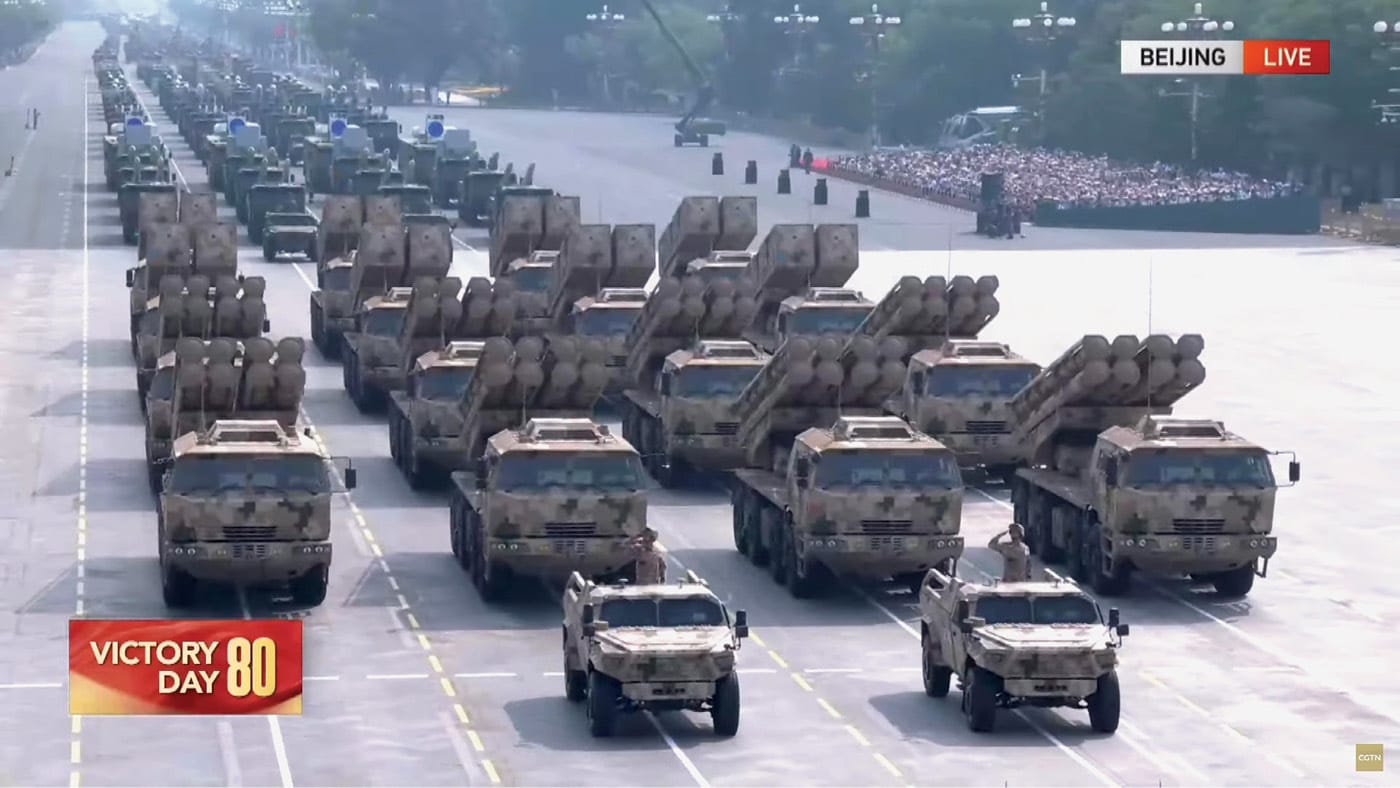
I remember being in China for three years, and returning several times after that. But my first impression of China, specifically of Chinese television, came from a soap opera about Chinese people in New York. They were seeing Chinese people in New York and seeing themselves. This was around 1993, and these people obviously didn’t have dishwashers or washing machines at home then. Nowadays, they don’t even have dishwashers and washing machines—they have robots that do both!
Back then, they still saw the West as a great power. China hasn’t yet realized, for example, that Europe isn’t a great power, that no European nation is a great power, and that NATO, as an instrument of all—not only Europe, but also the United States, and even without the United States, of all Europe—isn’t a power either. So, they’re trying to find something to counterbalance, not as a threat, but something to counterbalance.
EIR: How will they react when they realize that it is not a power?
Mini: They’re reacting now. They want to do business and are buying up everything, including struggling companies. We blame the Chinese for buying, but I blame the Americans, and especially the Italians, for selling! When someone tells me, “They’re buying everything, even in cash, coming here with suitcases full of money and offering me 100 million to take over my company,” I ask: “What did you do?” “I took the 100 million.” Well—
We no longer have entrepreneurs. Look at the story, even in the United States. In the West, we’ve moved beyond the era of great entrepreneurs, of self-made men who started from the bottom and built things. Today, our great entrepreneurs, especially the American ones, operate on the web, doing unseen things and, above all, making money.
The Chinese, on the other hand, have remained a step behind. They still want to see concrete results; they don’t follow the hype or Bezos’s illuminations….
EIR: Getting back to China’s overall strategy, it seems to be based on win-win cooperation with other states, rather than the demonstration of military force. The United States has over 800 military bases around the world, while China has only one, in the Horn of Africa. Don’t these numbers speak for themselves?
China’s Military Strategy: Security as Lowest Priority
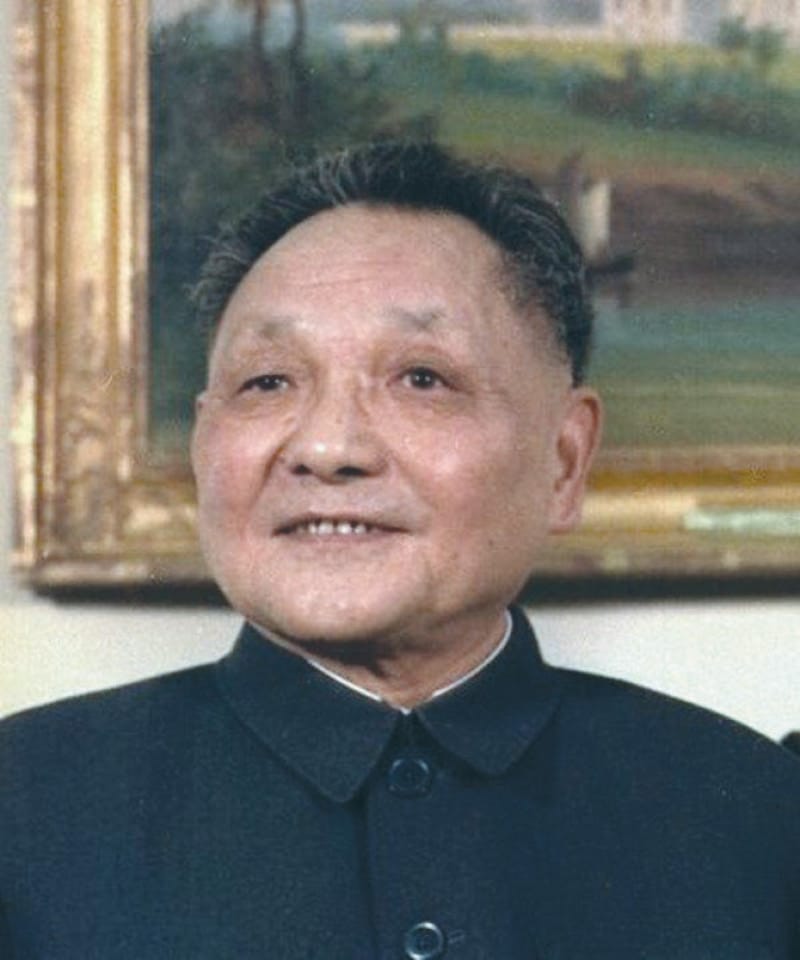
Mini: Yes, they do. But the Chinese strategy is all-encompassing, holistic, and must be articulated and modeled according to the priorities indicated during the time of Deng Xiaoping, and since reconfirmed. War, security, and military were the lowest priority, with agriculture at the top, followed by industrialization, technology, and then security.
These four priorities remain unchanged. However, more funds have been allocated to the military side, because in the meantime the military part has been completely reformed—from a popular army, scattered across the territory and lacking unified command. Previously, the regional commands rarely listened to Beijing, as we saw during the Tiananmen Square crisis. The Central Military Committee, seeking to quell the initial signs of revolt, requested that the regions send two army corps from outside; they refused. Consequently, to intervene in Tiananmen Square, they had to deploy the 47th Army Corps, which belonged to Yang Shangkun, a grandson of a Long March veteran from the influential Yang clan named Yang Baibing. This was a family connection, as Yang Shangkun had served as President of the Republic. He brought his army corps from Shenyang, a distance of approximately two thousand kilometers to the north, traveling from the snowy region to Beijing. No other commander responded to the request.
So, the reform of the armed forces began in the late nineties, during my time there, and it started not with an assessment of the threat, but of the risk. They saw the situation in Taiwan, with America and Japan courting Taiwan, as a risk. Therefore, the military needed to be developed in response to that risk.
When I went to China in 1993, they had four intercontinental missiles and about ten medium-range missiles. By the time I left in ’96, when they were conducting exercises in the Taiwan Strait, they had mobilized something like 200 medium-range missiles. By then, evaluating the risk, there was none.
The fundamental risk was the loss of sovereignty, and this continues to this day.
Taiwan, Sovereignty, and the One-China Policy
EIR: Taiwan is constantly used as an argument to support the perceived threat from China, specifically the threat of a supposed attack. In fact, this is often taken for granted. However, since the Cairo Conference and the Potsdam Declaration, Taiwan clearly belongs to China. How is it possible that the one-China policy, as defined by the United Nations, is continually being questioned?
Mini: Because they play dirty. That’s exactly what they want to do. There’s a financial and political reason, both in terms of international law and the turning point of assigning the United Nations seat to mainland China rather than Taiwan (Formosa). China’s seat at the United Nations was previously held by Taiwan, by Chiang Kai-shek. When the change occurred [1971] through the efforts of Kissinger, a major proponent of this change, they recognized that China was one. Or rather, they managed to establish the issue that China was one. I still have the 1995 China phone book. It’s tall. All of China was in this thick book, divided by provinces. When you opened the Taiwan pages, they were blank, and it said Taiwan was “temporarily absent.” It’s still there.
I asked the Minister of Defense a question when I went to say goodbye to him as I was leaving in 1996. I asked why the animosity towards Formosa was continuing. He told me something important: “Our sovereignty is endangered, not so much from the Taiwanese; it is endangered by those who tell them to do something—and they do it.”
“And how will you respond?” I asked. “Are these exercises meant to prepare for that?”
“We are getting ready. We’re preparing for any eventuality.” I understand. What’s that eventuality? Razing Taiwan to the ground? He said, “Exactly.” And the 20 million inhabitants? “We need territorial sovereignty, regardless of whether someone is there or not.”
I thought, obviously this would not happen, but the message was clear: Territorial sovereignty was the absolute priority. The same goes for Tibet, Xinjiang, and Inner Mongolia. In Xinjiang, everything always refers to sovereignty. They cannot allow someone in a province to oppose the central government, which means, above all, they are against China. If there are territories where they don’t have territorial sovereignty, they treat the inhabitants like terrorists. It makes me laugh when they talk about the “poor Uyghurs,” who are not poor at all, they’re quite well off.
The Uyghurs were the elite of Genghis Khan. They served as interpreters because they were the most cultured. The Uyghurs had their own language and writing, placing them at a high level during Genghis Khan’s time. However, they had a functional role in that power. Uyghurs are Turkmen, not Chinese. They also come from the area around Lake Baikal, from where they left with the hordes of Genghis Khan. These tribes all originated from Lake Baikal, stopping briefly in Mongolia before moving on. They became the men, the nomenklatura, the diplomats of the entire empire.
Now, in present-day Xinjiang, from the 1960s onwards, the Uyghurs went from being the majority to a minority, not by much, but a minority nonetheless. I’ve seen how minorities operate in China. I went to extreme Xinjiang, on the border with Pakistan, in Kashgar, where they had just inaugurated the largest market in Central Asia. It’s located on the border, at the crossroads with all the Central Asian republics. There, the Chinese were in the minority, and I saw how afraid they were, because at night, some would hunt for Chinese people in the streets; this is no exaggeration.
Populations undoubtedly have rights, and China safeguards these rights. In my opinion, China is making too much of an effort in that direction. But it is not true that they [Uyghurs] are a peaceful population, or that those poor people are tortured by China. That is not true. I was scared twice in China, once in Tibet and once in Xinjiang. In Ürümqi, the capital, they put a knife to my back because I didn’t want to buy a piece of rice nougat, but today the situation seems under control.
Of course, it was always under control, though previously, control was purely military.
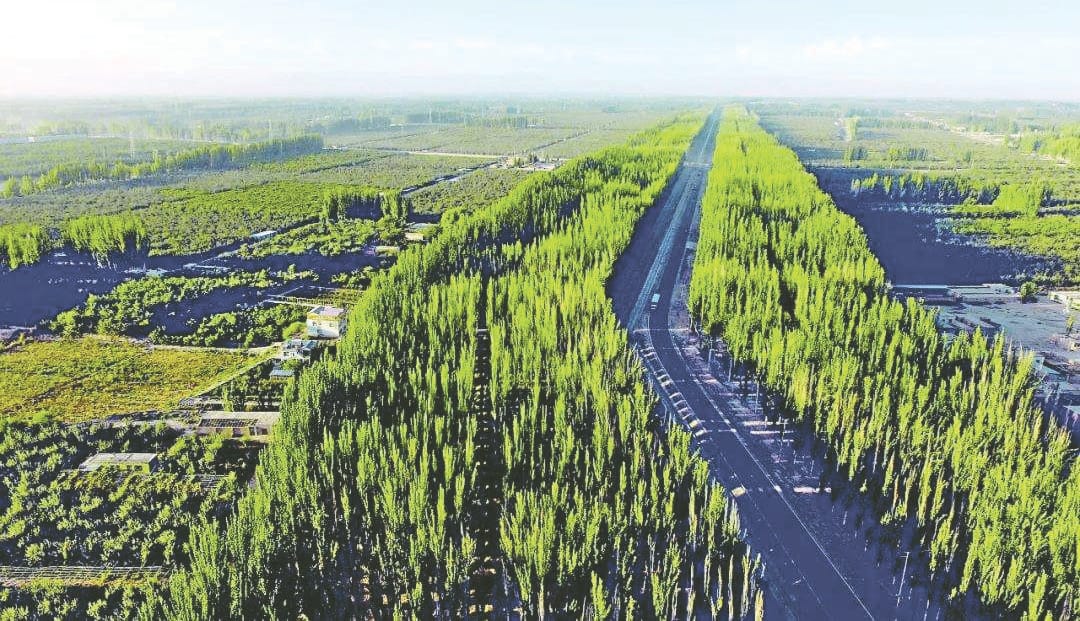
In Xinjiang, the Uyghurs controlled large, beautiful oases such as Turpan, which features ancient irrigation technology. However, the rest of Xinjiang was desert, devoid of people, and there were no Uyghurs outside of Ürümqi, Turpan, or Kashgar.
What did China do? It mobilized, or rather never demobilized, the so-called construction regiment, an engineering unit larger than a division, even larger than an army corps. They were sent to do desertification-control work, building settlements. Someone might say this is a Chinese invasion of Xinjiang. No! This is the recovery of a territory that belongs to no one. The Chinese worked the same way they did in Africa, and the same way the people of Xinjiang work. Day and night, hoes in hand, with hundreds of thousands of soldiers.
Since they couldn’t return home, they started families, who lived in colonies near the borders. Remember, while Russia and China are now on good terms, this was not the case in the 1990s. China’s primary enemy was in the north, not the south. Their missiles, few as they were, were hidden in mountain caves, aimed at Russian territory, not elsewhere.
EIR: You’re saying the so-called forced labor was done by the military, not by the Uyghurs?
Mini: Yes, and in their logic, it wasn’t forced labor, it was work they had to do.
EIR: They were conscripted, you could say, right?
Mini: No, it was their task. We have our Genio, the Engineer Corps of the Army, that were mobilized for any misfortune, any flood. They moved to open roads and close dams. During train strikes, the railway engineering regiment didn’t strike and kept the lines running. The armed forces had a social function then, unlike now. We no longer have the train regiment, but the Chinese do.
The Chinese still have the Construction Corps, because life is so difficult in some areas that only a military imposition with a strategic purpose, but above all a civil, civic nature, can suffice.
And that was the idea.
Japan’s Provocations and China’s Strategic Patience
EIR: This is very important. Turning to Taiwan, how do you explain the new Japanese Prime Minister Sanae Takaichi’s sudden accusations of threats to Japan’s security? She specifically mentioned threats to Japan’s security if China takes military action against Taiwan. What’s behind this outburst?
Mini: It’s a two-pronged attempt to make Taiwan a colony. The fingerprint is purely American; they always talk about this, and made a cooperation treaty with Japan that considers an attack on Japan an attack on the homeland. Japan copies this and does the same with Taiwan. Do they want Taiwan? I don’t think they could claim Taiwan, but they want all the small islands between Japan and Taiwan.
Yes, they want those, and China wants them too, claiming sovereignty. Frankly, these small islands aren’t particularly interesting. A Japanese citizen bought land on one, built a house, and played golf there. Japan uses this as justification for why it wants them.
China, for its part, cites historical reasons, but the earliest historical evidence is usually just a fishing boat in the vicinity, which is also tenuous.
However, Japan is playing this card to connect directly with Taiwan, making it part of its sphere of influence.
Secondly, Japan wants to rearm! Japan wants to close the chapter of the Peace Treaty and its commitments after World War II. They want to rearm legally, not surreptitiously as they have been. This has been the case since I was there. My Japanese colleague was just talking about this. He didn’t care about the Peace Treaty and said we needed this and that.
EIR: But how do the Chinese react to these provocations?
Mini: The Chinese know better than to react. They let it go until it becomes unbearable, but not beyond a certain threshold. The Japanese can say whatever they want, but the day a corvette lands near the islet where the fishermen are, they will sink it.
China has also created its own national airspace that covers part of Japanese territory at sea, claiming it’s for flight safety, which is true, but it’s a fixed area.
The Chinese, and I tell you the truth, aren’t particularly patient—I’ve always observed very little patience in the population. They are quarrelsome and avid gamblers, betting on everything. However, they are united when their sovereignty is at risk, acting as one for China as a force in the world; as a power—not a hegemonic power, but a power.
The Chinese, if you look at it, just want the place they deserve. They deserved their place before, but we treated them as if they were marginal. I was sent to China with the warning, “We don’t care about China; you are going to an area that is marginal for us.”
Very good. Then, when I came back, they realized that it was not marginal. And now they’re still reading what I wrote to them to understand that it was not marginal.
EIR: That was when NATO stayed within its borders, right?
Mini: Exactly. NATO stayed within its borders, careful not to sow discord.
EIR: The Chinese also show patience on the commercial front, for example, in how they reacted to President Donald Trump’s trade war. There is a famous military strategist, Sun Tzu [ca. 6th cent. BCE], whom you know—
Mini: I know him well—though not personally, as someone once asked me. Can you imagine?
EIR: Are they using his teachings on the tariff front as well?
Sun Tzu, Clausewitz, and China’s Strategy of Winning Without Fighting
Mini: Oh yes, oh yes. From a military point of view, I think they didn’t take much from Sun Tzu. They took a lot from Clausewitz because of kinetic warfare, which is what they’re still planning. But they did learn this great lesson from Sun Tzu. One is that war is a critical issue involving the state and its survival, demanding thorough study and understanding. The second point is this: The enemy isn’t defeated in battle, but in the planning stages. The famous saying goes: “To win one hundred victories in one hundred battles is not the acme of skill. To subdue the enemy without fighting is the acme of skill.” This doesn’t mean lacking the weapons to fight, but rather having already secured victory the moment the enemy attacks, perhaps without them even realizing it. This preliminary victory is achieved by undermining the opponent’s plans.
Looking at China’s defense planning in recent years reveals this very principle. Aircraft carriers? Good. Key points for the U.S. position? Good. How do you take out aircraft carriers? They figured it out: submarines armed with anti-ship missiles, and ships on the horizon acting as electronic reverb for thousands of kilometers. The key is knowing the plans and preventing them.
EIR: Then there are the drones, right?
Mini: Now there are drones, of course.
EIR: I realized how advanced they were with drones when I visited China the year before COVID. I attended a party during the tea festival, part of the first International Tea Day, with a Western delegation. Among others, there was a descendant of the famous Earl Grey. We were treated to a fantastic show on the lake, with drones unlike any I had ever seen. Luminous drones creating figures in the night. Fantastic.
However, China’s continuous growth over 40 years is unprecedented. There’s no historical parallel. The poor country has become an economic power, a leader in many sectors. What do you attribute this success to?
The Secrets Behind China’s Unprecedented Economic Growth
Mini: Well, the success is due, first and foremost, to something that frightens our rulers—planning. They’ve always had five-year plans, but struggled to achieve the expected results. Since the 1980s, by lowering the bar, they found that the plans could be fulfilled. Continuing with these five-year plans and achieving their goals propelled everyone forward.
What triggered it? The famous directives given by Deng Xiaoping: Get rich.
And then the rich have to drag the poor along. The coastal areas had always been very active and productive, but there was the great hinterland, what Australians call the outback; these huge areas inside the country. With the planning and the involvement of large companies, both state and private, they gave more free rein to private enterprises, or private companies, because they were not completely private. Then the other phenomenon was that the best individuals working in state industries were financed to set up their own companies. When we see all these Huaweis, these giants, they all started with a $10,000 loan to someone who had an idea.
EIR: However, they were able to enjoy the infrastructure created by the state, right?
Mini: Sure. The infrastructure and especially the land, in the sense that our joint ventures, too, that we had in China, Western ones, were all at 51-49: China gave 51%, and 49% was given by the investor. The 51% included land, the workforce, and local infrastructure. So, basically, they assigned a zone, and they would tell you, “This is yours, but you need to hire the labor force, and we’ll tell you whom to hire.”
And so it went, with the great experiments made with special economic zones that had been created. I visited two of them, and they were awesome, with a very high level of production and professionalism. In these special economic zones, everything happened.
You know, during the time I was there, annual growth had gone from 14% to 11%. 14% seemed strange to me. For our national or European criteria, these rates were already stratospheric. But even for China, there was something strange. I got broken-out data, and I saw that the 14% growth was an average for all of China, but in the coastal areas—in particular Shanghai, but also in lower Fujian, and also in the part of the island of Hainan—the annual increase was 32%.
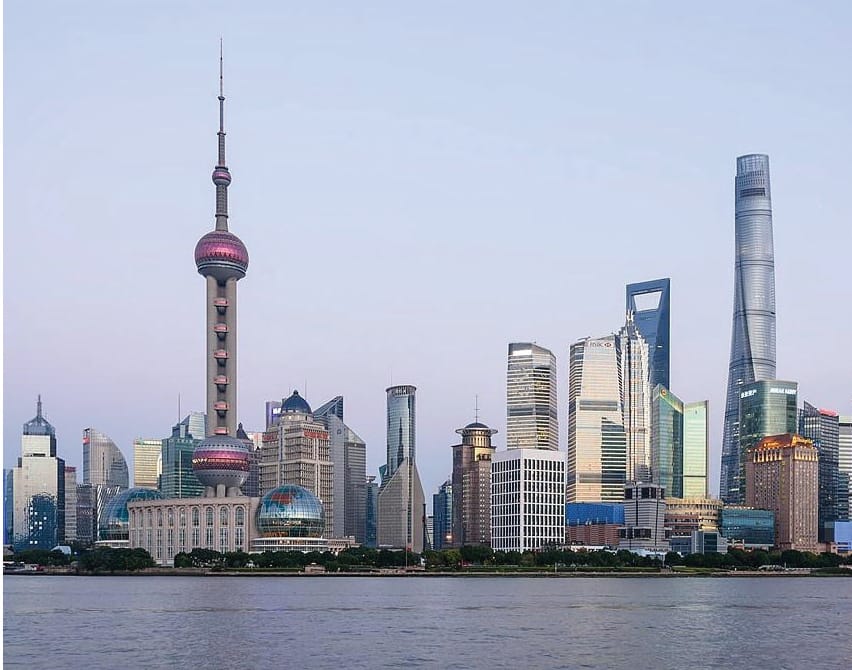
The government had the problem of overheated growth. They had to slow down the growth, because they realized that the economy was overheating and they were also producing some things that were not usable. It was money that was circulating, which was pouring in, but it wasn’t clear where it was going. In that case, they managed to cool it down with measures specifically to slow down development in certain areas, focusing more on quality than quantity.
In China, we had some very important assets. For example, [truck maker] Iveco was a model factory that Iveco managed independently for twenty years. When it was time for complete Chinese management to take over, the Chinese realized they lacked the managers for the job. So, Iveco left its managers there for several more years, after which the Chinese invested in developing their own managers.
They invested in young people to become leaders. It wasn’t just one thing that led to their success; it was a combination of actions taken in the right measure.
Today, they are at 5% or 6% growth, and everyone in the West cries, “It went down!” But I remember when the Chinese were pulling their hair out, because they knew 14% was too much. They realized it was too much.
Lessons the West Refuses to Learn
EIR: But Fabio, instead of trying to contain China, which is impossible, shouldn’t the West study the reasons for China’s success and learn from them?
Mini: That would be desirable, Claudio, that would be useful. But, as I said, that’s not the attitude. The attitude is to treat China as an enemy. If China stops being an enemy, half the world falls apart, because the great aspiration that Europeans and Americans share is not to have a conflict to fight—because that would be hard—but to have a conflict to fear. That way, everything needed to fuel preparations for the feared conflict moves forward, even the things that aren’t going well. Germany is doing the same thing. They are investing heavily in one sector, knowing full well that it’s not what they will ultimately develop. But they probably need it—I don’t know—they need it to pull the [other sectors] along.
Now, look, it’s no coincidence that this only means that they need something external to give them an anchor. That’s why the German delegation went to China. Because the anchor is a lifeline, but above all, it’s for real production. It is the lifeline coming from China to Germany. Obviously, France doesn’t agree, but still—
EIR: But at least this gives us hope that the rearmament stops there, that we don’t move forward, and that the war economy doesn’t lead to war.
Mini: No, a war economy that leads to war is a failure. I mean, it’s an economic failure, a commercial failure, and a failure of a state and its institutions. It’s a failure.
One can understand the preparation for war. During the era of two blocs, the arms race was more mitigated than it is now. It existed, but the goal was balance. Nobody wanted a major confrontation. Today, the game that European countries are playing is exactly that of saying, “Let’s move on, let’s move this thing forward,” but we won’t go to war anyway. There is a small detail, that we don’t have the resources, not even for preparation. I don’t know if Germany has the resources to prepare in this direction right now. Maybe they do; they may have a surplus of something. They don’t have as much debt as we do. But we do. America has debt.
You quoted Qiao Liang, in the book Empire Arc. He wrote this book in 2015, and it went completely unnoticed, partly because he wrote freely, and partly because he wrote in Chinese. He didn’t even have the books translated.
Those in the West who were interested had it translated for themselves, but woe betide anyone who spread it around. Because what he said in 2015 is what’s happening now. In 2015, he discussed de-dollarization and the creation of a market with a non-dollar reference point. These are all things that are happening now. Had we read this in 2015—I took the liberty of promoting it in 2022-23—that would have been it. And if you examine his discussion about the function of the dollar and the dollar system, it’s obvious. What Americans are doing now goes in the exact opposite direction than he forecast, in the sense that they want to strengthen the dollar, increase the debt, and make everyone else their customers. Trump even wants forced customers, because they have to buy certain things. This can go on for a while, but eventually even the Americans will realize it.
EIR: But I still see the attempt to save paper with paper.
Mini: Yes, yes.
EIR: Which therefore saves nothing. What worries you more—German rearmament or what would happen if the Brussels and French President Emmanuel Macron line passes, to carry out European rearmament with euro bonds? Which one worries you the most?
European Rearmament: National Rationality vs. Brussels Bureaucracy
Mini: Number two. I always have a lot of confidence in the rationality of national governments. Always a lot of confidence. Why a national government? It can express rationality up to a certain point. I hope Germany has this kind of rationality, that there is a rational purpose for this. But when we get together Great Britain, Poland, France and some other gadgets in the back—
EIR: And the Baltic States.
Mini: Ah, when we throw the Baltic countries into the mix, rationality no longer exists. It’s gone. And anything can be expected. Euro bonds? Are we kidding ourselves? Germany can afford to make its own bonds, but when it has to contribute to a system which is composed of debt of the entire European sector, what the hell are you getting yourself into?
EIR: What must be considered is what a nation decides for itself, certain objectives, national interests, etc. But it’s another matter what Brussels would decide, from a pan-European point of view, of this so-called European sovereignty, precisely as with the case of this planning for rearmament—what to build, where to buy, etc.
Mini: Exactly. This pan-European thing— I don’t believe the European Union has acted in a pan-European sense. A bureaucratic elite in Brussels has imposed things that were against everyone’s interest. What interest did we have in going to war in Ukraine? They still have to explain that to me. We had no interest. What interest do Italians—and this applies to Germany and other countries—have in confronting a continental power? We, especially Italians, and above all producers who have shortages of raw materials but abundant manufacturing, need to get along with those who have the raw materials and can buy from us.
So, the supreme national interest of countries like Italy—and I’m not only talking about Italy—is international cooperation, to have no enemies. The moment you have enemies, you naturally have the obligation to solve problems, or try to solve problems, with weapons, which doesn’t work.
EIR: So, this applies to both Russia and the policy towards China.
Mini: Right.
Understanding the Chinese Mentality: Problems as Tasks To Complete
EIR: Well, I think we’ve reached the end, after about an hour. Anything you would like to add? Any thoughts?
Mini: A thought: To understand the Chinese mentality, we don’t have to go back to Sun Tzu. In 2007, I was there with a United Nations panel for the safety of major events. The Olympic Games were coming to China, and I was there, hosted by the Beijing Police, to attend the event. The Beijing Police Academy produces 7,000 agents per year for Beijing, not for China. One of these agents, fresh out of the academy, was assigned to me as a driver. She was a beautiful girl.
In the car, she asked if I had noticed any changes since my previous trip to China. I said yes, many. I can’t even recognize the place anymore. The landscape is completely different.
Before there was one skyscraper; now there are only skyscrapers. But many problems remain.
So, the 20-year-old policewoman, who had just left the academy, answered me with: “bù guǎn: we have no problems. We have things to do.” Either she was a genius to say something like that, or they taught her. And that made me feel worse, or rather, I felt better, because it means the directive is to have no problems, but only to have things to do. A to-do list, according to priorities.
And when does a thing to do become a problem? When you don’t know how to solve it, when you don’t have the resources, and maybe when you don’t even want to solve it. In Europe, we always have problems. They, instead, turned them into things to do.
EIR: It sounds like a Confucian maxim.
Mini: Well, it wasn’t. Confucius never said anything like that.
EIR: All right. Thank you for this chat.
Mini: Thank you.