
The City of London and Wall Street, that’s who.
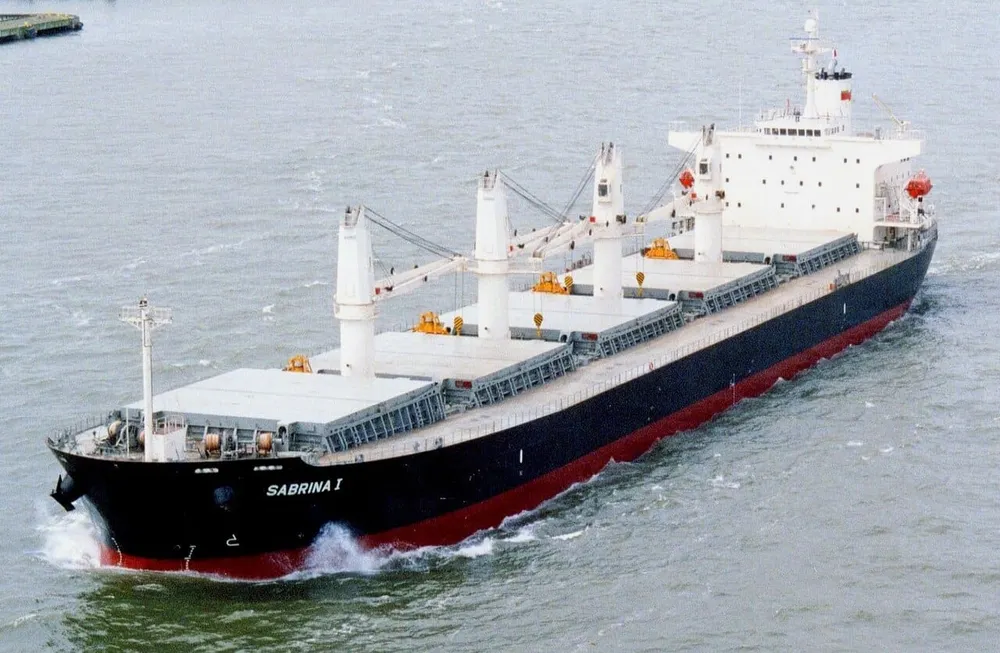
Over the last week, the twin wars in Ukraine and Iran have each escalated and spread dramatically. On London’s command, Ukraine has launched a growing barrage of drone attacks on Russian ships in the Sea of Azov, the gateway for over a quarter of Russia’s grain exports to the world. As we report below:
”[The Russians] have suspended all maritime traffic for now in the Sea of Azov and along the Don-Azov canal, a 30-km dredged canal connecting the major grain-trans-shipment river port of Rostov-on-Don with the Sea of Azov…. The Sea of Azov-Black Sea route is a critical export corridor for Russia’s huge wheat and other grain exports, handling some 30-40% of its wheat exports and 25% of its total grain exports. Russia is hands-down the largest wheat exporter in the world (25% of the world’s total), and in many years is also the leading exporter of all grains taken together (15-20% of the world total).
“Do the math. In broad terms, this means that some 10% of total world wheat exports has just ground to a halt. This is in the same order of magnitude of the share of world oil (20%) that used to pass through the Strait of Hormuz, which is now closed, also due to war. The main recipients of Russian wheat exports are countries in Africa, Asia and the Middle East—the same as those who imported Persian Gulf oil—and will be the ones hit hardest by this body blow.”
This is the policy of “controlled disintegration” which the Council on Foreign Relations—and the global financial oligarchy in New York and London they speak for—adopted as their long-term strategy back in the late 1970s, as the only way they could see to maintain their control over an international speculative system heading towards a predictable blowout. As former Fed chairman Paul Volcker famously pronounced in 1978: “A controlled disintegration in the world economy is a legitimate object for the 1980s.”
It is that same Malthusian policy, driven recklessly forward by what today is a $2.4 quadrillion speculative bubble, that is also behind the war that the U.S. and Israel launched against Iran, one of whose key purposes was to close the Strait of Hormuz—and thereby take down 20% of the world’s oil trade and 35% of fertilizer exports. Now President Trump is caught in a trap of his own making. As the City of London’s Economist magazine merrily reported yesterday: “The American president wants the strait back open—yet he has no good way to do it.” They raise one option for Trump, “Bombing vital infrastructure in Iran,” but note with feigned concern that this “might be a war crime.”
Trump is blind to the fact that the British are playing him for a fool. He told Fox News last night about his plans for Iran: “Next week comes the bridges. We’re gonna knock out all their power plants. We’re going to knock out all their bridges unless they get to the table and negotiate…. You better make a deal. You’re not going to have anybody left.”
Time is running out to prevent the Ukraine and Iran wars from escalating into a nuclear confrontation with Russia, as the British intend. And time is all the more so running out on our ability to stop the physical-economic shock-wave that is coming with the continuing 20% cut in world oil trade and 35% drop in fertilizer, now aggravated by a 10% plunge in world wheat exports.
Schiller Institute founder Helga Zepp-LaRouche presented a pathway to solve these problems in her July 15 webcast:
“The whole U.S. and world economy, I think, cannot hold out for very much longer. When the existing strategic reserves [of oil] are used up, we will have an energy crisis which is already leading to a world depression of the economy…. We have to have a new security and development architecture for the entire region and the world.” That will be the central topic of deliberation at the upcoming July 31 EIR Roundtable: Solve the Immigration Crisis with Development; What You Need to Know About the Strategic Significance of Pope Leo’s Encyclical.


